

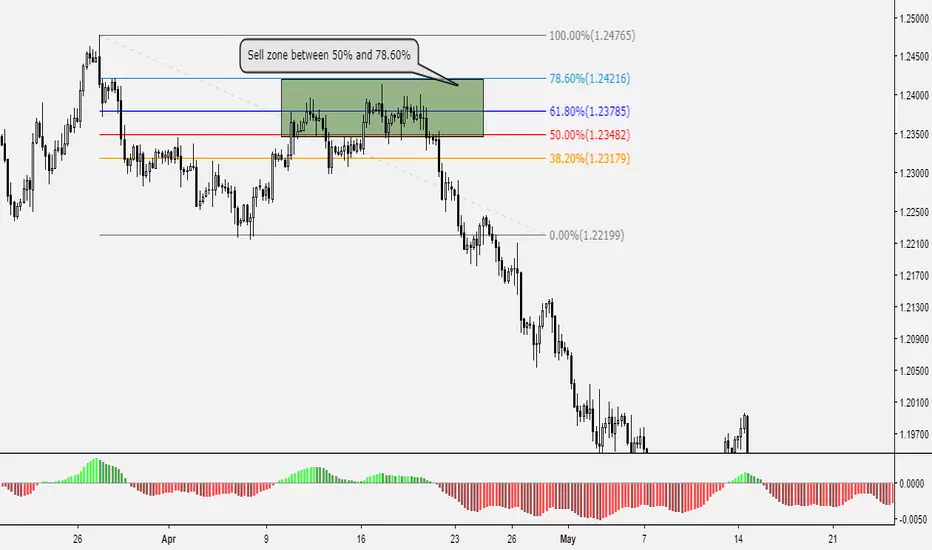
The first thing you should know about the Fibonacci tool is that it works best when the forex market is trending.
The idea is to go long (or buy) on a retracement at a Fibonacci support level when the market is trending up, and to go short (or sell) on a retracement at a Fibonacci resistance level when the market is trending down.
Finding Fibonacci Retracement Levels
In order to find these Fibonacci retracement levels, you have to find the recent significant Swing Highs and Swings Lows.
Then, for downtrends, click on the Swing High and drag the cursor to the most recent Swing Low.
For uptrends, do the opposite. Click on the Swing Low and drag the cursor to the most recent Swing High.
Got that?
Now, let’s take a look at some examples on how to apply Fibonacci retracements levels to the currency markets.
The idea is to go long (or buy) on a retracement at a Fibonacci support level when the market is trending up, and to go short (or sell) on a retracement at a Fibonacci resistance level when the market is trending down.
Finding Fibonacci Retracement Levels
In order to find these Fibonacci retracement levels, you have to find the recent significant Swing Highs and Swings Lows.
Then, for downtrends, click on the Swing High and drag the cursor to the most recent Swing Low.
For uptrends, do the opposite. Click on the Swing Low and drag the cursor to the most recent Swing High.
Got that?
Now, let’s take a look at some examples on how to apply Fibonacci retracements levels to the currency markets.

Publicações relacionadas
Aviso legal
As informações e publicações não se destinam a ser, e não constituem, conselhos ou recomendações financeiras, de investimento, comerciais ou de outro tipo fornecidos ou endossados pela TradingView. Leia mais nos Termos de Uso.
Publicações relacionadas
Aviso legal
As informações e publicações não se destinam a ser, e não constituem, conselhos ou recomendações financeiras, de investimento, comerciais ou de outro tipo fornecidos ou endossados pela TradingView. Leia mais nos Termos de Uso.