
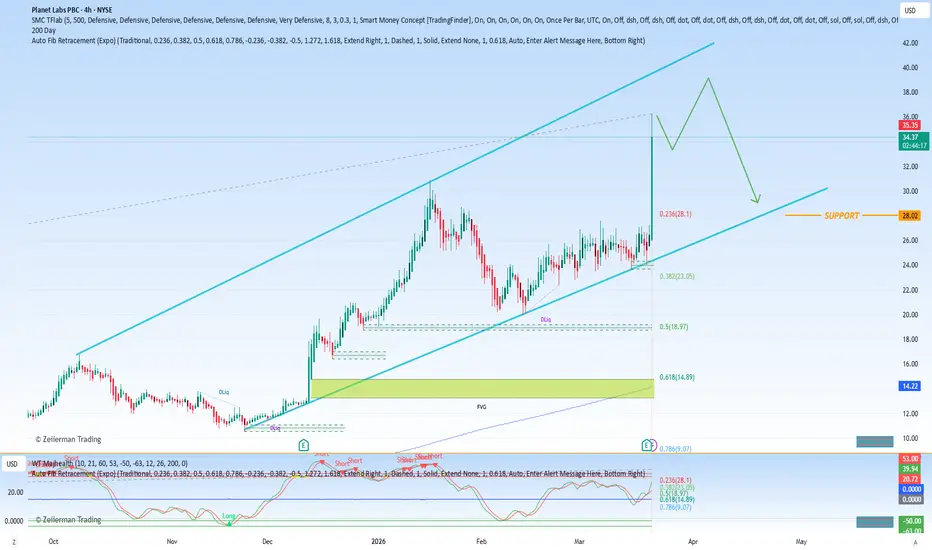
Planet Labs, a satellite-imaging company, witnessed a dramatic surge in its stock price on Thursday following the announcement of record-breaking annual financial results and an optimistic forecast that suggests even stronger performance on the horizon. Investors responded enthusiastically, sending shares up 14.6 percent in extended trading—a notable gain that adds to an extraordinary 535 percent rally the stock had already posted over the preceding 12 months through Thursday's market close.
The company reported that revenue for the quarter ending in January reached an all-time high of $86.8 million, representing a 41 percent increase compared to the same period a year earlier. This figure comfortably surpassed the $78.2 million that analysts had projected, according to data compiled by FactSet. For the full fiscal year, Planet Labs posted revenue of $307.7 million, a 26 percent rise from the previous year and another record for the company.
Perhaps most significantly, the company achieved a major financial milestone: adjusted earnings before interest, taxes, depreciation, and amortization (EBITDA) came in at $15.5 million for the fiscal year. This marks the first time Planet Labs has turned a profit on an adjusted basis since its public market debut in 2021. In the prior fiscal year, the company had recorded an adjusted loss of $10.6 million, highlighting the scale of its recent operational improvements.
Planet Labs also disclosed that it ended the year with a substantial backlog valued at $900 million, a 79 percent increase compared to the previous fiscal year. This figure reflects the strength of the company's contract pipeline, which received a notable boost in January when Planet Labs announced that agreements with Sweden, Germany, and Japan collectively amounted to more than $500 million.
Looking ahead, the company provided guidance for the current quarter, which concludes in April. It expects revenue to land between $87 million and $91 million, with an adjusted loss ranging from $3 million to $6 million. For the full fiscal year, Planet Labs projected revenue in the range of $415 million to $440 million, alongside adjusted profitability of up to $10 million.
In a statement accompanying the results, Chief Executive Will Marshall expressed confidence in the company's trajectory, pointing to the robust backlog and a healthy pipeline of future business as foundations for sustained growth. He also emphasized that the company sees artificial intelligence as a transformative force in the year ahead, with the potential to accelerate expansion into what he described as "massive markets" more quickly than previously anticipated.
Earlier in the week, Planet Labs announced a collaboration with Nvidia to explore ways of integrating graphics processing units (GPUs) into its image-processing workflows. As part of this initiative, the company plans to incorporate Nvidia's GPUs into its next-generation Pelican satellites and its Owl satellite constellation. According to Planet Labs, the Owl satellites are designed to assist customers with a range of critical applications, including disaster-relief operations, intelligence gathering, and military response. The company has stated that these satellites are expected to deliver higher-resolution imagery, with AI-driven analysis available in under an hour.
Planet Labs was among a cohort of space-focused companies that entered the public markets in 2021 through mergers with special-purpose acquisition companies (SPACs). At the time of its debut, the company carried a valuation of approximately $2.8 billion. Today, its market capitalization stands at $8.4 billion, reflecting the substantial growth it has achieved since going public.
However, the company's rapid expansion has not come without financial complexity. Planet Labs reported a net loss of $246.9 million for the full fiscal year, a significant increase from the $123.2 million loss recorded in fiscal year 2025. The company attributed roughly $161.4 million of this loss to a revaluation charge resulting from changes in the fair value of warrant liabilities—a non-cash accounting adjustment driven by the appreciation of its stock price. When excluding this revaluation, Planet Labs' net loss would have been substantially lower, at approximately $85.5 million.
The company reported that revenue for the quarter ending in January reached an all-time high of $86.8 million, representing a 41 percent increase compared to the same period a year earlier. This figure comfortably surpassed the $78.2 million that analysts had projected, according to data compiled by FactSet. For the full fiscal year, Planet Labs posted revenue of $307.7 million, a 26 percent rise from the previous year and another record for the company.
Perhaps most significantly, the company achieved a major financial milestone: adjusted earnings before interest, taxes, depreciation, and amortization (EBITDA) came in at $15.5 million for the fiscal year. This marks the first time Planet Labs has turned a profit on an adjusted basis since its public market debut in 2021. In the prior fiscal year, the company had recorded an adjusted loss of $10.6 million, highlighting the scale of its recent operational improvements.
Planet Labs also disclosed that it ended the year with a substantial backlog valued at $900 million, a 79 percent increase compared to the previous fiscal year. This figure reflects the strength of the company's contract pipeline, which received a notable boost in January when Planet Labs announced that agreements with Sweden, Germany, and Japan collectively amounted to more than $500 million.
Looking ahead, the company provided guidance for the current quarter, which concludes in April. It expects revenue to land between $87 million and $91 million, with an adjusted loss ranging from $3 million to $6 million. For the full fiscal year, Planet Labs projected revenue in the range of $415 million to $440 million, alongside adjusted profitability of up to $10 million.
In a statement accompanying the results, Chief Executive Will Marshall expressed confidence in the company's trajectory, pointing to the robust backlog and a healthy pipeline of future business as foundations for sustained growth. He also emphasized that the company sees artificial intelligence as a transformative force in the year ahead, with the potential to accelerate expansion into what he described as "massive markets" more quickly than previously anticipated.
Earlier in the week, Planet Labs announced a collaboration with Nvidia to explore ways of integrating graphics processing units (GPUs) into its image-processing workflows. As part of this initiative, the company plans to incorporate Nvidia's GPUs into its next-generation Pelican satellites and its Owl satellite constellation. According to Planet Labs, the Owl satellites are designed to assist customers with a range of critical applications, including disaster-relief operations, intelligence gathering, and military response. The company has stated that these satellites are expected to deliver higher-resolution imagery, with AI-driven analysis available in under an hour.
Planet Labs was among a cohort of space-focused companies that entered the public markets in 2021 through mergers with special-purpose acquisition companies (SPACs). At the time of its debut, the company carried a valuation of approximately $2.8 billion. Today, its market capitalization stands at $8.4 billion, reflecting the substantial growth it has achieved since going public.
However, the company's rapid expansion has not come without financial complexity. Planet Labs reported a net loss of $246.9 million for the full fiscal year, a significant increase from the $123.2 million loss recorded in fiscal year 2025. The company attributed roughly $161.4 million of this loss to a revaluation charge resulting from changes in the fair value of warrant liabilities—a non-cash accounting adjustment driven by the appreciation of its stock price. When excluding this revaluation, Planet Labs' net loss would have been substantially lower, at approximately $85.5 million.

Publicações relacionadas
Aviso legal
As informações e publicações não se destinam a ser, e não constituem, conselhos ou recomendações financeiras, de investimento, comerciais ou de outro tipo fornecidos ou endossados pela TradingView. Leia mais nos Termos de Uso.
Publicações relacionadas
Aviso legal
As informações e publicações não se destinam a ser, e não constituem, conselhos ou recomendações financeiras, de investimento, comerciais ou de outro tipo fornecidos ou endossados pela TradingView. Leia mais nos Termos de Uso.