
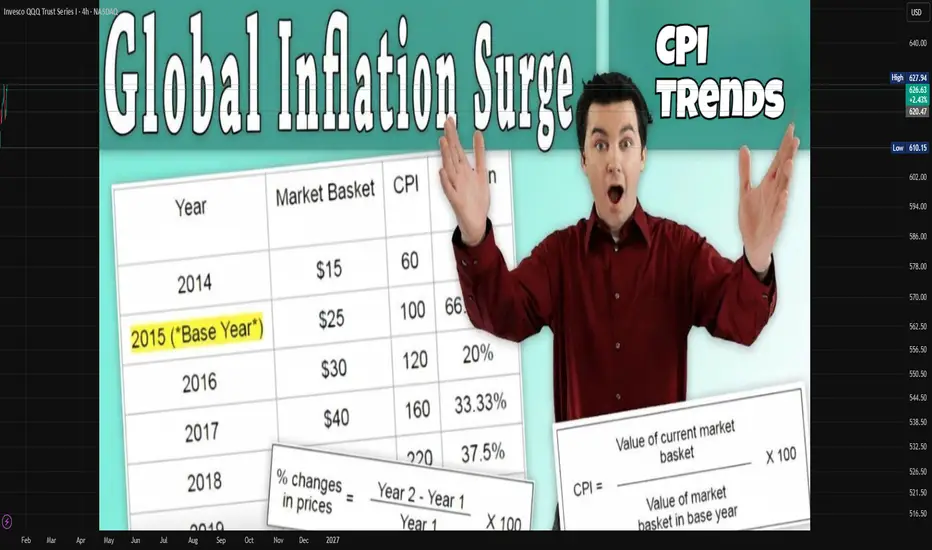
1. What Is CPI and Why It Matters
The Consumer Price Index (CPI) is a key economic indicator that measures the average change over time in the prices paid by consumers for a basket of goods and services. It’s widely used to gauge inflation and deflation: a rising CPI suggests inflationary pressures, while a falling CPI points to deflation. Because CPI reflects the cost of living and purchasing power, central banks, governments, businesses, and investors rely on it for decisions involving monetary policy, wage adjustments, financial planning, and savings strategies.
CPI typically includes prices of categories such as housing, food and beverages, transportation, medical care, education, recreation, and energy. Changes in any of these segments can influence overall inflation readings and expectations about future economic conditions.
2. Post-Pandemic Inflation Surge and Recent Trends
Global inflation surged sharply in 2021 and 2022 as the world economy recovered from the disruptions caused by the COVID-19 pandemic. Supply chain bottlenecks, strong demand backed by fiscal and monetary stimulus, and spikes in energy prices pushed CPI rates to multi-decade highs in many countries. For example, global general CPI inflation jumped from around 1.4% in 2020 to nearly 7.8% in 2022 before moderating in subsequent years.
By 2024 and into 2025, inflation began to ease in many economies, but it did not return uniformly to pre-pandemic levels. According to the OECD, headline CPI inflation across advanced economies remained several percentage points above historic norms throughout 2024 and into 2025, reflecting persistent price pressures in many price categories.
3. Global CPI Patterns: Convergence and Divergence
Advanced Economies (OECD & G7):
In the OECD area, CPI inflation showed signs of moderation in 2025, with headline rates tempering from peaks seen earlier in the decade. For instance, headline inflation in the OECD dropped to around 4.2% in March 2025 and continued to trend lower in subsequent months. Core CPI—excluding volatile food and energy components—also eased, indicating some stabilization of underlying price pressures. However, inflation remained well above the long-term central bank targets of around 2% in many economies.
In the G7 economies, inflation generally stayed closer to central bank targets, though categories such as services and housing continued to post higher readings. While headline CPI in some G7 countries was around 2–3% in early 2025, core inflation often remained stickier.
Emerging Markets and Developing Economies:
Emerging markets displayed a broad spectrum of inflation outcomes. Some countries, particularly those with volatile currencies or reliance on imported commodities, continued to face elevated inflation. For example, countries like Turkey and Argentina experienced CPI rates far above global averages—sometimes exceeding 30%—driven by currency depreciation, fiscal imbalances, and structural challenges. Other emerging economies saw more moderate inflation aligned with global moderation trends.
China:
China’s CPI trends illustrated a different dynamic. In late 2025, China’s inflation climbed to its highest in nearly three years, but even so, the overall inflation environment remained relatively subdued compared to many other major economies. Persistent weak demand and continued producer price (PPI) deflation have kept broader inflationary pressures in check, prompting policymakers to pursue stimulus measures to support consumption.
4. What’s Driving Global CPI Trends Today
Multiple interconnected factors have influenced global CPI dynamics, often in different directions across regions:
a. Supply Chain and Commodity Prices
Disruptions triggered by the pandemic and exacerbated by geopolitical tensions—including the Russia-Ukraine conflict and trade frictions—have periodically fueled price volatility. Energy prices, in particular, made significant contributions to inflation spikes. Even as energy inflation moderated at times, fluctuations in oil and gas markets still affect headline CPI.
b. Food Price Volatility
Food prices experienced significant swings in recent years. While global food CPI peaked in 2022, it moderated in 2023 and 2024, largely due to improved supply conditions and lower energy costs. However, localized weather events, transport costs, and regional supply constraints continue to cause volatility in food prices—an important component of CPI, especially in emerging economies.
c. Monetary and Fiscal Policies
Central banks worldwide responded to inflation surges with aggressive interest rate hikes to cool demand. Over time, these policy actions helped dampen inflation in many economies, leading to lower CPI rates in 2024 and 2025 compared to the peak years. However, rate cuts or expectations of easing in some regions (especially advanced economies) have also raised concerns about inflation re-acceleration.
d. Labor Markets and Services Prices
Tight labor markets in several developed economies have contributed to persistent services inflation—where price increases in sectors like housing, healthcare, and leisure have been more resistant to decline. Core CPI, which excludes volatile food and energy, often reflects these underlying pressures more clearly.
e. Emerging Innovation and Structural Change
Technological shifts and investment—particularly in sectors like artificial intelligence—have the potential to influence cost structures and price levels. Analysts caution that accelerated tech investment, while boosting productivity, could also have inflationary side effects through higher energy and input costs in the short term.
5. Regional Case Studies
United States:
U.S. CPI trends have shown moderation from the elevated levels seen in the early 2020s. As of late 2025, inflation hovered around 2.7%, with the Federal Reserve balancing the need to support growth against the risk of persistent inflation.
India:
India’s CPI inflation remained relatively subdued by global standards, with year-end readings around 1.5% in late 2025. Core inflation, excluding food and fuel, was higher—indicating that underlying price pressures still warranted monitoring by the Reserve Bank of India.
China:
China’s CPI rose modestly toward the end of 2025 but remained lower than many major economies due to structural sluggishness and persistent producer-level deflation.
6. Forecasts and Outlook
Looking ahead, economists generally expect global CPI inflation to continue moderating gradually, though at varied speeds across regions. Surveys of economic experts forecast average global inflation rates of around 4.0% in 2025 and only slightly lower in 2026 and beyond. This suggests that inflation pressures—while easing from their peaks—may remain elevated relative to pre-pandemic norms for the foreseeable future.
Central banks face a balancing act: keeping inflation expectations anchored without stifling growth. Geopolitical risks, energy market disruptions, and structural changes in labor and technology will remain key factors shaping CPI trends.
7. Conclusion
Global inflation trends, as reflected in the CPI, have been characterized by sharp surges, gradual moderation, and persistent structural pressures. From advanced economies to emerging markets, inflation dynamics have been influenced by an array of global and regional forces—from supply chain disruptions to monetary policy shifts and changing demand patterns. As the world moves further from the acute phase of pandemic-related dislocation, inflation remains a central concern for policymakers and households alike, shaping economic strategies and living costs around the globe.
The Consumer Price Index (CPI) is a key economic indicator that measures the average change over time in the prices paid by consumers for a basket of goods and services. It’s widely used to gauge inflation and deflation: a rising CPI suggests inflationary pressures, while a falling CPI points to deflation. Because CPI reflects the cost of living and purchasing power, central banks, governments, businesses, and investors rely on it for decisions involving monetary policy, wage adjustments, financial planning, and savings strategies.
CPI typically includes prices of categories such as housing, food and beverages, transportation, medical care, education, recreation, and energy. Changes in any of these segments can influence overall inflation readings and expectations about future economic conditions.
2. Post-Pandemic Inflation Surge and Recent Trends
Global inflation surged sharply in 2021 and 2022 as the world economy recovered from the disruptions caused by the COVID-19 pandemic. Supply chain bottlenecks, strong demand backed by fiscal and monetary stimulus, and spikes in energy prices pushed CPI rates to multi-decade highs in many countries. For example, global general CPI inflation jumped from around 1.4% in 2020 to nearly 7.8% in 2022 before moderating in subsequent years.
By 2024 and into 2025, inflation began to ease in many economies, but it did not return uniformly to pre-pandemic levels. According to the OECD, headline CPI inflation across advanced economies remained several percentage points above historic norms throughout 2024 and into 2025, reflecting persistent price pressures in many price categories.
3. Global CPI Patterns: Convergence and Divergence
Advanced Economies (OECD & G7):
In the OECD area, CPI inflation showed signs of moderation in 2025, with headline rates tempering from peaks seen earlier in the decade. For instance, headline inflation in the OECD dropped to around 4.2% in March 2025 and continued to trend lower in subsequent months. Core CPI—excluding volatile food and energy components—also eased, indicating some stabilization of underlying price pressures. However, inflation remained well above the long-term central bank targets of around 2% in many economies.
In the G7 economies, inflation generally stayed closer to central bank targets, though categories such as services and housing continued to post higher readings. While headline CPI in some G7 countries was around 2–3% in early 2025, core inflation often remained stickier.
Emerging Markets and Developing Economies:
Emerging markets displayed a broad spectrum of inflation outcomes. Some countries, particularly those with volatile currencies or reliance on imported commodities, continued to face elevated inflation. For example, countries like Turkey and Argentina experienced CPI rates far above global averages—sometimes exceeding 30%—driven by currency depreciation, fiscal imbalances, and structural challenges. Other emerging economies saw more moderate inflation aligned with global moderation trends.
China:
China’s CPI trends illustrated a different dynamic. In late 2025, China’s inflation climbed to its highest in nearly three years, but even so, the overall inflation environment remained relatively subdued compared to many other major economies. Persistent weak demand and continued producer price (PPI) deflation have kept broader inflationary pressures in check, prompting policymakers to pursue stimulus measures to support consumption.
4. What’s Driving Global CPI Trends Today
Multiple interconnected factors have influenced global CPI dynamics, often in different directions across regions:
a. Supply Chain and Commodity Prices
Disruptions triggered by the pandemic and exacerbated by geopolitical tensions—including the Russia-Ukraine conflict and trade frictions—have periodically fueled price volatility. Energy prices, in particular, made significant contributions to inflation spikes. Even as energy inflation moderated at times, fluctuations in oil and gas markets still affect headline CPI.
b. Food Price Volatility
Food prices experienced significant swings in recent years. While global food CPI peaked in 2022, it moderated in 2023 and 2024, largely due to improved supply conditions and lower energy costs. However, localized weather events, transport costs, and regional supply constraints continue to cause volatility in food prices—an important component of CPI, especially in emerging economies.
c. Monetary and Fiscal Policies
Central banks worldwide responded to inflation surges with aggressive interest rate hikes to cool demand. Over time, these policy actions helped dampen inflation in many economies, leading to lower CPI rates in 2024 and 2025 compared to the peak years. However, rate cuts or expectations of easing in some regions (especially advanced economies) have also raised concerns about inflation re-acceleration.
d. Labor Markets and Services Prices
Tight labor markets in several developed economies have contributed to persistent services inflation—where price increases in sectors like housing, healthcare, and leisure have been more resistant to decline. Core CPI, which excludes volatile food and energy, often reflects these underlying pressures more clearly.
e. Emerging Innovation and Structural Change
Technological shifts and investment—particularly in sectors like artificial intelligence—have the potential to influence cost structures and price levels. Analysts caution that accelerated tech investment, while boosting productivity, could also have inflationary side effects through higher energy and input costs in the short term.
5. Regional Case Studies
United States:
U.S. CPI trends have shown moderation from the elevated levels seen in the early 2020s. As of late 2025, inflation hovered around 2.7%, with the Federal Reserve balancing the need to support growth against the risk of persistent inflation.
India:
India’s CPI inflation remained relatively subdued by global standards, with year-end readings around 1.5% in late 2025. Core inflation, excluding food and fuel, was higher—indicating that underlying price pressures still warranted monitoring by the Reserve Bank of India.
China:
China’s CPI rose modestly toward the end of 2025 but remained lower than many major economies due to structural sluggishness and persistent producer-level deflation.
6. Forecasts and Outlook
Looking ahead, economists generally expect global CPI inflation to continue moderating gradually, though at varied speeds across regions. Surveys of economic experts forecast average global inflation rates of around 4.0% in 2025 and only slightly lower in 2026 and beyond. This suggests that inflation pressures—while easing from their peaks—may remain elevated relative to pre-pandemic norms for the foreseeable future.
Central banks face a balancing act: keeping inflation expectations anchored without stifling growth. Geopolitical risks, energy market disruptions, and structural changes in labor and technology will remain key factors shaping CPI trends.
7. Conclusion
Global inflation trends, as reflected in the CPI, have been characterized by sharp surges, gradual moderation, and persistent structural pressures. From advanced economies to emerging markets, inflation dynamics have been influenced by an array of global and regional forces—from supply chain disruptions to monetary policy shifts and changing demand patterns. As the world moves further from the acute phase of pandemic-related dislocation, inflation remains a central concern for policymakers and households alike, shaping economic strategies and living costs around the globe.

Hye Guys,Welcome to a professional trading journey built on precision, discipline, and smart money concepts.
📞 Phone: +91 93159 78955
💬 WhatsApp: wa.link/kdkejz
📩 Contact Mail: globalwolfstreet@gmail.com
📞 Phone: +91 93159 78955
💬 WhatsApp: wa.link/kdkejz
📩 Contact Mail: globalwolfstreet@gmail.com
Publicações relacionadas
Aviso legal
As informações e publicações não se destinam a ser, e não constituem, conselhos ou recomendações financeiras, de investimento, comerciais ou de outro tipo fornecidos ou endossados pela TradingView. Leia mais nos Termos de Uso.
Hye Guys,Welcome to a professional trading journey built on precision, discipline, and smart money concepts.
📞 Phone: +91 93159 78955
💬 WhatsApp: wa.link/kdkejz
📩 Contact Mail: globalwolfstreet@gmail.com
📞 Phone: +91 93159 78955
💬 WhatsApp: wa.link/kdkejz
📩 Contact Mail: globalwolfstreet@gmail.com
Publicações relacionadas
Aviso legal
As informações e publicações não se destinam a ser, e não constituem, conselhos ou recomendações financeiras, de investimento, comerciais ou de outro tipo fornecidos ou endossados pela TradingView. Leia mais nos Termos de Uso.