
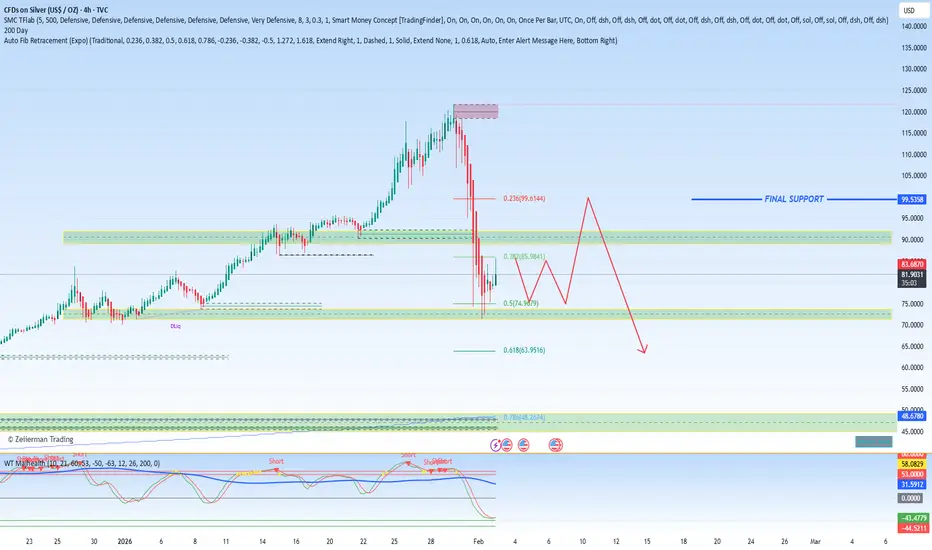
The Historic Rally and the Impending Cliff: A Battle for Silver's Soul
Silver's explosive ascent past $100 per ounce represents a watershed moment in commodity markets, marking the culmination of a historic, multi-faceted rally. However, this unprecedented price action has cleaved the investment community into two camps: those who see a new paradigm of structural scarcity and those, like JPMorgan's former chief strategist Marko Kolanovic, who see a classic speculative bubble on the verge of a violent correction. The metal now sits at a precipice, caught between the potent forces of fundamental supply deficits and the unpredictable whims of speculative capital.
The JPMorgan Bear Thesis: A Prescription for a 50% Crash
Marko Kolanovic’s stark warning—forecasting a collapse back to $50 per ounce in 2026—is rooted in technical analysis, market psychology, and historical precedent. His argument is built on several interlocking pillars:
Parabolic Exhaustion and Speculative Mania: The rally's sheer velocity—a 264% gain year-over-year and a 54% surge in January alone—exhibits the textbook characteristics of a parabolic blow-off top. Kolanovic attributes this not to disciplined investment, but to "meme traders attempting to take over the market," suggesting the price has been hijacked by retail speculation and momentum-chasing capital disconnected from physical realities.
The Inevitability of Mean Reversion: Silver is notoriously volatile. Kolanovic posits that a 50% retracement is a historically normal, even predictable, outcome following such an extreme move. He draws a direct parallel to the 1970s gold market, which saw a 50% crash after its initial surge, shaking out weak-handed speculators before resuming its historic bull run to $800. This view frames the predicted crash not as the end of the story, but as a necessary and painful "psychological trap" to reset the market.
Silver's Inherent Volatility vs. Gold's Stability: A critical distinction in Kolanovic's analysis is that "silver is not gold." While both are precious metals, silver trades with significantly higher beta—it amplifies both greed and fear. Its smaller market and dual identity make it more susceptible to liquidity-driven distortions. A crash, therefore, would be a function of its inherent character as a "leveraged macro instrument" rather than a failure of its underlying story.
The "Broken Market" Thesis: When Fundamentals and Price Diverge
Kolanovic’s view is amplified by a broader sentiment among analysts that the market's pricing mechanism has become dysfunctional or "broken." This perspective highlights a dangerous divergence:
The Disconnect: Analysts like Nicky Shiels of MKS PAMP point to "unheard-of volatility" driven not by physical supply/demand flows, but by "wild liquidity flows." Maximilian Tomei of Galena Asset Management notes that a 200% rally cannot be explained by fundamentals alone, stating, "The way silver is behaving is exaggerated... The market is broken."
The Source of Distortion: Silver's dual nature is at the heart of the chaos. On one hand, it is an industrial metal with record demand from solar photovoltaics, electronics, and the energy transition. On the other, it is a monetary metal acting as a high-beta, "poor man's gold" safe haven. The current price likely reflects a flood of speculative capital betting on the latter narrative, creating a massive overlay on top of the former's steady, structural deficit.
The Unyielding Bull Case: "This Time Is Different"
Despite the warnings, a formidable bull case argues that the paradigm has fundamentally shifted, making historical comparisons incomplete.
The Structural Deficit Argument: This is the cornerstone of the bullish thesis. Institutions like HSBC forecast the structural supply deficit widening to 1.2 million ounces in 2024. This isn't a cyclical shortage but a secular trend driven by the global energy transition. Solar panel demand alone is consuming ever-larger portions of annual mine supply, creating a physical floor under the market that did not exist in previous speculative eras.
The Electrification Super-Cycle: Silver is the most conductive metal on earth, and its role in electrification (from EVs to grid infrastructure) is irreplaceable in the near term. Bulls contend this creates a "right-hand tail" of demand growth for years to come, potentially absorbing supply and justifying higher equilibrium prices.
Institutional and Official Validation: The market stress is becoming palpable. The U.S. Mint's temporary removal of some silver coin products for pricing review is a tell-tale sign of a physical market straining under price-discovery failure. This administrative action underscores the tension between paper speculation and physical availability.
Synthesis and Strategic Implications
The market is engaged in a high-stakes battle between Fear (speculative mania) and Physics (structural deficit).
The Kolanovic/JPMorgan Scenario ($50 Target): This plays out if/when the speculative froth is wiped out. A catalyst could be a shift in Fed policy, a resolution of geopolitical tensions, or simply a loss of momentum that triggers cascading liquidations in leveraged positions. The price would crash toward levels that reflect its industrial fundamentals, purging the "meme trader" influence.
The Bullish Scenario (Continued Secular Strength): This prevails if the structural deficit is so profound that any price crash is met with insatiable physical buying from industry and long-term investors. In this view, a correction would be a buying opportunity, akin to the 1970s shakeout that preceded gold's largest gains.
Investor Takeaway: Navigating the Dichotomy
For investors in vehicles like the iShares Silver Trust (SLV), the decision hinges on timeframe and conviction:
Short-Term Traders: The risk is overwhelmingly to the downside. Kolanovic's warning is a clear signal of extreme overbought conditions. The market is prone to a sharp, sentiment-driven correction.
Long-Term Investors: The decision is more nuanced. They must decide if they believe the structural deficit narrative is powerful enough to withstand a 50% speculative purge. If so, any crash could represent a historic buying opportunity. If not, they risk catching a falling knife.
In conclusion, silver is not merely a commodity at a high price; it is a theater of war between two compelling but contradictory narratives. Kolanovic’s forecast is a bet that market psychology and historical patterns will overwhelm new fundamental realities. The coming months will test whether silver's breakout is the start of a new era or one of the most spectacular mean reversions in modern financial history.
Silver's explosive ascent past $100 per ounce represents a watershed moment in commodity markets, marking the culmination of a historic, multi-faceted rally. However, this unprecedented price action has cleaved the investment community into two camps: those who see a new paradigm of structural scarcity and those, like JPMorgan's former chief strategist Marko Kolanovic, who see a classic speculative bubble on the verge of a violent correction. The metal now sits at a precipice, caught between the potent forces of fundamental supply deficits and the unpredictable whims of speculative capital.
The JPMorgan Bear Thesis: A Prescription for a 50% Crash
Marko Kolanovic’s stark warning—forecasting a collapse back to $50 per ounce in 2026—is rooted in technical analysis, market psychology, and historical precedent. His argument is built on several interlocking pillars:
Parabolic Exhaustion and Speculative Mania: The rally's sheer velocity—a 264% gain year-over-year and a 54% surge in January alone—exhibits the textbook characteristics of a parabolic blow-off top. Kolanovic attributes this not to disciplined investment, but to "meme traders attempting to take over the market," suggesting the price has been hijacked by retail speculation and momentum-chasing capital disconnected from physical realities.
The Inevitability of Mean Reversion: Silver is notoriously volatile. Kolanovic posits that a 50% retracement is a historically normal, even predictable, outcome following such an extreme move. He draws a direct parallel to the 1970s gold market, which saw a 50% crash after its initial surge, shaking out weak-handed speculators before resuming its historic bull run to $800. This view frames the predicted crash not as the end of the story, but as a necessary and painful "psychological trap" to reset the market.
Silver's Inherent Volatility vs. Gold's Stability: A critical distinction in Kolanovic's analysis is that "silver is not gold." While both are precious metals, silver trades with significantly higher beta—it amplifies both greed and fear. Its smaller market and dual identity make it more susceptible to liquidity-driven distortions. A crash, therefore, would be a function of its inherent character as a "leveraged macro instrument" rather than a failure of its underlying story.
The "Broken Market" Thesis: When Fundamentals and Price Diverge
Kolanovic’s view is amplified by a broader sentiment among analysts that the market's pricing mechanism has become dysfunctional or "broken." This perspective highlights a dangerous divergence:
The Disconnect: Analysts like Nicky Shiels of MKS PAMP point to "unheard-of volatility" driven not by physical supply/demand flows, but by "wild liquidity flows." Maximilian Tomei of Galena Asset Management notes that a 200% rally cannot be explained by fundamentals alone, stating, "The way silver is behaving is exaggerated... The market is broken."
The Source of Distortion: Silver's dual nature is at the heart of the chaos. On one hand, it is an industrial metal with record demand from solar photovoltaics, electronics, and the energy transition. On the other, it is a monetary metal acting as a high-beta, "poor man's gold" safe haven. The current price likely reflects a flood of speculative capital betting on the latter narrative, creating a massive overlay on top of the former's steady, structural deficit.
The Unyielding Bull Case: "This Time Is Different"
Despite the warnings, a formidable bull case argues that the paradigm has fundamentally shifted, making historical comparisons incomplete.
The Structural Deficit Argument: This is the cornerstone of the bullish thesis. Institutions like HSBC forecast the structural supply deficit widening to 1.2 million ounces in 2024. This isn't a cyclical shortage but a secular trend driven by the global energy transition. Solar panel demand alone is consuming ever-larger portions of annual mine supply, creating a physical floor under the market that did not exist in previous speculative eras.
The Electrification Super-Cycle: Silver is the most conductive metal on earth, and its role in electrification (from EVs to grid infrastructure) is irreplaceable in the near term. Bulls contend this creates a "right-hand tail" of demand growth for years to come, potentially absorbing supply and justifying higher equilibrium prices.
Institutional and Official Validation: The market stress is becoming palpable. The U.S. Mint's temporary removal of some silver coin products for pricing review is a tell-tale sign of a physical market straining under price-discovery failure. This administrative action underscores the tension between paper speculation and physical availability.
Synthesis and Strategic Implications
The market is engaged in a high-stakes battle between Fear (speculative mania) and Physics (structural deficit).
The Kolanovic/JPMorgan Scenario ($50 Target): This plays out if/when the speculative froth is wiped out. A catalyst could be a shift in Fed policy, a resolution of geopolitical tensions, or simply a loss of momentum that triggers cascading liquidations in leveraged positions. The price would crash toward levels that reflect its industrial fundamentals, purging the "meme trader" influence.
The Bullish Scenario (Continued Secular Strength): This prevails if the structural deficit is so profound that any price crash is met with insatiable physical buying from industry and long-term investors. In this view, a correction would be a buying opportunity, akin to the 1970s shakeout that preceded gold's largest gains.
Investor Takeaway: Navigating the Dichotomy
For investors in vehicles like the iShares Silver Trust (SLV), the decision hinges on timeframe and conviction:
Short-Term Traders: The risk is overwhelmingly to the downside. Kolanovic's warning is a clear signal of extreme overbought conditions. The market is prone to a sharp, sentiment-driven correction.
Long-Term Investors: The decision is more nuanced. They must decide if they believe the structural deficit narrative is powerful enough to withstand a 50% speculative purge. If so, any crash could represent a historic buying opportunity. If not, they risk catching a falling knife.
In conclusion, silver is not merely a commodity at a high price; it is a theater of war between two compelling but contradictory narratives. Kolanovic’s forecast is a bet that market psychology and historical patterns will overwhelm new fundamental realities. The coming months will test whether silver's breakout is the start of a new era or one of the most spectacular mean reversions in modern financial history.

Aviso legal
As informações e publicações não se destinam a ser, e não constituem, conselhos ou recomendações financeiras, de investimento, comerciais ou de outro tipo fornecidos ou endossados pela TradingView. Leia mais nos Termos de Uso.
Aviso legal
As informações e publicações não se destinam a ser, e não constituem, conselhos ou recomendações financeiras, de investimento, comerciais ou de outro tipo fornecidos ou endossados pela TradingView. Leia mais nos Termos de Uso.