
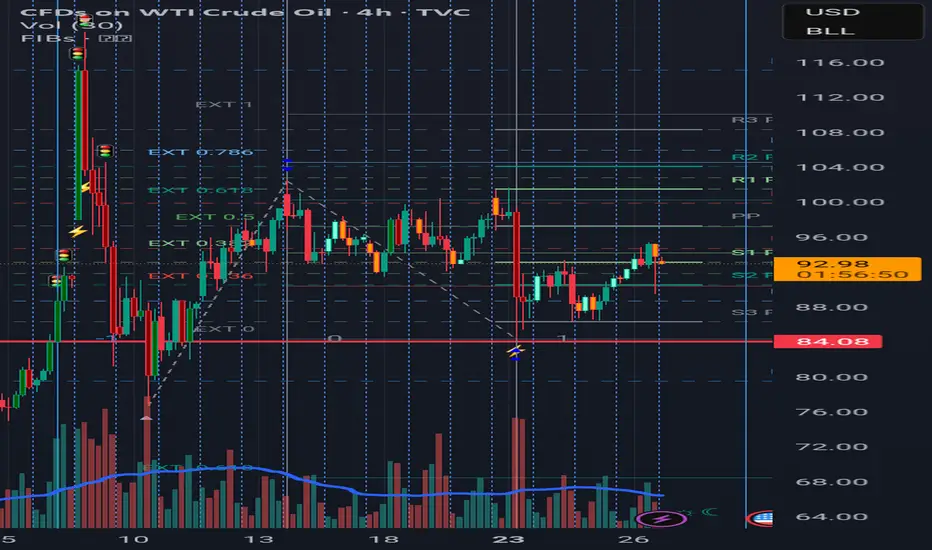
The Weekly Market Game: How Donald Trump’s Statements Are Moving (and Shaking) Financial Markets
In today’s financial landscape, markets are no longer driven purely by economic data, earnings reports, or central bank policy. Increasingly, they are reacting to something far less predictable: the words of Donald Trump.
A growing number of analysts, traders, and even policymakers are raising a serious question:
Are markets being influenced—intentionally—through political messaging?
The Power of a Single Statement
Financial markets thrive on clarity. But in recent months, they’ve been reacting to sudden, often unexpected political statements.
Reports show that Trump’s announcements—especially around geopolitics and trade—can trigger immediate and significant price swings across stocks, oil, crypto, and currencies. �LinkedIn
In one recent case, oil markets surged and then reversed sharply following statements related to tensions in the Middle East. � Facebook
Even more striking:
Markets have shown sensitivity not just to policy—but to rumors, hints, and even ambiguous comments.
A false or misinterpreted report about tariff policy once caused the Dow to swing dramatically within minutes before being corrected. �AP News
This creates an environment where narrative moves markets faster than fundamentals.
Suspicious Timing and “Too Perfect” Trades
One of the most controversial developments involves trading activity that appears to precede major announcements.
According to recent reporting:
Traders placed hundreds of millions of dollars in oil bets minutes before a Trump announcement about Iran. �The Real News Network
Roughly $1.5 billion in S&P 500 futures was bought shortly before a key policy-related statement. �
The Real News Network
These patterns have sparked serious concerns:
Possible insider awareness
Coordinated positioning
Or, at minimum, a system where those closest to political signals gain a massive edge
Even foreign officials accused Trump of spreading “fake news” to manipulate financial and oil markets in relation to these events. �The Week
The “Narrative Control” Strategy
A recurring pattern has emerged:
Markets begin to fall or show instability
A strong or optimistic political statement is released
Markets rebound or stabilize
Later, the details often prove exaggerated, unclear, or inaccurate
Trump has a long-documented history of making false or misleading public statements, with fact-checkers recording tens of thousands over time. �Wikipedia
In financial markets, however, timing matters more than truth.
Even temporary optimism can:
Trigger short squeezes
Reverse panic selling
Provide liquidity exits for large players
The “TACO Trade” and Market Conditioning
On Wall Street, a theory has quietly taken hold: the so-called “Trump Always Chickens Out” (TACO) pattern.
This idea suggests:
Trump escalates rhetoric (tariffs, war threats, sanctions)
Markets drop
He softens or delays action
Markets rebound
This repeated cycle conditions traders to:
Buy dips during political panic
Expect reversals after extreme rhetoric
In effect, markets begin to trade the personality—not the policy. �
Wikipedia
Blurring the Line Between Policy and Market Influence
Critics argue that recent actions go beyond normal political influence.
Examples include:
Threats targeting specific industries (defense, housing) that immediately impact stock prices
Early signals about Federal Reserve leadership that could sway rate expectations
Trade and military rhetoric that moves commodities like oil and gold
Analysts warn that this behavior blurs the line between governance and market intervention, raising concerns about fairness and transparency. �
Barron's
A New Market Reality
What we are witnessing may be a structural shift:
Markets reacting to information flow instead of fundamentals
Political messaging becoming a tradable asset
Volatility driven by narrative cycles rather than economic cycles
Academic research even suggests that policy communication shocks—like sudden announcements—create measurable volatility patterns across global markets. �
arXiv
Conclusion: Manipulation or Just Influence?
Is this deliberate market manipulation?
That remains unproven.
But what is clear is this:
Markets are increasingly reactive to Trump’s statements
Timing of announcements has coincided with major price moves
Questions about misinformation and strategic messaging are growing
Whether intentional or not, the result is the same:
👉 A market environment where political narratives can move billions in minutes
And for traders, that changes everything.

Publicações relacionadas
Aviso legal
As informações e publicações não se destinam a ser, e não constituem, conselhos ou recomendações financeiras, de investimento, comerciais ou de outro tipo fornecidos ou endossados pela TradingView. Leia mais nos Termos de Uso.
Publicações relacionadas
Aviso legal
As informações e publicações não se destinam a ser, e não constituem, conselhos ou recomendações financeiras, de investimento, comerciais ou de outro tipo fornecidos ou endossados pela TradingView. Leia mais nos Termos de Uso.