
Hey traders 👋
Let's have a real talk for a minute.
You know that feeling. You're scrolling through your feed, another "revolutionary" system pops up. "New indicator with 94% win rate!" "Institutional edge finally revealed!" "This one trick changed everything!"
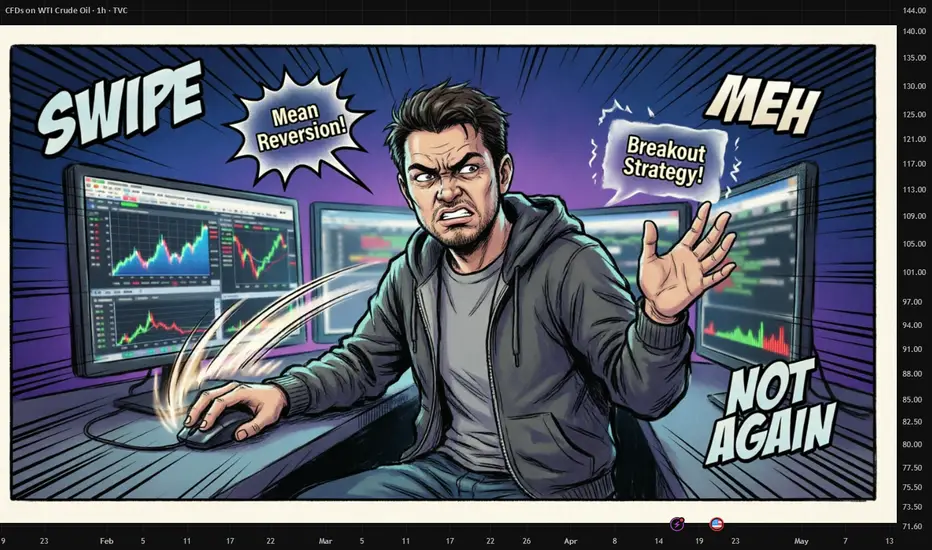
And what do we do? Swipe. Keep scrolling. Maybe a skeptical eyebrow raise. Sometimes a quiet sigh.
Here's the thing: we're not cynical. We're not closed off. Most of us—retail traders with 5, 10, even 15 years in the game—started because we were curious, hungry to learn, ready to test anything that might give us an edge.
So why, despite genuine openness, do we instinctively ignore so many "promising" offers? And more importantly: what would actually make us pause, lean in, and want to test something ourselves?
Let's break it down. Not as gurus. Just as fellow traders who've been in the trenches.
🧠 The "Been There" Filter
After a few years in the markets, we develop something you won't find in any textbook: pattern recognition for ideas themselves.
We've seen:
The "holy grail" indicator that worked beautifully in backtests... and failed in live markets.
The complex multi-timeframe system that required 12 confirmations...
It's not arrogance. It's earned caution.
When we see a new methodology, our internal checklist activates automatically:
✅ Does this acknowledge market regimes change?
✅ Does it respect risk management as core, not an afterthought?
✅ Can I understand the logic, not just follow signals?
If an idea doesn't pass this silent audit in the first 10 seconds? Scroll.
🔍 What Actually Makes Us Stop Scrolling
So what cuts through the noise? After observing our own behavior and talking with other experienced retail traders, a few patterns emerge. Here's what genuinely captures attention:
1. Show the "Why," Not Just the "What"
We don't need another black box. We want to understand the mechanism.
❌ "This indicator predicts reversals!"
✅ "This works because it tracks large traders positioning shifts during volatility compression—here's the options flow data that confirms it."
When you explain the market microstructure behind a signal, you're speaking our language. We've learned that edges come from understanding why price moves, not just that it moves.
2. Embrace Uncertainty (Seriously)
The most trustworthy voices are the ones that say: "This works about 70% of the time, here's when it fails, and here's how I manage that."
Experienced traders know: no edge is universal. Markets evolve. Regimes shift. A strategy that prints in low-volatility ranges may blow up in trending news events.
When a methodology acknowledges its own boundaries? That's not weakness. That's credibility.
3. Respect Our Time & Intelligence
We've all wasted hours optimizing parameters that overfit yesterday's data. So when a new idea:
Requires 20 indicators on one chart
Needs manual adjustment every day/week
Has entry rules that take a paragraph to explain...
...we mentally calculate the opportunity cost. Is this worth hundred hours of testing?
The ideas that win our attention are elegant in their simplicity. Clear rules. Testable logic. Minimal curve-fitting.
5. Show the Data (But Keep It Human)
We love statistics—but not for statistics' sake. We want:
Sample size transparency ("Tested on 100+ events across 3 market regimes")
Realistic metrics ("Average R:R 1:2.3, max consecutive losses: 5")
Visual proof that's interpretable, not just impressive
And crucially: context. A 65% win rate means nothing without knowing: In what conditions? With what risk parameters?
💡 The "Ignition" Moment: What Makes Us Want to Test
Even when an idea passes the filters above, there's one final hurdle: motivation to actually test it.
What flips that switch?
🔹 The "Aha" Clarity
When the core insight clicks instantly:
"Oh—so it's not predicting direction. It's identifying when dealer hedging flows are likely to accelerate a move that's already starting. That's why it works better in momentum regimes."
That moment of conceptual clarity is addictive. It makes us want to see it in action.
🔹 Low-Friction First Steps
We're more likely to test something if:
There's a simple checklist to validate the setup
The data source is accessible and trustable (exchange reports, broker firms data data, options flow, etc.)
Barriers to entry matter. If testing requires multiple parameter settings (overfitting) or 3 hours of manual data entry? Most of us will bookmark it... and never return.
🔹 It Solves a Specific Pain Point
Generic "improve your trading" promises don't move us. But:
Specificity signals real-world testing. And if it addresses a frustration we actually have? Instant attention.
🧭 A Personal Reflection
I'll be honest: I've ignored ideas I later realized were valuable. Not because they were poorly presented, but because they arrived at the wrong time—or I was too anchored to my existing framework.
That's the paradox of experience: it protects us from noise, but can also blind us to genuine innovation.
So here's my commitment—to you, and to myself:
Stay curious, not cynical. Question, but don't dismiss.
Test small. If an idea has logical merit, allocate minimal capital to validate it personally.
Share the process. Win or lose, document what we learn. That's how we all level up.
🎯 Your Turn
I'd love to hear from you:
👇 What's one "overlooked" idea you later realized had merit?
👇 What's the #1 thing that makes you want to test a new strategy?
👇 What's a common "red flag" that makes you scroll past?
No right answers. Just real talk from real traders.
Trade with data. Trade smart. Stay curious. 🚀
Let's have a real talk for a minute.
You know that feeling. You're scrolling through your feed, another "revolutionary" system pops up. "New indicator with 94% win rate!" "Institutional edge finally revealed!" "This one trick changed everything!"
And what do we do? Swipe. Keep scrolling. Maybe a skeptical eyebrow raise. Sometimes a quiet sigh.
Here's the thing: we're not cynical. We're not closed off. Most of us—retail traders with 5, 10, even 15 years in the game—started because we were curious, hungry to learn, ready to test anything that might give us an edge.
So why, despite genuine openness, do we instinctively ignore so many "promising" offers? And more importantly: what would actually make us pause, lean in, and want to test something ourselves?
Let's break it down. Not as gurus. Just as fellow traders who've been in the trenches.
🧠 The "Been There" Filter
After a few years in the markets, we develop something you won't find in any textbook: pattern recognition for ideas themselves.
We've seen:
The "holy grail" indicator that worked beautifully in backtests... and failed in live markets.
The complex multi-timeframe system that required 12 confirmations...
It's not arrogance. It's earned caution.
When we see a new methodology, our internal checklist activates automatically:
✅ Does this acknowledge market regimes change?
✅ Does it respect risk management as core, not an afterthought?
✅ Can I understand the logic, not just follow signals?
If an idea doesn't pass this silent audit in the first 10 seconds? Scroll.
🔍 What Actually Makes Us Stop Scrolling
So what cuts through the noise? After observing our own behavior and talking with other experienced retail traders, a few patterns emerge. Here's what genuinely captures attention:
1. Show the "Why," Not Just the "What"
We don't need another black box. We want to understand the mechanism.
❌ "This indicator predicts reversals!"
✅ "This works because it tracks large traders positioning shifts during volatility compression—here's the options flow data that confirms it."
When you explain the market microstructure behind a signal, you're speaking our language. We've learned that edges come from understanding why price moves, not just that it moves.
2. Embrace Uncertainty (Seriously)
The most trustworthy voices are the ones that say: "This works about 70% of the time, here's when it fails, and here's how I manage that."
Experienced traders know: no edge is universal. Markets evolve. Regimes shift. A strategy that prints in low-volatility ranges may blow up in trending news events.
When a methodology acknowledges its own boundaries? That's not weakness. That's credibility.
3. Respect Our Time & Intelligence
We've all wasted hours optimizing parameters that overfit yesterday's data. So when a new idea:
Requires 20 indicators on one chart
Needs manual adjustment every day/week
Has entry rules that take a paragraph to explain...
...we mentally calculate the opportunity cost. Is this worth hundred hours of testing?
The ideas that win our attention are elegant in their simplicity. Clear rules. Testable logic. Minimal curve-fitting.
5. Show the Data (But Keep It Human)
We love statistics—but not for statistics' sake. We want:
Sample size transparency ("Tested on 100+ events across 3 market regimes")
Realistic metrics ("Average R:R 1:2.3, max consecutive losses: 5")
Visual proof that's interpretable, not just impressive
And crucially: context. A 65% win rate means nothing without knowing: In what conditions? With what risk parameters?
💡 The "Ignition" Moment: What Makes Us Want to Test
Even when an idea passes the filters above, there's one final hurdle: motivation to actually test it.
What flips that switch?
🔹 The "Aha" Clarity
When the core insight clicks instantly:
"Oh—so it's not predicting direction. It's identifying when dealer hedging flows are likely to accelerate a move that's already starting. That's why it works better in momentum regimes."
That moment of conceptual clarity is addictive. It makes us want to see it in action.
🔹 Low-Friction First Steps
We're more likely to test something if:
There's a simple checklist to validate the setup
The data source is accessible and trustable (exchange reports, broker firms data data, options flow, etc.)
Barriers to entry matter. If testing requires multiple parameter settings (overfitting) or 3 hours of manual data entry? Most of us will bookmark it... and never return.
🔹 It Solves a Specific Pain Point
Generic "improve your trading" promises don't move us. But:
Specificity signals real-world testing. And if it addresses a frustration we actually have? Instant attention.
🧭 A Personal Reflection
I'll be honest: I've ignored ideas I later realized were valuable. Not because they were poorly presented, but because they arrived at the wrong time—or I was too anchored to my existing framework.
That's the paradox of experience: it protects us from noise, but can also blind us to genuine innovation.
So here's my commitment—to you, and to myself:
Stay curious, not cynical. Question, but don't dismiss.
Test small. If an idea has logical merit, allocate minimal capital to validate it personally.
Share the process. Win or lose, document what we learn. That's how we all level up.
🎯 Your Turn
I'd love to hear from you:
👇 What's one "overlooked" idea you later realized had merit?
👇 What's the #1 thing that makes you want to test a new strategy?
👇 What's a common "red flag" that makes you scroll past?
No right answers. Just real talk from real traders.
Trade with data. Trade smart. Stay curious. 🚀

Publicações relacionadas
Aviso legal
As informações e publicações não se destinam a ser, e não constituem, conselhos ou recomendações financeiras, de investimento, comerciais ou de outro tipo fornecidos ou endossados pela TradingView. Leia mais nos Termos de Uso.
Publicações relacionadas
Aviso legal
As informações e publicações não se destinam a ser, e não constituem, conselhos ou recomendações financeiras, de investimento, comerciais ou de outro tipo fornecidos ou endossados pela TradingView. Leia mais nos Termos de Uso.