
Chapter 3: Funded Traders Lose on Rules, Not Reads
(Education only. Not financial advice. No automation. No signals.)
Why this chapter matters
Many funded traders read bias correctly… and still fail.
Not because their analysis is wrong — but because evaluation rules punish emotional execution:
Daily loss limit
Max drawdown (static / trailing)
Consistency expectations
Overtrading + revenge trades under pressure
Funded accounts don’t die on “direction.” They die on “discipline.”
The Funded Failure Chain (what really breaks evaluations)
This pattern repeats across almost every blown challenge:
One normal loss happens
Trader feels “time pressure” to recover
Size increases (or standards drop)
Another loss hits → daily loss limit pressure starts
Forced entries + late entries + FOMO
Slippage/spread + panic exits
Rule breach → evaluation ends
The market didn’t eliminate you. The rulebook did.
The 7 core mistakes (and the solution for each)
1) Trading P&L instead of trading setup quality
Symptom: “I need to make it back today.”
Solution: Your KPI becomes A/A+ setups only, not profit.
MARAL touch: If your board says WAIT / WEAK, you do nothing — even if you “feel” it.
2) Oversizing (the silent killer)
Symptom: “Just one bigger trade to recover.”
Solution: Fixed risk per trade. No exceptions.
MARAL touch: Risk is not emotional — it’s pre-defined. If “Risk State” is HIGH, size must reduce or skip.
3) Revenge trading after a loss
Symptom: Immediate re-entry without re-validation.
Solution: A forced cooldown + re-qualification rule.
MARAL touch: After a loss, you must return to Qualification Board. If Entry Permission is not clean → WAIT.
4) Holding losers because “it will come back”
Symptom: Stop becomes negotiable.
Solution: Stop-loss is a rule, not a suggestion.
MARAL touch: If structure flips or “Exit Pressure” appears → manage or exit. No hope trades.
5) Moving SL wider (“avoid stop hunt”)
Symptom: Turning a controlled loss into drawdown damage.
Solution: If SL hit → accept → reassess. Never widen.
MARAL touch: SL is tied to logic + invalidation, not emotion.
6) Overtrading during low-quality liquidity
Symptom: Trading chop / thin liquidity / late-stage moves.
Solution: Only trade when market is “cooperative.”
MARAL touch: If Liquidity is LOW or Momentum Health is weak → avoid. Funded trading is selective, not active.
7) No exit plan (winners turn into losers)
Symptom: Good entry, bad management.
Solution: Predefine TP1 / reduce-risk / exit triggers.
MARAL touch: Management Board tells you when to hold / reduce / exit based on real-time conditions.
The MARAL Funded Survival Protocol (solution system)
A) 3 Kill-Switch Rules (non-negotiable)
Daily Drawdown Guard: If you hit your daily loss threshold → STOP (no “one more trade”).
Quality Guard: If your setup isn’t A/A+ → NO TRADE.
State Guard: If board says WAIT / RISKY / WEAK → NO TRADE.
Funded traders pass by not dying on bad days.
B) MARAL 3-Board Workflow (Funded Mode)
1) Context Board (Before any trade)
Trend / structure alignment
Volatility context (is the market stable or wild?)
“Obstacle ahead” check (near HTF levels/liquidity zones)
If Context is mixed → WAIT.
2) Qualification Board (Permission to trade)
You only trade when these are aligned:
Setup state = VALID
Entry permission = YES (clean confirmation)
Liquidity not “LOW” (avoid thin/dirty zones)
Risk awareness = acceptable (no “high-risk squeeze zone”)
If any gate fails → WAIT.
3) Management Board (After entry)
Funded traders fail here. MARAL solves this by structuring decisions:
Reduce risk when trade stabilizes (protect drawdown)
Exit when structure changes / exit pressure rises
Hold only when conditions remain valid
Goal: protect equity + protect evaluation eligibility.
Practical Rule Set
Risk (simple & safe)
Risk per trade: 0.25% – 0.50% max
Trades per day: 2–3 max
After 1 loss: 1 cooldown candle + re-qualify
After 2 losses: STOP for the day (funded mode)
Execution (quality first)
Only trade when MARAL gates say VALID + Permission
No entries inside chop
No “late entries” after the move already expanded
Stop-loss never widened
If conditions degrade → reduce risk or exit
Psychology (the funded mindset)
Passing is not about big wins
Passing is about zero rule breaks
Consistency > hero trades
One clean trade is enough
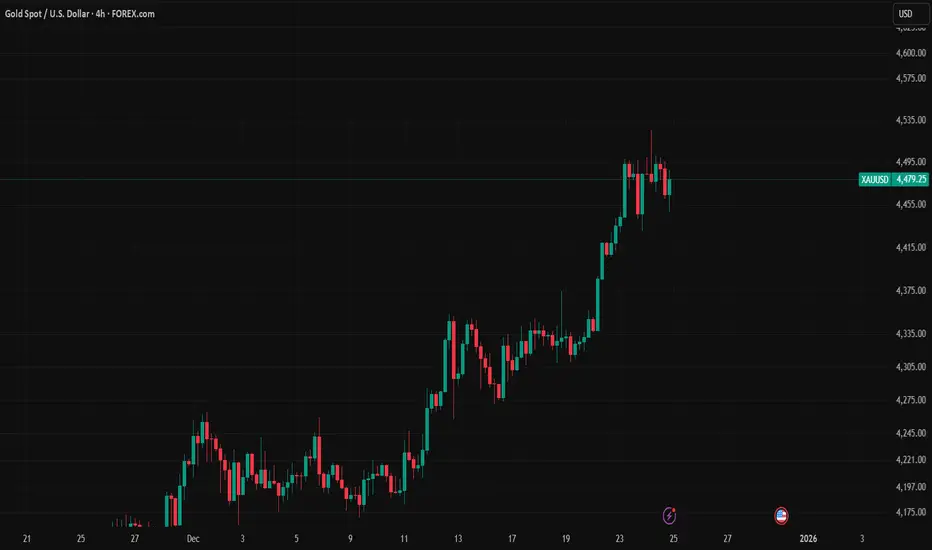
What this chart is showing (how to study it)
Even in a strong move, funded traders often fail during:
pullbacks
consolidation
late-session impulse entries
emotional overconfidence after 1–2 wins
Your job is not to predict. Your job is to execute inside rules.
That’s the funded edge.
Closing
Chapter 3 is the reality check:
Funded traders lose on rules, not reads.
Build a rule-safe execution system, and your “good analysis” finally gets paid.
Educational content only. Manual discretionary trading. No automation. No guarantees.
Chapter 4 (Coming Soon): Intuition vs Execution Permission
Intuition isn’t the enemy.
Unfiltered intuition is.
Next chapter breaks down why “gut feeling” fails funded traders—and how intuition must pass execution permission, risk awareness, and context checks to become tradable.
#trading #riskmanagement #propfirm #fundedtrader #tradingpsychology #execution #discipline
(Education only. Not financial advice. No automation. No signals.)
Why this chapter matters
Many funded traders read bias correctly… and still fail.
Not because their analysis is wrong — but because evaluation rules punish emotional execution:
Daily loss limit
Max drawdown (static / trailing)
Consistency expectations
Overtrading + revenge trades under pressure
Funded accounts don’t die on “direction.” They die on “discipline.”
The Funded Failure Chain (what really breaks evaluations)
This pattern repeats across almost every blown challenge:
One normal loss happens
Trader feels “time pressure” to recover
Size increases (or standards drop)
Another loss hits → daily loss limit pressure starts
Forced entries + late entries + FOMO
Slippage/spread + panic exits
Rule breach → evaluation ends
The market didn’t eliminate you. The rulebook did.
The 7 core mistakes (and the solution for each)
1) Trading P&L instead of trading setup quality
Symptom: “I need to make it back today.”
Solution: Your KPI becomes A/A+ setups only, not profit.
MARAL touch: If your board says WAIT / WEAK, you do nothing — even if you “feel” it.
2) Oversizing (the silent killer)
Symptom: “Just one bigger trade to recover.”
Solution: Fixed risk per trade. No exceptions.
MARAL touch: Risk is not emotional — it’s pre-defined. If “Risk State” is HIGH, size must reduce or skip.
3) Revenge trading after a loss
Symptom: Immediate re-entry without re-validation.
Solution: A forced cooldown + re-qualification rule.
MARAL touch: After a loss, you must return to Qualification Board. If Entry Permission is not clean → WAIT.
4) Holding losers because “it will come back”
Symptom: Stop becomes negotiable.
Solution: Stop-loss is a rule, not a suggestion.
MARAL touch: If structure flips or “Exit Pressure” appears → manage or exit. No hope trades.
5) Moving SL wider (“avoid stop hunt”)
Symptom: Turning a controlled loss into drawdown damage.
Solution: If SL hit → accept → reassess. Never widen.
MARAL touch: SL is tied to logic + invalidation, not emotion.
6) Overtrading during low-quality liquidity
Symptom: Trading chop / thin liquidity / late-stage moves.
Solution: Only trade when market is “cooperative.”
MARAL touch: If Liquidity is LOW or Momentum Health is weak → avoid. Funded trading is selective, not active.
7) No exit plan (winners turn into losers)
Symptom: Good entry, bad management.
Solution: Predefine TP1 / reduce-risk / exit triggers.
MARAL touch: Management Board tells you when to hold / reduce / exit based on real-time conditions.
The MARAL Funded Survival Protocol (solution system)
A) 3 Kill-Switch Rules (non-negotiable)
Daily Drawdown Guard: If you hit your daily loss threshold → STOP (no “one more trade”).
Quality Guard: If your setup isn’t A/A+ → NO TRADE.
State Guard: If board says WAIT / RISKY / WEAK → NO TRADE.
Funded traders pass by not dying on bad days.
B) MARAL 3-Board Workflow (Funded Mode)
1) Context Board (Before any trade)
Trend / structure alignment
Volatility context (is the market stable or wild?)
“Obstacle ahead” check (near HTF levels/liquidity zones)
If Context is mixed → WAIT.
2) Qualification Board (Permission to trade)
You only trade when these are aligned:
Setup state = VALID
Entry permission = YES (clean confirmation)
Liquidity not “LOW” (avoid thin/dirty zones)
Risk awareness = acceptable (no “high-risk squeeze zone”)
If any gate fails → WAIT.
3) Management Board (After entry)
Funded traders fail here. MARAL solves this by structuring decisions:
Reduce risk when trade stabilizes (protect drawdown)
Exit when structure changes / exit pressure rises
Hold only when conditions remain valid
Goal: protect equity + protect evaluation eligibility.
Practical Rule Set
Risk (simple & safe)
Risk per trade: 0.25% – 0.50% max
Trades per day: 2–3 max
After 1 loss: 1 cooldown candle + re-qualify
After 2 losses: STOP for the day (funded mode)
Execution (quality first)
Only trade when MARAL gates say VALID + Permission
No entries inside chop
No “late entries” after the move already expanded
Stop-loss never widened
If conditions degrade → reduce risk or exit
Psychology (the funded mindset)
Passing is not about big wins
Passing is about zero rule breaks
Consistency > hero trades
One clean trade is enough
What this chart is showing (how to study it)
Even in a strong move, funded traders often fail during:
pullbacks
consolidation
late-session impulse entries
emotional overconfidence after 1–2 wins
Your job is not to predict. Your job is to execute inside rules.
That’s the funded edge.
Closing
Chapter 3 is the reality check:
Funded traders lose on rules, not reads.
Build a rule-safe execution system, and your “good analysis” finally gets paid.
Educational content only. Manual discretionary trading. No automation. No guarantees.
Chapter 4 (Coming Soon): Intuition vs Execution Permission
Intuition isn’t the enemy.
Unfiltered intuition is.
Next chapter breaks down why “gut feeling” fails funded traders—and how intuition must pass execution permission, risk awareness, and context checks to become tradable.
#trading #riskmanagement #propfirm #fundedtrader #tradingpsychology #execution #discipline
Nota
How MARAL Helps Funded Traders (Mapped to Every Failure Point)MARAL is not an entry generator.
It is an execution control framework designed to keep traders rule-compliant under pressure.
Below is how MARAL directly addresses each problem highlighted
1) Trading P&L Instead of Setup Quality
Problem: Traders chase recovery instead of quality.
How MARAL helps:
MARAL converts “discipline” into visible execution states (WAIT / VALID / RISKY / WEAK)
If the board does not show VALID, execution permission is blocked
This shifts focus from money recovery → process integrity
Funded advantage:
Prevents emotional trades driven by drawdown anxiety.
2) Oversizing Under Pressure
Problem: Size increases after losses.
How MARAL helps:
Risk is treated as a state, not a feeling
When risk conditions degrade, MARAL visually flags higher risk
Encourages size reduction or skipping, not escalation
Funded advantage:
Protects daily loss limits and trailing drawdown.
3) Revenge Trading After Losses
Problem: Immediate re-entries without revalidation.
How MARAL helps:
Forces a return to the Qualification Board
Entry permission must be re-earned
If confirmation is not clean → WAIT
Funded advantage:
Breaks the loss → revenge → rule breach cycle.
4) Holding Losers Emotionally
Problem: Stops become negotiable.
How MARAL helps:
Tracks structure validity and exit pressure
When trade health degrades, MARAL signals management action
Removes “hope-based holding”
Funded advantage:
Limits drawdown damage before rules are violated.
5) Moving Stop-Loss Wider
Problem: Controlled losses become large losses.
How MARAL helps:
Stop logic is tied to invalidation, not emotion
Execution framework reinforces that SL is a rule, not a preference
Funded advantage:
Keeps losses contained, which is critical in evaluations.
6) Overtrading Low-Quality Liquidity
Problem: Trading chop, thin liquidity, late moves.
How MARAL helps:
Highlights liquidity context and momentum health
Signals when the market is non-cooperative
Encourages patience during volatility expansion
Funded advantage:
Reduces unnecessary trades that slowly bleed drawdown.
7) No Exit Plan (Bad Management of Winners)
Problem: Profits turn into losses.
How MARAL helps:
Management Board provides hold / reduce / exit guidance
Decisions are based on live conditions, not fear or greed
Funded advantage:
Improves consistency without increasing trade frequency.
Why This Matters for Funded Accounts
Funded traders don’t fail because they can’t read markets.
They fail because execution collapses under rules.
MARAL helps by:
Reducing the number of decisions a trader must make under stress
Turning execution into a gated process
Prioritizing eligibility survival over short-term profit
Passing is not about making more.
Passing is about not breaking rules.
Important Clarity
MARAL does not guarantee profits
MARAL does not increase win rate by promise
MARAL does not automate decisions
Any improvement comes from:
Better execution timing, risk control, and decision discipline
One-Line Summary
MARAL doesn’t help funded traders win faster — it helps them fail less often.

MARAL Execution Workflow, Long & Short Permission , Dynamic risk mapper & Deep Candle Intelligence
Context → Liquidity Event → Displacement → Structure Shift → POI Confirmation → Risk Clearance (Discretionary | Educational)
Context → Liquidity Event → Displacement → Structure Shift → POI Confirmation → Risk Clearance (Discretionary | Educational)
Aviso legal
As informações e publicações não se destinam a ser, e não constituem, conselhos ou recomendações financeiras, de investimento, comerciais ou de outro tipo fornecidos ou endossados pela TradingView. Leia mais nos Termos de Uso.
MARAL Execution Workflow, Long & Short Permission , Dynamic risk mapper & Deep Candle Intelligence
Context → Liquidity Event → Displacement → Structure Shift → POI Confirmation → Risk Clearance (Discretionary | Educational)
Context → Liquidity Event → Displacement → Structure Shift → POI Confirmation → Risk Clearance (Discretionary | Educational)
Aviso legal
As informações e publicações não se destinam a ser, e não constituem, conselhos ou recomendações financeiras, de investimento, comerciais ou de outro tipo fornecidos ou endossados pela TradingView. Leia mais nos Termos de Uso.