
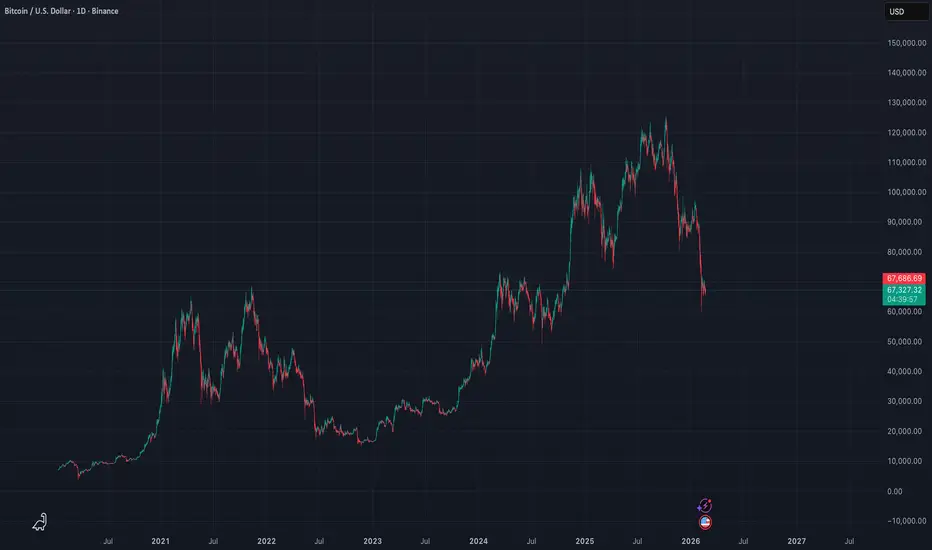
I am not writing this because markets have crashed. I am writing it because even at the height of the euphoria, something about the structure never felt convincing to me.
A Decade Later, What Actually Remains?
There was a time when crypto felt inevitable. It did not feel like speculation. It felt like history unfolding. The language was grand and intoxicating — decentralization, financial sovereignty, permissionless systems, the end of banks, trustless coordination, generational wealth for those early enough to understand. Conferences were packed, timelines were loud, whitepapers were treated like scripture. Every new token was a breakthrough. Every upgrade was a revolution.
Every dip was a gift.
And for a while, price validated belief. But markets have a way of separating narrative from structure. Time does what enthusiasm cannot. A decade is long enough to judge whether something was a technological shift or a liquidity event.
The uncomfortable truth is this: crypto as a movement peaked. What remains is something far narrower and far more ordinary.
Bitcoin survived, but not in the way it was once imagined. It did not replace banks. It did not become everyday currency. It did not dismantle the global monetary system. Instead, it matured into a macro asset — volatile, tradable, embedded in ETFs and institutional balance sheets. It stopped trying to be a revolution and became a financial instrument. Ironically, that humility is what allowed it to persist. It promised little beyond scarcity and censorship resistance. It did not rely on roadmaps or governance theater. It did not need constant reinvention to justify its existence.
Everything else tried to promise the future. The altcoin era was built on velocity. Faster chains, smarter contracts, scalable layers, interoperable ecosystems, decentralized autonomous organizations. The vocabulary grew more sophisticated with each cycle, but the underlying economic structure rarely changed. Tokens were issued before demand existed. Distribution preceded utility. Founders and venture capital received large allocations early, while retail participants arrived later under the belief that they were still early.
When prices rose, the model looked brilliant. When liquidity dried up, the structure revealed itself. Many of these coins did not collapse to zero. They simply stalled. They entered a state of permanent limbo — not dead enough to reset, not alive enough to grow. Years passed. Development updates continued. Partnerships were announced. Foundations remained active. And yet, adoption outside the ecosystem never materialized in a meaningful way. The charts told a quieter story: explosive rise, violent crash, long horizontal drift. Loyal holders remained, waiting for the return to former highs, anchoring to numbers that no longer had structural support.
These assets did not die because they did not need to. A token does not require customers to survive. It requires liquidity. As long as exchanges list it and traders rotate through it, it can exist indefinitely. That is not proof of success. It is proof of inertia.
Decentralized finance followed a similar arc. It was introduced as a bankless alternative — code replacing intermediaries, yield without institutions, transparent and trustless coordination. In practice, much of DeFi became leverage layered upon leverage, emissions labeled as yield, governance controlled by large token holders, and recurring exploits that exposed the fragility of immutable code interacting with adversarial environments. The promise was structural transformation. The outcome was a closed financial loop largely dependent on its own token incentives.
Real yield is generated by productive economic activity. Much of DeFi yield was generated by printing more tokens. That distinction matters. Incentives can bootstrap growth temporarily, but they cannot substitute for demand forever.
This does not mean nothing of value emerged. Stablecoins became real infrastructure. On-chain settlement proved efficient for certain types of transfers. Exchanges built highly liquid markets. Trading systems evolved. Arbitrage tightened spreads globally. But these are financial utilities, not civilizational resets.
It is also true that significant money was made. Founders with early allocations realized gains. Venture funds structured exits across cycles. Exchanges collected fees regardless of direction. Skilled traders navigated volatility. Retail participants, as a group, did not fare as well. Most arrived after narratives had matured and liquidity had thickened. Screenshots of unrealized gains circulated more widely than realized profits. Markets reward timing and structure, not enthusiasm.
None of this implies that crypto collapses tomorrow. It has moved beyond fragility. It is embedded now — regulated in parts, institutionalized in others, taxed, traded, integrated. But embedded does not mean transformative. It means absorbed.
The initial euphoria was fueled by the belief that code could eliminate human nature. That governance tokens could distribute power evenly. That decentralization would automatically produce fairness. Over time, it became clear that incentives shape behavior more reliably than ideology. Where large allocations exist, power concentrates. Where liquidity pools form, insiders act first. Where narratives dominate, attention becomes currency.
Markets are ruthless auditors. They do not care about intention. They care about structure.
A decade later, what remains is narrower but clearer. Bitcoin persists as a scarce digital asset within the global financial system. A handful of networks operate as high-speed trading venues. Stablecoins function as transactional rails. Exchanges thrive on volume. Volatility remains the primary product.
The revolution did not fully materialize. The system did not disappear. Instead, crypto folded into the financial world it once claimed it would replace. Perhaps that was always the more realistic outcome.
Euphoria expands possibilities. Reality compresses them. And in that compression, we finally see what was substance — and what was simply noise.
A Decade Later, What Actually Remains?
There was a time when crypto felt inevitable. It did not feel like speculation. It felt like history unfolding. The language was grand and intoxicating — decentralization, financial sovereignty, permissionless systems, the end of banks, trustless coordination, generational wealth for those early enough to understand. Conferences were packed, timelines were loud, whitepapers were treated like scripture. Every new token was a breakthrough. Every upgrade was a revolution.
Every dip was a gift.
And for a while, price validated belief. But markets have a way of separating narrative from structure. Time does what enthusiasm cannot. A decade is long enough to judge whether something was a technological shift or a liquidity event.
The uncomfortable truth is this: crypto as a movement peaked. What remains is something far narrower and far more ordinary.
Bitcoin survived, but not in the way it was once imagined. It did not replace banks. It did not become everyday currency. It did not dismantle the global monetary system. Instead, it matured into a macro asset — volatile, tradable, embedded in ETFs and institutional balance sheets. It stopped trying to be a revolution and became a financial instrument. Ironically, that humility is what allowed it to persist. It promised little beyond scarcity and censorship resistance. It did not rely on roadmaps or governance theater. It did not need constant reinvention to justify its existence.
Everything else tried to promise the future. The altcoin era was built on velocity. Faster chains, smarter contracts, scalable layers, interoperable ecosystems, decentralized autonomous organizations. The vocabulary grew more sophisticated with each cycle, but the underlying economic structure rarely changed. Tokens were issued before demand existed. Distribution preceded utility. Founders and venture capital received large allocations early, while retail participants arrived later under the belief that they were still early.
When prices rose, the model looked brilliant. When liquidity dried up, the structure revealed itself. Many of these coins did not collapse to zero. They simply stalled. They entered a state of permanent limbo — not dead enough to reset, not alive enough to grow. Years passed. Development updates continued. Partnerships were announced. Foundations remained active. And yet, adoption outside the ecosystem never materialized in a meaningful way. The charts told a quieter story: explosive rise, violent crash, long horizontal drift. Loyal holders remained, waiting for the return to former highs, anchoring to numbers that no longer had structural support.
These assets did not die because they did not need to. A token does not require customers to survive. It requires liquidity. As long as exchanges list it and traders rotate through it, it can exist indefinitely. That is not proof of success. It is proof of inertia.
Decentralized finance followed a similar arc. It was introduced as a bankless alternative — code replacing intermediaries, yield without institutions, transparent and trustless coordination. In practice, much of DeFi became leverage layered upon leverage, emissions labeled as yield, governance controlled by large token holders, and recurring exploits that exposed the fragility of immutable code interacting with adversarial environments. The promise was structural transformation. The outcome was a closed financial loop largely dependent on its own token incentives.
Real yield is generated by productive economic activity. Much of DeFi yield was generated by printing more tokens. That distinction matters. Incentives can bootstrap growth temporarily, but they cannot substitute for demand forever.
This does not mean nothing of value emerged. Stablecoins became real infrastructure. On-chain settlement proved efficient for certain types of transfers. Exchanges built highly liquid markets. Trading systems evolved. Arbitrage tightened spreads globally. But these are financial utilities, not civilizational resets.
It is also true that significant money was made. Founders with early allocations realized gains. Venture funds structured exits across cycles. Exchanges collected fees regardless of direction. Skilled traders navigated volatility. Retail participants, as a group, did not fare as well. Most arrived after narratives had matured and liquidity had thickened. Screenshots of unrealized gains circulated more widely than realized profits. Markets reward timing and structure, not enthusiasm.
None of this implies that crypto collapses tomorrow. It has moved beyond fragility. It is embedded now — regulated in parts, institutionalized in others, taxed, traded, integrated. But embedded does not mean transformative. It means absorbed.
The initial euphoria was fueled by the belief that code could eliminate human nature. That governance tokens could distribute power evenly. That decentralization would automatically produce fairness. Over time, it became clear that incentives shape behavior more reliably than ideology. Where large allocations exist, power concentrates. Where liquidity pools form, insiders act first. Where narratives dominate, attention becomes currency.
Markets are ruthless auditors. They do not care about intention. They care about structure.
A decade later, what remains is narrower but clearer. Bitcoin persists as a scarce digital asset within the global financial system. A handful of networks operate as high-speed trading venues. Stablecoins function as transactional rails. Exchanges thrive on volume. Volatility remains the primary product.
The revolution did not fully materialize. The system did not disappear. Instead, crypto folded into the financial world it once claimed it would replace. Perhaps that was always the more realistic outcome.
Euphoria expands possibilities. Reality compresses them. And in that compression, we finally see what was substance — and what was simply noise.

Do what others don’t know, and don’t do what others know.
免责声明
这些信息和出版物并非旨在提供,也不构成TradingView提供或认可的任何形式的财务、投资、交易或其他类型的建议或推荐。请阅读使用条款了解更多信息。
Do what others don’t know, and don’t do what others know.
免责声明
这些信息和出版物并非旨在提供,也不构成TradingView提供或认可的任何形式的财务、投资、交易或其他类型的建议或推荐。请阅读使用条款了解更多信息。