
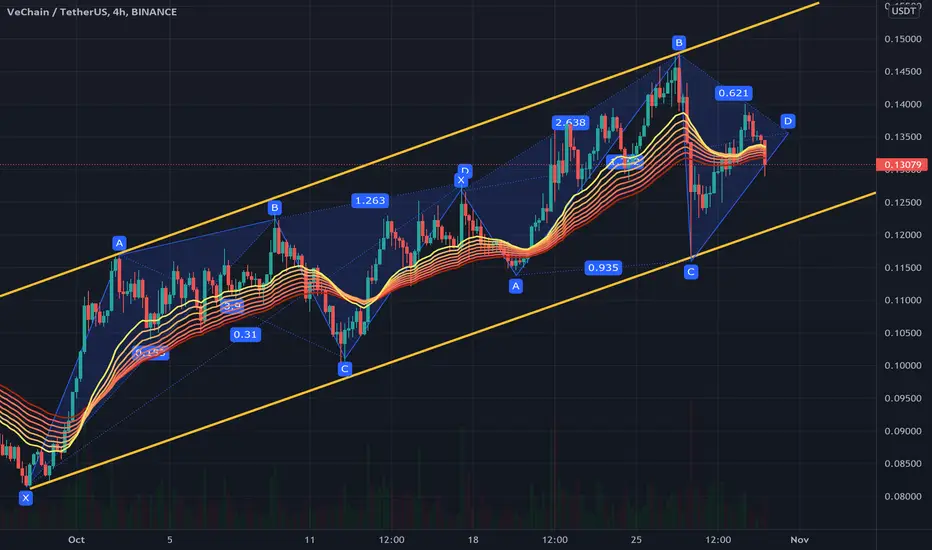
📊Long investment deal📊
VeChain’s blockchain is built on a modified version of the Ethereum codebase and it optimizes its blockchain (called Thor) for enterprise use cases. Thor is the core of the blockchain, which functions as a basic layer for message exchange, key management, and data storage. Business applications can be built on top of Thor for smart contract creation and data auditing. VeChain plans to develop Thor smart contract development with visualization tools and support for multiple languages. VeChain IDs are a key component of the blockchain. Physical good tracked with VeChain are assigned digital identities created with a SHA256 hash and tracked with NFC, RFID, and QR codes. It uses a Proof of Authority (PoA) consensus mechanism that relies on masternodes to validate transactions. Authoritative masternodes are selected by the VeChain Foundation and the VeChain community after Know Your Customer (KYC) processes. VeChain’s blockchain circulates two tokens. The first, VET, is the network’s primary medium of exchange for governance and payments. The second, VeThor (VTHO), is a token for a lower transaction fee model that is credited to VeChain users daily based on the amount of VET they hold. VeThor is used to executing smart contracts and transactions on the VeChain blockchain. VeChain blockchain users are categorized as users and service providers. VeChain users include manufacturers, retailers, consumers, and other enterprise clients. Service providers build specific applications on the network like smart contracts and other blockchain-based software applications.
VeChain’s blockchain is built on a modified version of the Ethereum codebase and it optimizes its blockchain (called Thor) for enterprise use cases. Thor is the core of the blockchain, which functions as a basic layer for message exchange, key management, and data storage. Business applications can be built on top of Thor for smart contract creation and data auditing. VeChain plans to develop Thor smart contract development with visualization tools and support for multiple languages. VeChain IDs are a key component of the blockchain. Physical good tracked with VeChain are assigned digital identities created with a SHA256 hash and tracked with NFC, RFID, and QR codes. It uses a Proof of Authority (PoA) consensus mechanism that relies on masternodes to validate transactions. Authoritative masternodes are selected by the VeChain Foundation and the VeChain community after Know Your Customer (KYC) processes. VeChain’s blockchain circulates two tokens. The first, VET, is the network’s primary medium of exchange for governance and payments. The second, VeThor (VTHO), is a token for a lower transaction fee model that is credited to VeChain users daily based on the amount of VET they hold. VeThor is used to executing smart contracts and transactions on the VeChain blockchain. VeChain blockchain users are categorized as users and service providers. VeChain users include manufacturers, retailers, consumers, and other enterprise clients. Service providers build specific applications on the network like smart contracts and other blockchain-based software applications.

免责声明
这些信息和出版物并非旨在提供,也不构成TradingView提供或认可的任何形式的财务、投资、交易或其他类型的建议或推荐。请阅读使用条款了解更多信息。
免责声明
这些信息和出版物并非旨在提供,也不构成TradingView提供或认可的任何形式的财务、投资、交易或其他类型的建议或推荐。请阅读使用条款了解更多信息。