
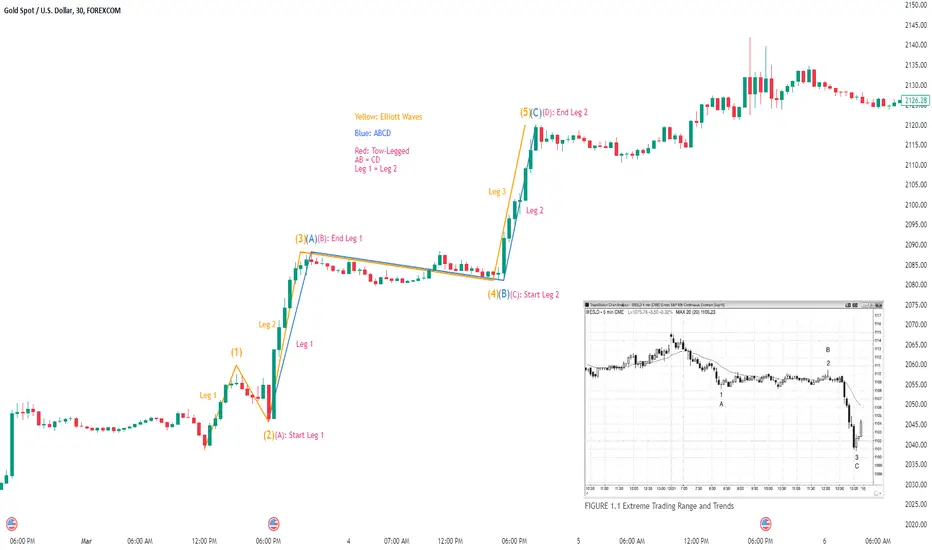
Figure 1.1 has two extreme trends and one extreme trading range. This day began with a strong bear trend down to bar 1, then entered an unusually tight trading range until it broke out to the upside by one tick at bar 2, and then reversed to a downside breakout into an exceptionally strong trend down to bar 3.
Two-legged moves are common, but unfortunately the traditional nomenclature is confusing. When one occurs as a pullback in a trend, it is often called an ABC move. When the two legs are the first two legs of a trend, Elliott Wave technicians instead refer to the legs as waves 1 and 3, with the pullback between them as wave 2. Some traders who are looking for a measured move will look for a reversal back up after the second leg reaches about the same size as the first leg. These technicians often call the pattern an AB = CD move. The first leg down begins with point A and ends with point B (bar 1 in Figure 1.1, which is also A in the ABC move), and the second leg begins with point C (bar 2 in Figure 1.1, which is also B in the ABC move) and ends with point D (bar 3 in Figure 1.1, which is also C in the ABC move).
Two-legged moves are common, but unfortunately the traditional nomenclature is confusing. When one occurs as a pullback in a trend, it is often called an ABC move. When the two legs are the first two legs of a trend, Elliott Wave technicians instead refer to the legs as waves 1 and 3, with the pullback between them as wave 2. Some traders who are looking for a measured move will look for a reversal back up after the second leg reaches about the same size as the first leg. These technicians often call the pattern an AB = CD move. The first leg down begins with point A and ends with point B (bar 1 in Figure 1.1, which is also A in the ABC move), and the second leg begins with point C (bar 2 in Figure 1.1, which is also B in the ABC move) and ends with point D (bar 3 in Figure 1.1, which is also C in the ABC move).

免责声明
这些信息和出版物并非旨在提供,也不构成TradingView提供或认可的任何形式的财务、投资、交易或其他类型的建议或推荐。请阅读使用条款了解更多信息。