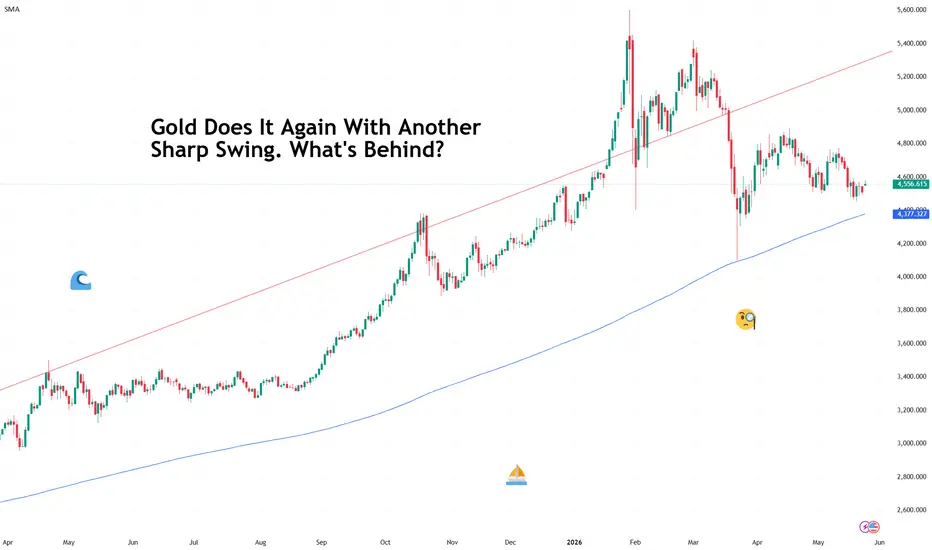
Gold  XAUUSD is doing that thing again.
One minute bullion is shooting higher into the atmosphere. The next minute it is tumbling hundreds of dollars as traders get squashed and squeezed no matter their bets’ direction. It’s all about different narratives colliding.
The precious metal swung wildly again Monday after President Donald Trump said negotiations with Iran were progressing in an “orderly and constructive manner,” cooling fears that the Middle East conflict was about to spiral even further out of control. Prices added 1% to top $4,560, sliding a bit from the intraday high of $4,580 an ounce.
Oil prices dropped UKOIL more than 5% shortly afterward, giving investors a brief moment to unclench their jaws and maybe even look away from the futures screen (US stocks are closed Monday while Japanese stocks wait for no one).
🌍 Gold Is Trading More Than Just Fear
At first glance, gold’s recent price action seems straightforward. Rising geopolitical tensions usually push investors toward traditional safe havens, which include assets people flock to during uncertainty. Gold has played that role for centuries.
But the current environment is far messier.
The conflict involving Iran, the US naval blockade near the Strait of Hormuz, and concerns around global energy supply have created a tangled web connecting oil, inflation, interest rates, currencies, and investor psychology all at once.
That means gold traders are effectively trying to solve five puzzles simultaneously while TradingView charts flash red and green like it’s December.
When oil spikes sharply, markets begin worrying about inflation returning. Higher inflation can pressure central banks to keep interest rates elevated. Higher rates typically reduce gold’s appeal because bullion pays no yield. Investors can earn interest elsewhere.
Then the narrative flips again.
If geopolitical risks weaken growth or force central banks toward rate cuts, gold suddenly becomes attractive because lower interest rates reduce the opportunity cost of holding it. In simple terms, when bonds and cash pay less, shiny metal sitting in a vault starts looking fashionable again.
That dynamic explains why gold can rally on both fear and optimism depending on which macro thread traders decide to pull that day.
Trump’s latest comments eased some of the oil-induced panic.
Lower oil prices immediately calmed inflation expectations, which helped stabilize broader markets heading into the Memorial Day holiday closure. Global equities breathed easier. Bond yields softened. It’s nice to be invested.
📈 Pullbacks Are for Shopping
Gold’s strange resilience says something important about the current market mood.
Even after massive rallies, investors continue treating sharp pullbacks as opportunities rather than warnings. Central-bank buying remains strong globally, rate-cut expectations still linger beneath the surface, and geopolitical uncertainty continues hovering over nearly every major asset class.
That creates an environment where traders hesitate to stay bearish on bullion for very long.
The metal’s daily swings may look chaotic, but underneath the volatility demand keeps returning.
🏦 The Fed's Complicated Play
Another wrinkle comes from the Federal Reserve itself.
Kevin Warsh officially stepped into the Fed leadership role last week, and markets are still trying to decode how aggressive the central bank may become if inflation cools further.
Traders increasingly believe lower rates could arrive later this year if energy prices stabilize and economic growth slows modestly. Warsh’s first rate call comes in about three weeks, on June 17 (ref: Economic calendar).
At the same time, persistent inflation risks tied to geopolitical tensions could complicate the picture. A prolonged conflict that pushes oil back upward would likely revive fears of sticky inflation and tighter monetary policy.
That balancing act explains the enormous intraday swings traders have been dealing with recently.
Off to you: How are you navigating one of those periods where seesawing volatility can easily take you out? Buying the dip or sitting it out? Share your approach in the comments!
XAUUSD is doing that thing again.One minute bullion is shooting higher into the atmosphere. The next minute it is tumbling hundreds of dollars as traders get squashed and squeezed no matter their bets’ direction. It’s all about different narratives colliding.
The precious metal swung wildly again Monday after President Donald Trump said negotiations with Iran were progressing in an “orderly and constructive manner,” cooling fears that the Middle East conflict was about to spiral even further out of control. Prices added 1% to top $4,560, sliding a bit from the intraday high of $4,580 an ounce.
Oil prices dropped
UKOIL more than 5% shortly afterward, giving investors a brief moment to unclench their jaws and maybe even look away from the futures screen (US stocks are closed Monday while Japanese stocks wait for no one).🌍 Gold Is Trading More Than Just Fear
At first glance, gold’s recent price action seems straightforward. Rising geopolitical tensions usually push investors toward traditional safe havens, which include assets people flock to during uncertainty. Gold has played that role for centuries.
But the current environment is far messier.
The conflict involving Iran, the US naval blockade near the Strait of Hormuz, and concerns around global energy supply have created a tangled web connecting oil, inflation, interest rates, currencies, and investor psychology all at once.
That means gold traders are effectively trying to solve five puzzles simultaneously while TradingView charts flash red and green like it’s December.
When oil spikes sharply, markets begin worrying about inflation returning. Higher inflation can pressure central banks to keep interest rates elevated. Higher rates typically reduce gold’s appeal because bullion pays no yield. Investors can earn interest elsewhere.
Then the narrative flips again.
If geopolitical risks weaken growth or force central banks toward rate cuts, gold suddenly becomes attractive because lower interest rates reduce the opportunity cost of holding it. In simple terms, when bonds and cash pay less, shiny metal sitting in a vault starts looking fashionable again.
That dynamic explains why gold can rally on both fear and optimism depending on which macro thread traders decide to pull that day.
Trump’s latest comments eased some of the oil-induced panic.
Lower oil prices immediately calmed inflation expectations, which helped stabilize broader markets heading into the Memorial Day holiday closure. Global equities breathed easier. Bond yields softened. It’s nice to be invested.
📈 Pullbacks Are for Shopping
Gold’s strange resilience says something important about the current market mood.
Even after massive rallies, investors continue treating sharp pullbacks as opportunities rather than warnings. Central-bank buying remains strong globally, rate-cut expectations still linger beneath the surface, and geopolitical uncertainty continues hovering over nearly every major asset class.
That creates an environment where traders hesitate to stay bearish on bullion for very long.
The metal’s daily swings may look chaotic, but underneath the volatility demand keeps returning.
🏦 The Fed's Complicated Play
Another wrinkle comes from the Federal Reserve itself.
Kevin Warsh officially stepped into the Fed leadership role last week, and markets are still trying to decode how aggressive the central bank may become if inflation cools further.
Traders increasingly believe lower rates could arrive later this year if energy prices stabilize and economic growth slows modestly. Warsh’s first rate call comes in about three weeks, on June 17 (ref: Economic calendar).
At the same time, persistent inflation risks tied to geopolitical tensions could complicate the picture. A prolonged conflict that pushes oil back upward would likely revive fears of sticky inflation and tighter monetary policy.
That balancing act explains the enormous intraday swings traders have been dealing with recently.
Off to you: How are you navigating one of those periods where seesawing volatility can easily take you out? Buying the dip or sitting it out? Share your approach in the comments!

Share TradingView with a friend:
tradingview.com/share-your-love/
Check out all #tradingviewtips
tradingview.com/ideas/tradingviewtips/?type=education
New Tools and Features:
tradingview.com/blog/en/
tradingview.com/share-your-love/
Check out all #tradingviewtips
tradingview.com/ideas/tradingviewtips/?type=education
New Tools and Features:
tradingview.com/blog/en/
相关出版物
免责声明
这些信息和出版物并非旨在提供,也不构成TradingView提供或认可的任何形式的财务、投资、交易或其他类型的建议或推荐。请阅读使用条款了解更多信息。
Share TradingView with a friend:
tradingview.com/share-your-love/
Check out all #tradingviewtips
tradingview.com/ideas/tradingviewtips/?type=education
New Tools and Features:
tradingview.com/blog/en/
tradingview.com/share-your-love/
Check out all #tradingviewtips
tradingview.com/ideas/tradingviewtips/?type=education
New Tools and Features:
tradingview.com/blog/en/
相关出版物
免责声明
这些信息和出版物并非旨在提供,也不构成TradingView提供或认可的任何形式的财务、投资、交易或其他类型的建议或推荐。请阅读使用条款了解更多信息。