
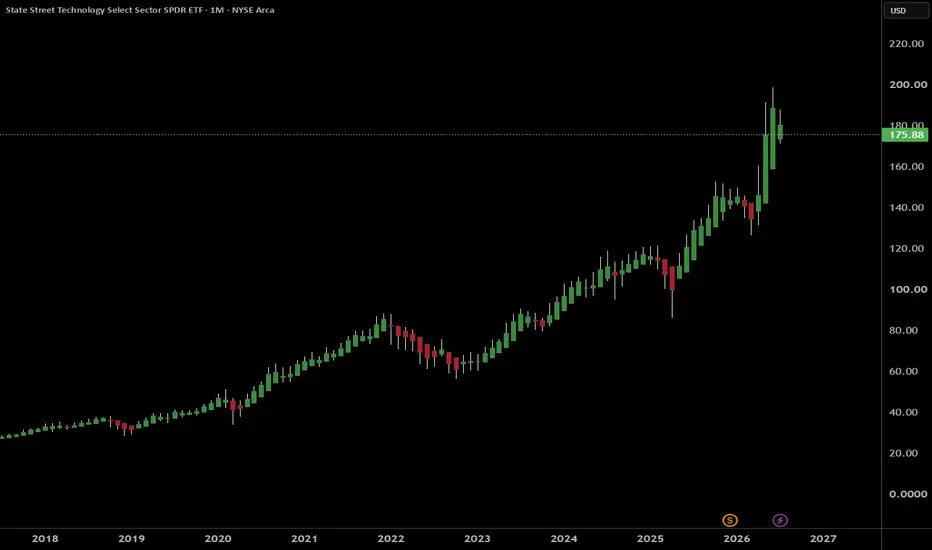
Tech is strong is something people say. Here's how you check it instead.
A sector being up means nothing on its own. On a good day, almost everything is up. What you want to know is whether it's outrunning the market.
Relative strength, plainly Relative strength (RS) is just this: how a stock or sector performed compared to the market over the same stretch of time. If the S&P is up 3% over sixty days and a sector is up 8%, that sector has real relative strength. If it's up 1%, it's a laggard wearing a green candle.
How to check it yourself
Pick a lookback — sixty days is a reasonable swing-trading window.
Measure the sector ETF's percent change over that window.
Measure SPY's percent change over the same window.
Subtract. Positive means it's leading. Negative means it's following.
Do that for all eleven sector ETFs and sort them. The top of that list is where the money is going.
Why it's worth the trouble Stocks move with their group more often than not. Buying a decent setup in a leading sector and buying the same setup in a lagging one are two different trades. Picking the pond before you pick the fish is most of the work.
The honest caveat Strength is backward-looking. A sector that led for sixty days can hand the baton over tomorrow. That's why you check where the money is going, not where it went once, and why the check gets repeated — not memorized.
Educational only — not financial advice.

免责声明
这些信息和出版物并非旨在提供,也不构成TradingView提供或认可的任何形式的财务、投资、交易或其他类型的建议或推荐。请阅读使用条款了解更多信息。