
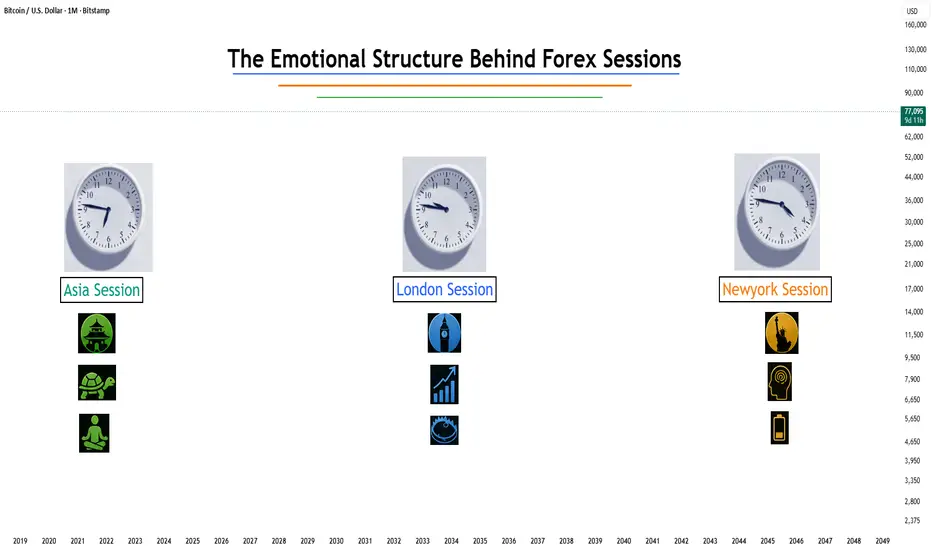
Most traders view Forex sessions only in terms of volatility and timing.
♦️ The Asian session is considered slow.
♦️ The London session is known for movement.
♦️ The New York session is associated with volatility and news.
But, after spending enough time in the market, something deeper becomes visible. Every session creates a completely different psychological environment. Price behavior changes throughout the day, but trader behavior changes with it as well.
🎲 Asian Session: The Battle Against Impatience
💠 Why the Market Feels Slow:
The Asian session is usually calm and slow-moving. Price often trades inside tight ranges, while volatility remains much lower compared to London or New York.
For many traders, this becomes mentally uncomfortable because the lack of movement slowly creates boredom.
💠 How Traders Start Forcing Trades:
As the market stays quiet:
1. Small candles begin looking important.
2. Weak setups start feeling tradable.
3. Traders start overanalyzing tiny movements.
4. Boredom slowly creates impulsive entries.
This is why overtrading becomes very common during Asian hours, even when the market offers little opportunity.
💠 What Experienced Traders Understand:
Experienced traders usually approach this session differently.
Instead of chasing movement, they:
1. Stay patient
2. Protect emotional energy
3. wait for a clean structure
4. Avoid unnecessary trades
The Asian session rewards patience far more than aggression.
🎲 London Session: The Rise of Emotional Pressure
💠 Why London Changes Everything:
When London opens, market behavior changes quickly.
Liquidity increases, volatility expands, and momentum starts entering the market. This is where Forex often begins making meaningful directional moves.
💠 The Psychological Shift During London:
As volatility increases, trader emotions change immediately.
Suddenly:
1. Breakouts begin feeling emotionally exciting as momentum enters the market
2. Volatility creates urgency, which pushes traders toward faster decisions
3. Many traders start fearing missed opportunities during strong moves
4. Emotional execution increases as reactions become less disciplined
The London session creates strong opportunities, but it also creates strong emotional pressure.
💠 Why Traders Struggle Here
Many traders become too reactive during London volatility.
Large candles create emotional confidence very quickly, which often leads to:
1. Traders start chasing breakouts emotionally
2. Entries become late after the momentum has already expanded
3. Fear of missing out begins controlling decisions
4. Risk management slowly becomes weaker
The opportunities are real, but emotional discipline becomes much harder to maintain.
🎲 New York Session: Volatility and Mental Fatigue
💠 The Market Carries Emotion Into New York
By the time New York opens, traders have already spent hours watching charts and reacting to movement from London.
This creates emotional carryover.
If London trends aggressively, traders expect continuation. If volatility becomes unstable, emotional reactions increase even more.
💠 Why New York Feels Unpredictable
The New York session can:
1. Continue trends aggressively after the London momentum.
2. Reverse direction sharply and trap traders.
3. React violently to economic news and volatility spikes.
This uncertainty creates heavy psychological pressure inside the market.
💠 The Problem of Emotional Exhaustion
After spending hours focused on charts, mental energy starts dropping.
This is why many traders lose discipline during New York trading hours:
1. Impulsive entries
2. Revenge trading
3. Panic reactions
4. Emotional decision-making
Volatility and exhaustion begin to combine.
Conclusion:
Forex sessions are not only different because of volatility or timing.
They are different because trader psychology changes throughout the trading day.
1. Asian session tests patience.
2. London session tests emotional control.
3. New York session tests discipline under pressure.
The market changes personality throughout the day.
We will update further information soon.
♦️ The Asian session is considered slow.
♦️ The London session is known for movement.
♦️ The New York session is associated with volatility and news.
But, after spending enough time in the market, something deeper becomes visible. Every session creates a completely different psychological environment. Price behavior changes throughout the day, but trader behavior changes with it as well.
Understanding this shift matters because many trading mistakes are not due to poor analysis. They happen because traders use the wrong mindset in the wrong session.
🎲 Asian Session: The Battle Against Impatience
💠 Why the Market Feels Slow:
The Asian session is usually calm and slow-moving. Price often trades inside tight ranges, while volatility remains much lower compared to London or New York.
For many traders, this becomes mentally uncomfortable because the lack of movement slowly creates boredom.
💠 How Traders Start Forcing Trades:
As the market stays quiet:
1. Small candles begin looking important.
2. Weak setups start feeling tradable.
3. Traders start overanalyzing tiny movements.
4. Boredom slowly creates impulsive entries.
This is why overtrading becomes very common during Asian hours, even when the market offers little opportunity.
💠 What Experienced Traders Understand:
Experienced traders usually approach this session differently.
Instead of chasing movement, they:
1. Stay patient
2. Protect emotional energy
3. wait for a clean structure
4. Avoid unnecessary trades
The Asian session rewards patience far more than aggression.
🎲 London Session: The Rise of Emotional Pressure
💠 Why London Changes Everything:
When London opens, market behavior changes quickly.
Liquidity increases, volatility expands, and momentum starts entering the market. This is where Forex often begins making meaningful directional moves.
💠 The Psychological Shift During London:
As volatility increases, trader emotions change immediately.
Suddenly:
1. Breakouts begin feeling emotionally exciting as momentum enters the market
2. Volatility creates urgency, which pushes traders toward faster decisions
3. Many traders start fearing missed opportunities during strong moves
4. Emotional execution increases as reactions become less disciplined
The London session creates strong opportunities, but it also creates strong emotional pressure.
💠 Why Traders Struggle Here
Many traders become too reactive during London volatility.
Large candles create emotional confidence very quickly, which often leads to:
1. Traders start chasing breakouts emotionally
2. Entries become late after the momentum has already expanded
3. Fear of missing out begins controlling decisions
4. Risk management slowly becomes weaker
The opportunities are real, but emotional discipline becomes much harder to maintain.
🎲 New York Session: Volatility and Mental Fatigue
💠 The Market Carries Emotion Into New York
By the time New York opens, traders have already spent hours watching charts and reacting to movement from London.
This creates emotional carryover.
If London trends aggressively, traders expect continuation. If volatility becomes unstable, emotional reactions increase even more.
💠 Why New York Feels Unpredictable
The New York session can:
1. Continue trends aggressively after the London momentum.
2. Reverse direction sharply and trap traders.
3. React violently to economic news and volatility spikes.
This uncertainty creates heavy psychological pressure inside the market.
💠 The Problem of Emotional Exhaustion
After spending hours focused on charts, mental energy starts dropping.
This is why many traders lose discipline during New York trading hours:
1. Impulsive entries
2. Revenge trading
3. Panic reactions
4. Emotional decision-making
Volatility and exhaustion begin to combine.
Conclusion:
Forex sessions are not only different because of volatility or timing.
They are different because trader psychology changes throughout the trading day.
1. Asian session tests patience.
2. London session tests emotional control.
3. New York session tests discipline under pressure.
The market changes personality throughout the day.
We will update further information soon.
Anmerkung

Verbundene Veröffentlichungen
Haftungsausschluss
Die Informationen und Veröffentlichungen sind nicht als Finanz-, Anlage-, Handels- oder andere Arten von Ratschlägen oder Empfehlungen gedacht, die von TradingView bereitgestellt oder gebilligt werden, und stellen diese nicht dar. Lesen Sie mehr in den Nutzungsbedingungen.
Verbundene Veröffentlichungen
Haftungsausschluss
Die Informationen und Veröffentlichungen sind nicht als Finanz-, Anlage-, Handels- oder andere Arten von Ratschlägen oder Empfehlungen gedacht, die von TradingView bereitgestellt oder gebilligt werden, und stellen diese nicht dar. Lesen Sie mehr in den Nutzungsbedingungen.