
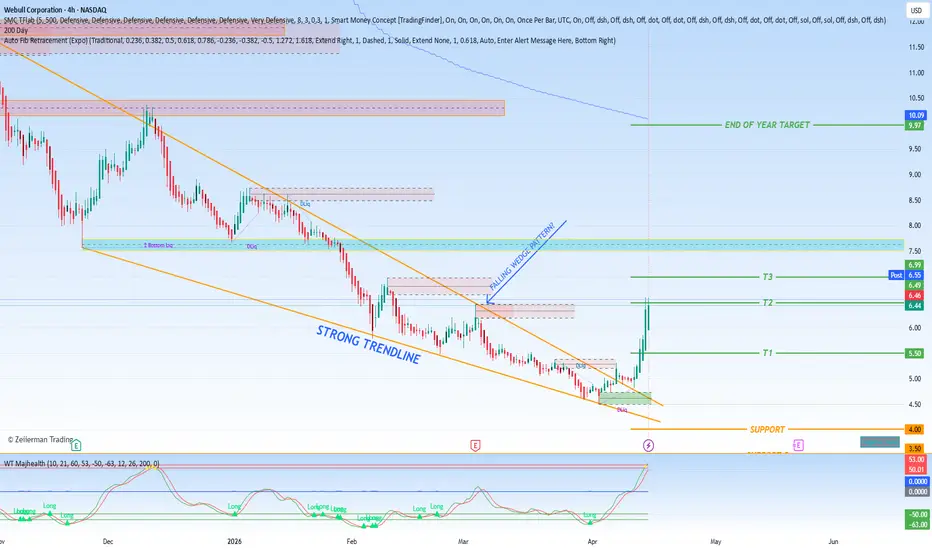
Webull (NASDAQ: BULL), the popular retail trading platform, saw its stock price jump more than 9% on Wednesday following a landmark decision by the U.S. Securities and Exchange Commission (SEC). The regulator formally approved a major overhaul of the long-standing pattern day-trading rule, effectively eliminating the requirement that investors maintain a minimum of $25,000 in a margin account in order to execute frequent trades. The decision marks one of the most significant changes to retail trading regulations in years, and its impact was felt broadly across the sector. Shares of Webull's chief rival, Robinhood Markets (NASDAQ: HOOD), also advanced on the news, rising 5.7% in Wednesday trading.
The SEC's approval came in response to a proposal submitted by the Financial Industry Regulatory Authority (FINRA), which had recommended scrapping the existing restrictions. Under the old framework, investors with less than $25,000 in assets were barred from making more than four day trades within any rolling five-business-day period. That threshold had been a source of frustration for many smaller retail traders, who often found themselves locked out of active trading strategies simply because they did not meet the minimum equity requirement.
Under the newly approved framework, that restriction has been removed entirely. Instead of a fixed dollar threshold, all customers will now be required to maintain sufficient equity in their accounts to cover the real-time risk of their positions, regardless of account size. This risk-based approach is intended to protect both investors and brokerage firms from excessive losses while still allowing greater flexibility for those with smaller account balances. The shift effectively replaces an arbitrary numerical cap with a more dynamic and personalized assessment of trading risk.
Sherry Haywood, Assistant Secretary of the SEC, noted that public feedback on the proposed changes had been "overwhelmingly supportive." She confirmed that the new rules remove both the minimum-equity threshold and the formal regulatory definition of a "pattern day trader," a designation that had carried significant compliance burdens for both investors and brokers. By eliminating these constructs, the SEC aims to modernize the regulatory landscape for a new generation of retail investors.
The response from retail brokers was swift and enthusiastic. Anthony Denier, Group President and U.S. CEO of Webull, told Investing.com that the reform was long overdue. "PDT reform is long overdue," Denier said, adding that "today's retail investors are more informed, more engaged, and equipped with better tools than ever before." He argued that updating the rule was not about encouraging reckless speculation but rather about aligning regulation with the actual functioning of modern financial markets. "Ensuring access isn't arbitrarily limited," he explained, is a core principle of the new approach.
Denier also revealed that Webull had been actively preparing for this regulatory transition as part of the company's broader strategic focus on access, transparency, and investor controls. "We've been preparing for this shift because we believe the future of retail investing is rooted in access, transparency, and control," he said. "As the landscape evolves, our focus remains on giving investors the tools and insights they need to trade responsibly." His comments underscored a broader industry sentiment that the old rules had become outdated in an era of commission-free trading, real-time data, and sophisticated retail trading platforms.
The market reaction was immediate and positive. Webull's 9% gain reflected investor optimism that the rule change would expand the company's potential user base by removing a significant barrier to entry for active traders. Similarly, Robinhood's 5.7% rise suggested that the benefits of the overhaul are expected to flow broadly across the retail brokerage sector, rather than being limited to a single platform. Both companies stand to gain from an influx of smaller accounts that can now engage in day trading strategies without the fear of being flagged or restricted under the old $25,000 threshold.
For retail investors, the change is likely to be felt most acutely by those who have been trading with modest account sizes. Previously, many such investors found themselves unable to execute more than a handful of day trades per week, forcing them to either limit their activity or move to unregulated platforms. Under the new risk-based framework, that constraint disappears, replaced by a system that ties trading freedom to real-time account equity rather than an arbitrary minimum. While critics may worry about increased risk-taking by inexperienced traders, supporters argue that the old rule was a blunt instrument that punished responsible small investors alongside reckless ones.
Looking ahead, the SEC's decision is expected to spur further innovation among retail brokers, who will now need to develop and implement sophisticated real-time risk-monitoring systems to comply with the new framework. For Webull and Robinhood, both of which have built their brands around democratizing access to financial markets, the rule change represents both an opportunity and a responsibility. As Denier put it, the goal is not simply to enable more trading, but to equip investors with the tools and insights needed to trade responsibly in a more open and dynamic regulatory environment.
The SEC's approval came in response to a proposal submitted by the Financial Industry Regulatory Authority (FINRA), which had recommended scrapping the existing restrictions. Under the old framework, investors with less than $25,000 in assets were barred from making more than four day trades within any rolling five-business-day period. That threshold had been a source of frustration for many smaller retail traders, who often found themselves locked out of active trading strategies simply because they did not meet the minimum equity requirement.
Under the newly approved framework, that restriction has been removed entirely. Instead of a fixed dollar threshold, all customers will now be required to maintain sufficient equity in their accounts to cover the real-time risk of their positions, regardless of account size. This risk-based approach is intended to protect both investors and brokerage firms from excessive losses while still allowing greater flexibility for those with smaller account balances. The shift effectively replaces an arbitrary numerical cap with a more dynamic and personalized assessment of trading risk.
Sherry Haywood, Assistant Secretary of the SEC, noted that public feedback on the proposed changes had been "overwhelmingly supportive." She confirmed that the new rules remove both the minimum-equity threshold and the formal regulatory definition of a "pattern day trader," a designation that had carried significant compliance burdens for both investors and brokers. By eliminating these constructs, the SEC aims to modernize the regulatory landscape for a new generation of retail investors.
The response from retail brokers was swift and enthusiastic. Anthony Denier, Group President and U.S. CEO of Webull, told Investing.com that the reform was long overdue. "PDT reform is long overdue," Denier said, adding that "today's retail investors are more informed, more engaged, and equipped with better tools than ever before." He argued that updating the rule was not about encouraging reckless speculation but rather about aligning regulation with the actual functioning of modern financial markets. "Ensuring access isn't arbitrarily limited," he explained, is a core principle of the new approach.
Denier also revealed that Webull had been actively preparing for this regulatory transition as part of the company's broader strategic focus on access, transparency, and investor controls. "We've been preparing for this shift because we believe the future of retail investing is rooted in access, transparency, and control," he said. "As the landscape evolves, our focus remains on giving investors the tools and insights they need to trade responsibly." His comments underscored a broader industry sentiment that the old rules had become outdated in an era of commission-free trading, real-time data, and sophisticated retail trading platforms.
The market reaction was immediate and positive. Webull's 9% gain reflected investor optimism that the rule change would expand the company's potential user base by removing a significant barrier to entry for active traders. Similarly, Robinhood's 5.7% rise suggested that the benefits of the overhaul are expected to flow broadly across the retail brokerage sector, rather than being limited to a single platform. Both companies stand to gain from an influx of smaller accounts that can now engage in day trading strategies without the fear of being flagged or restricted under the old $25,000 threshold.
For retail investors, the change is likely to be felt most acutely by those who have been trading with modest account sizes. Previously, many such investors found themselves unable to execute more than a handful of day trades per week, forcing them to either limit their activity or move to unregulated platforms. Under the new risk-based framework, that constraint disappears, replaced by a system that ties trading freedom to real-time account equity rather than an arbitrary minimum. While critics may worry about increased risk-taking by inexperienced traders, supporters argue that the old rule was a blunt instrument that punished responsible small investors alongside reckless ones.
Looking ahead, the SEC's decision is expected to spur further innovation among retail brokers, who will now need to develop and implement sophisticated real-time risk-monitoring systems to comply with the new framework. For Webull and Robinhood, both of which have built their brands around democratizing access to financial markets, the rule change represents both an opportunity and a responsibility. As Denier put it, the goal is not simply to enable more trading, but to equip investors with the tools and insights needed to trade responsibly in a more open and dynamic regulatory environment.

Verbundene Veröffentlichungen
Haftungsausschluss
Die Informationen und Veröffentlichungen sind nicht als Finanz-, Anlage-, Handels- oder andere Arten von Ratschlägen oder Empfehlungen gedacht, die von TradingView bereitgestellt oder gebilligt werden, und stellen diese nicht dar. Lesen Sie mehr in den Nutzungsbedingungen.
Verbundene Veröffentlichungen
Haftungsausschluss
Die Informationen und Veröffentlichungen sind nicht als Finanz-, Anlage-, Handels- oder andere Arten von Ratschlägen oder Empfehlungen gedacht, die von TradingView bereitgestellt oder gebilligt werden, und stellen diese nicht dar. Lesen Sie mehr in den Nutzungsbedingungen.