
In a move that signals a major strategic shift for the Finnish telecommunications giant, Nokia (NYSE: NOK) has announced a pivotal partnership with Telia Finland aimed at developing and rigorously testing cutting-edge AI-powered Radio Access Network (AI-RAN) use cases. The collaboration, unveiled during the whirlwind of activity at Mobile World Congress (MWC) 2026 in Barcelona, is far more than a simple technology trial; it represents a foundational step in Nokia's ambitious plan to redefine the capabilities of modern telecom infrastructure. By embedding artificial intelligence directly into the core of network architecture, Nokia is positioning itself at the vanguard of the next great technological wave: the convergence of advanced connectivity and ubiquitous intelligence.
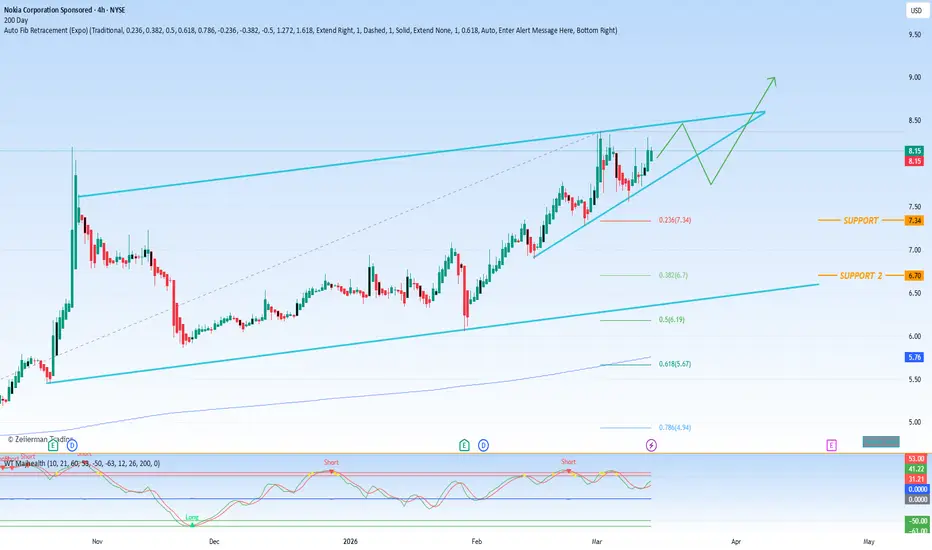
This initiative is designed to do more than just improve your smartphone's download speed. The core objective is to explore and commercialize a new generation of AI-enabled technologies that can serve a vast array of sectors, from industrial automation and smart cities to mission-critical operations like public safety and remote healthcare. As the news reverberated through the market, Nokia's stock was seen holding firm near its annual highs, a clear indicator of investor optimism surrounding the company's strategic direction.
A Deep Dive into the AI-RAN Initiative: More Than Just a Network Upgrade
The AI-RAN (AI-enabled Radio Access Network) initiative, first hinted at during the early days of MWC26, is a significant leap forward in the quest for hyper-efficient, self-optimizing network infrastructure. The partnership between Nokia and Telia Finland is not merely a vendor-client relationship; it is a strategic alliance aimed at co-creating an entirely new ecosystem for AI-driven applications that live at the edge of the network.
Traditionally, Radio Access Networks have been hardware-centric and statically configured. By injecting AI into the RAN, Nokia and Telia are aiming to create a network that is dynamic, predictive, and autonomous. The collaboration will focus on several key areas:
Predictive Network Optimization: Using machine learning algorithms to analyze traffic patterns in real-time, the AI-RAN can anticipate congestion points and automatically reallocate spectrum and compute resources. This ensures a consistently high quality of service, even during peak demand, smoothing the user experience for everything from 4K video streaming to cloud gaming.
Radical Energy Efficiency: One of the most promising applications of AI in this context is energy savings. 5G networks, while powerful, can be energy-intensive. The AI-RAN will be trained to intelligently power down specific components or shift into low-energy modes during periods of low traffic without compromising the network's ability to react instantly to a surge in demand. This is critical for telecom operators grappling with both operational costs and sustainability goals.
Network as a Sensor: By leveraging the inherent properties of radio waves, the AI-RAN can effectively turn the entire network into a distributed sensor. This allows for the detection and analysis of movement and activity in the physical environment, opening up entirely new use cases that go far beyond communication, such as advanced security, traffic monitoring, and even gesture-based control systems.
The Strategic Implications for the 5G and 6G Eras
This partnership is pivotal in advancing the capabilities of current 5G networks, but its true significance lies in its role as a blueprint for the future. The focus on commercializing AI-enabled systems for various industries is a direct acknowledgment that the next phase of growth for telecom operators will come from enterprise and industrial applications, not just consumer data plans.
Nokia is betting that the "AI Supercycle"—the period where AI becomes embedded in every aspect of business and daily life—will be fundamentally dependent on a new kind of connectivity. This connectivity must be not only fast and low-latency but also intelligent, reliable, and transparent. The AI-RAN is designed to be the nervous system for this new world, providing the foundational layer upon which autonomous factories, drone fleets, and smart city grids can be built.
Pallavi Mahajan, Nokia’s Chief Technology and AI Officer, emphasized the transformative nature of this work. In a statement, she highlighted that this collaboration is a crucial element in their overarching AI-RAN strategy, which is aimed at building a powerful and open ecosystem that can support a diverse range of developers and innovators. The goal is to democratize access to network intelligence, allowing third parties to create applications that were previously unimaginable.
MWC26 Showcase: A Glimpse into a Cognitive Future
The partnership announcement was just one part of Nokia's aggressive push at MWC26. The company used the global stage to showcase several live demonstrations of AI-RAN technologies, giving attendees a tangible glimpse into a future where networks are cognitive and software-defined. These demonstrations were designed to illustrate the profound shift from connectivity-only infrastructure to a platform that can perceive, reason, and act.
Key highlights from the Nokia booth included:
Vision AI with Reasoning Capabilities: Demonstrations showed how AI integrated into the network could analyze video feeds not just to identify objects, but to understand context and reason about complex scenarios. For example, a system could distinguish between a worker falling in a factory and a piece of equipment being dropped, triggering an appropriate, automated emergency response.
Radio Networks as Environmental Sensors: Nokia showcased its technology's ability to use radio signals to monitor physical environments. This "RF sensing" can detect intrusions in secure areas, monitor the movement of people and assets in a warehouse, or even analyze crowd density and flow at a public event, all without relying on cameras.
Expanding the "Network as Code" Platform: In a parallel announcement on Tuesday, Nokia disclosed that it is significantly broadening its "Network as Code" initiative. This involves bringing additional telecom operators from around the world into the fold, creating a larger, more attractive market for developers. Crucially, Nokia also announced a strengthened partnership with Google Cloud to embed advanced "agentic AI" directly into its network APIs. This means that developers will soon be able to create AI agents that can not only access network data but also program and control network functions to optimize their own performance, ushering in an era of truly autonomous, self-driving networks.
Market Response:
The market's reaction to this flurry of innovation was muted but positive. According to data from Benzinga Pro, Nokia Oyj shares were up 0.85% at $8.13 on Wednesday. While the gain is modest, the fact that the stock is holding near its annual highs suggests that long-term investors are buying into the company's vision. The market seems to recognize that Nokia is no longer just a hardware vendor; it is pivoting to become a key software and intelligence provider for the AI-driven, hyper-connected world of the future. This strategic transformation, if successful, could unlock significant long-term value, making the current share price a reflection of a company in the midst of a profound and promising evolution.
This initiative is designed to do more than just improve your smartphone's download speed. The core objective is to explore and commercialize a new generation of AI-enabled technologies that can serve a vast array of sectors, from industrial automation and smart cities to mission-critical operations like public safety and remote healthcare. As the news reverberated through the market, Nokia's stock was seen holding firm near its annual highs, a clear indicator of investor optimism surrounding the company's strategic direction.
A Deep Dive into the AI-RAN Initiative: More Than Just a Network Upgrade
The AI-RAN (AI-enabled Radio Access Network) initiative, first hinted at during the early days of MWC26, is a significant leap forward in the quest for hyper-efficient, self-optimizing network infrastructure. The partnership between Nokia and Telia Finland is not merely a vendor-client relationship; it is a strategic alliance aimed at co-creating an entirely new ecosystem for AI-driven applications that live at the edge of the network.
Traditionally, Radio Access Networks have been hardware-centric and statically configured. By injecting AI into the RAN, Nokia and Telia are aiming to create a network that is dynamic, predictive, and autonomous. The collaboration will focus on several key areas:
Predictive Network Optimization: Using machine learning algorithms to analyze traffic patterns in real-time, the AI-RAN can anticipate congestion points and automatically reallocate spectrum and compute resources. This ensures a consistently high quality of service, even during peak demand, smoothing the user experience for everything from 4K video streaming to cloud gaming.
Radical Energy Efficiency: One of the most promising applications of AI in this context is energy savings. 5G networks, while powerful, can be energy-intensive. The AI-RAN will be trained to intelligently power down specific components or shift into low-energy modes during periods of low traffic without compromising the network's ability to react instantly to a surge in demand. This is critical for telecom operators grappling with both operational costs and sustainability goals.
Network as a Sensor: By leveraging the inherent properties of radio waves, the AI-RAN can effectively turn the entire network into a distributed sensor. This allows for the detection and analysis of movement and activity in the physical environment, opening up entirely new use cases that go far beyond communication, such as advanced security, traffic monitoring, and even gesture-based control systems.
The Strategic Implications for the 5G and 6G Eras
This partnership is pivotal in advancing the capabilities of current 5G networks, but its true significance lies in its role as a blueprint for the future. The focus on commercializing AI-enabled systems for various industries is a direct acknowledgment that the next phase of growth for telecom operators will come from enterprise and industrial applications, not just consumer data plans.
Nokia is betting that the "AI Supercycle"—the period where AI becomes embedded in every aspect of business and daily life—will be fundamentally dependent on a new kind of connectivity. This connectivity must be not only fast and low-latency but also intelligent, reliable, and transparent. The AI-RAN is designed to be the nervous system for this new world, providing the foundational layer upon which autonomous factories, drone fleets, and smart city grids can be built.
Pallavi Mahajan, Nokia’s Chief Technology and AI Officer, emphasized the transformative nature of this work. In a statement, she highlighted that this collaboration is a crucial element in their overarching AI-RAN strategy, which is aimed at building a powerful and open ecosystem that can support a diverse range of developers and innovators. The goal is to democratize access to network intelligence, allowing third parties to create applications that were previously unimaginable.
MWC26 Showcase: A Glimpse into a Cognitive Future
The partnership announcement was just one part of Nokia's aggressive push at MWC26. The company used the global stage to showcase several live demonstrations of AI-RAN technologies, giving attendees a tangible glimpse into a future where networks are cognitive and software-defined. These demonstrations were designed to illustrate the profound shift from connectivity-only infrastructure to a platform that can perceive, reason, and act.
Key highlights from the Nokia booth included:
Vision AI with Reasoning Capabilities: Demonstrations showed how AI integrated into the network could analyze video feeds not just to identify objects, but to understand context and reason about complex scenarios. For example, a system could distinguish between a worker falling in a factory and a piece of equipment being dropped, triggering an appropriate, automated emergency response.
Radio Networks as Environmental Sensors: Nokia showcased its technology's ability to use radio signals to monitor physical environments. This "RF sensing" can detect intrusions in secure areas, monitor the movement of people and assets in a warehouse, or even analyze crowd density and flow at a public event, all without relying on cameras.
Expanding the "Network as Code" Platform: In a parallel announcement on Tuesday, Nokia disclosed that it is significantly broadening its "Network as Code" initiative. This involves bringing additional telecom operators from around the world into the fold, creating a larger, more attractive market for developers. Crucially, Nokia also announced a strengthened partnership with Google Cloud to embed advanced "agentic AI" directly into its network APIs. This means that developers will soon be able to create AI agents that can not only access network data but also program and control network functions to optimize their own performance, ushering in an era of truly autonomous, self-driving networks.
Market Response:
The market's reaction to this flurry of innovation was muted but positive. According to data from Benzinga Pro, Nokia Oyj shares were up 0.85% at $8.13 on Wednesday. While the gain is modest, the fact that the stock is holding near its annual highs suggests that long-term investors are buying into the company's vision. The market seems to recognize that Nokia is no longer just a hardware vendor; it is pivoting to become a key software and intelligence provider for the AI-driven, hyper-connected world of the future. This strategic transformation, if successful, could unlock significant long-term value, making the current share price a reflection of a company in the midst of a profound and promising evolution.

Verbundene Veröffentlichungen
Haftungsausschluss
Die Informationen und Veröffentlichungen sind nicht als Finanz-, Anlage-, Handels- oder andere Arten von Ratschlägen oder Empfehlungen gedacht, die von TradingView bereitgestellt oder gebilligt werden, und stellen diese nicht dar. Lesen Sie mehr in den Nutzungsbedingungen.
Verbundene Veröffentlichungen
Haftungsausschluss
Die Informationen und Veröffentlichungen sind nicht als Finanz-, Anlage-, Handels- oder andere Arten von Ratschlägen oder Empfehlungen gedacht, die von TradingView bereitgestellt oder gebilligt werden, und stellen diese nicht dar. Lesen Sie mehr in den Nutzungsbedingungen.