
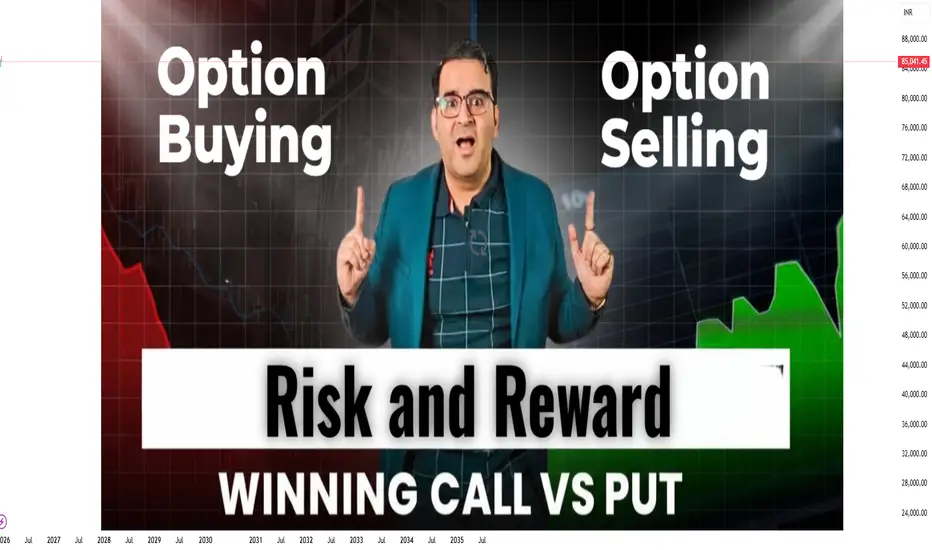
Understanding Option Buying
Option buying is the more popular and intuitive approach, especially among beginners. When you buy an option, you purchase the right but not the obligation to buy (call option) or sell (put option) the underlying asset at a predetermined price (strike price) before or on expiry.
The biggest attraction of option buying is limited risk. The maximum loss is restricted to the premium paid. This makes it psychologically comfortable, especially in volatile markets. If the market moves sharply in your favor, the reward can be many times the premium invested.
However, option buying comes with a hidden enemy: time decay (Theta). Every passing day reduces the value of the option, even if the market does nothing. For an option buyer to profit, the price must move quickly and significantly in the expected direction. Direction alone is not enough; timing and volatility expansion are equally critical.
Option buying works best during:
Strong trending markets
Breakouts from consolidation
High volatility expansion phases
Event-based trades (results, policy announcements)
Despite its appeal, option buying has a low probability of success. Many trades result in partial or total premium loss due to slow market movement, sideways action, or volatility contraction.
Understanding Option Selling
Option selling is often referred to as premium trading. When you sell an option, you receive the premium upfront and take on the obligation to buy or sell the underlying if exercised.
The biggest advantage of option selling is that it benefits from time decay. Every day that passes works in favor of the seller. Even if the market moves slightly against the position, the decay in option value can still generate profit. This makes option selling a high-probability strategy, especially in range-bound or low-volatility markets.
However, option selling comes with unlimited or very high risk, depending on the structure. A naked call seller faces unlimited upside risk, while a naked put seller faces large downside risk. This is why option selling requires:
High margin
Strong risk management
Discipline and experience
Professional traders often use hedged strategies such as spreads, iron condors, or strangles with protection to manage risk.
Option selling works best during:
Sideways markets
Low to moderate volatility
Expiry weeks
Mean-reverting conditions
Risk and Reward Comparison
The most critical difference between option buying and selling lies in the risk–reward equation.
Option Buying
Risk: Limited (premium paid)
Reward: Unlimited or large
Probability: Low
Emotional challenge: Frequent small losses
Option Selling
Risk: High or unlimited (if unhedged)
Reward: Limited (premium received)
Probability: High
Emotional challenge: Occasional large losses
Option buyers often experience a series of small losses waiting for one big winning trade. Option sellers enjoy frequent small profits but must be prepared for rare but severe drawdowns.
Capital and Margin Requirements
Option buying is capital-efficient. Traders can participate with small capital because only the premium is paid upfront. This makes it attractive for retail traders.
Option selling requires significantly higher capital due to margin requirements imposed by exchanges. Hedged strategies reduce margin but still require more capital than buying options. As a result, option selling is typically favored by institutional and professional traders.
Role of Volatility
Volatility plays opposite roles in buying and selling.
Option buyers benefit from rising volatility. An increase in implied volatility raises option premiums, even if price movement is moderate.
Option sellers benefit from falling or stable volatility. When implied volatility contracts, option premiums erode faster.
Ignoring volatility is one of the biggest mistakes retail traders make, especially when buying options at already inflated premiums.
Psychological Differences
Option buying demands patience and emotional resilience. Losing streaks are common, and traders must avoid overtrading to recover losses.
Option selling requires discipline and risk awareness. Overconfidence during long winning streaks can lead to oversized positions and catastrophic losses. Successful sellers respect risk more than reward.
Which Is Better: Buying or Selling?
There is no universal answer. The choice depends on:
Market conditions
Trader experience
Capital size
Risk tolerance
Trading style
Beginners often start with option buying due to limited risk. As experience grows, many traders transition toward option selling or hybrid strategies that combine both.
Conclusion
Option buying and option selling are two sides of the same coin, yet they represent completely different philosophies of trading. Option buying focuses on direction and momentum, offering high reward with low probability. Option selling focuses on time decay and probability, offering consistent income with higher risk exposure.
A mature options trader does not choose one over the other permanently. Instead, they adapt—buying options during explosive trends and selling options during quiet, range-bound markets. Mastery comes not from preference, but from understanding when each approach offers the highest edge.
In options trading, success is not about being bullish or bearish—it is about being strategically aligned with time, volatility, and probability.
Option buying is the more popular and intuitive approach, especially among beginners. When you buy an option, you purchase the right but not the obligation to buy (call option) or sell (put option) the underlying asset at a predetermined price (strike price) before or on expiry.
The biggest attraction of option buying is limited risk. The maximum loss is restricted to the premium paid. This makes it psychologically comfortable, especially in volatile markets. If the market moves sharply in your favor, the reward can be many times the premium invested.
However, option buying comes with a hidden enemy: time decay (Theta). Every passing day reduces the value of the option, even if the market does nothing. For an option buyer to profit, the price must move quickly and significantly in the expected direction. Direction alone is not enough; timing and volatility expansion are equally critical.
Option buying works best during:
Strong trending markets
Breakouts from consolidation
High volatility expansion phases
Event-based trades (results, policy announcements)
Despite its appeal, option buying has a low probability of success. Many trades result in partial or total premium loss due to slow market movement, sideways action, or volatility contraction.
Understanding Option Selling
Option selling is often referred to as premium trading. When you sell an option, you receive the premium upfront and take on the obligation to buy or sell the underlying if exercised.
The biggest advantage of option selling is that it benefits from time decay. Every day that passes works in favor of the seller. Even if the market moves slightly against the position, the decay in option value can still generate profit. This makes option selling a high-probability strategy, especially in range-bound or low-volatility markets.
However, option selling comes with unlimited or very high risk, depending on the structure. A naked call seller faces unlimited upside risk, while a naked put seller faces large downside risk. This is why option selling requires:
High margin
Strong risk management
Discipline and experience
Professional traders often use hedged strategies such as spreads, iron condors, or strangles with protection to manage risk.
Option selling works best during:
Sideways markets
Low to moderate volatility
Expiry weeks
Mean-reverting conditions
Risk and Reward Comparison
The most critical difference between option buying and selling lies in the risk–reward equation.
Option Buying
Risk: Limited (premium paid)
Reward: Unlimited or large
Probability: Low
Emotional challenge: Frequent small losses
Option Selling
Risk: High or unlimited (if unhedged)
Reward: Limited (premium received)
Probability: High
Emotional challenge: Occasional large losses
Option buyers often experience a series of small losses waiting for one big winning trade. Option sellers enjoy frequent small profits but must be prepared for rare but severe drawdowns.
Capital and Margin Requirements
Option buying is capital-efficient. Traders can participate with small capital because only the premium is paid upfront. This makes it attractive for retail traders.
Option selling requires significantly higher capital due to margin requirements imposed by exchanges. Hedged strategies reduce margin but still require more capital than buying options. As a result, option selling is typically favored by institutional and professional traders.
Role of Volatility
Volatility plays opposite roles in buying and selling.
Option buyers benefit from rising volatility. An increase in implied volatility raises option premiums, even if price movement is moderate.
Option sellers benefit from falling or stable volatility. When implied volatility contracts, option premiums erode faster.
Ignoring volatility is one of the biggest mistakes retail traders make, especially when buying options at already inflated premiums.
Psychological Differences
Option buying demands patience and emotional resilience. Losing streaks are common, and traders must avoid overtrading to recover losses.
Option selling requires discipline and risk awareness. Overconfidence during long winning streaks can lead to oversized positions and catastrophic losses. Successful sellers respect risk more than reward.
Which Is Better: Buying or Selling?
There is no universal answer. The choice depends on:
Market conditions
Trader experience
Capital size
Risk tolerance
Trading style
Beginners often start with option buying due to limited risk. As experience grows, many traders transition toward option selling or hybrid strategies that combine both.
Conclusion
Option buying and option selling are two sides of the same coin, yet they represent completely different philosophies of trading. Option buying focuses on direction and momentum, offering high reward with low probability. Option selling focuses on time decay and probability, offering consistent income with higher risk exposure.
A mature options trader does not choose one over the other permanently. Instead, they adapt—buying options during explosive trends and selling options during quiet, range-bound markets. Mastery comes not from preference, but from understanding when each approach offers the highest edge.
In options trading, success is not about being bullish or bearish—it is about being strategically aligned with time, volatility, and probability.

Verbundene Veröffentlichungen
Haftungsausschluss
Die Informationen und Veröffentlichungen sind nicht als Finanz-, Anlage-, Handels- oder andere Arten von Ratschlägen oder Empfehlungen gedacht, die von TradingView bereitgestellt oder gebilligt werden, und stellen diese nicht dar. Lesen Sie mehr in den Nutzungsbedingungen.
Verbundene Veröffentlichungen
Haftungsausschluss
Die Informationen und Veröffentlichungen sind nicht als Finanz-, Anlage-, Handels- oder andere Arten von Ratschlägen oder Empfehlungen gedacht, die von TradingView bereitgestellt oder gebilligt werden, und stellen diese nicht dar. Lesen Sie mehr in den Nutzungsbedingungen.