Long
MSD Invests $6.7 Billion to Acquire Terns Pharmaceuticals
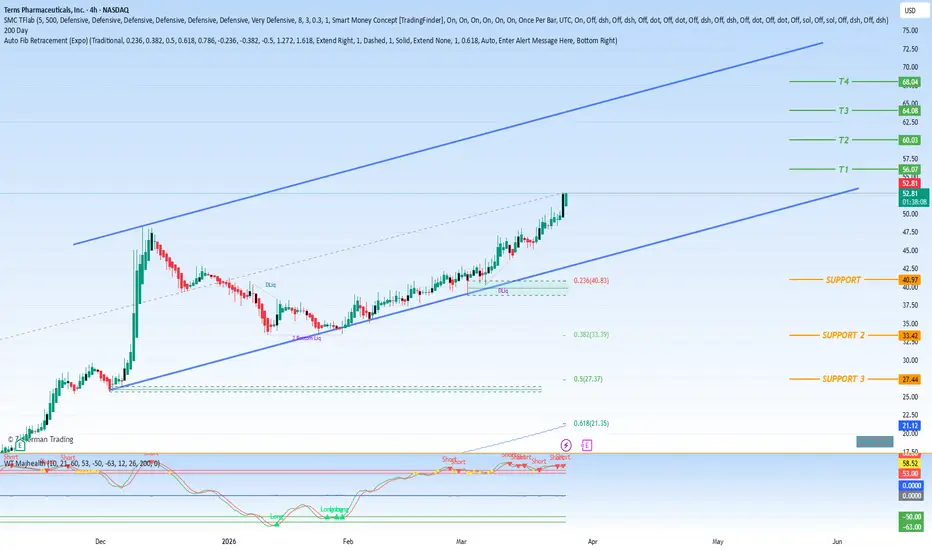
MSD has agreed to acquire cancer-focused biopharmaceutical company Terns Pharmaceuticals in a deal valued at $6.7 billion, marking the latest in a series of multibillion-dollar acquisitions as the drugmaker seeks to build a robust pipeline in anticipation of the eventual loss of exclusivity for its blockbuster immunotherapy, Keytruda (pembrolizumab). The acquisition reflects MSD’s broader strategy to diversify its oncology portfolio and reduce its long-term dependence on its flagship cancer drug.
MSD, which operates as Merck & Co. in the United States, will purchase Terns for $53 per share in cash, representing a 6% premium over the biopharma’s closing price of $50 on March 24. The transaction is expected to be finalized in the second quarter of 2026, pending customary closing conditions.
A Promising Candidate for Blood Cancer
Terns’ lead investigational candidate is an oral allosteric BCR-ABL1 tyrosine kinase inhibitor (TKI) being developed for the treatment of a specific form of blood cancer. Known as TERN-701, the asset is currently being evaluated in a Phase I/II clinical trial (NCT06163430) for patients with Philadelphia chromosome-positive (Ph+) chronic myeloid leukemia (CML). The trial focuses on individuals who have not responded adequately to at least one prior TKI therapy, representing a patient population with significant unmet medical need.
While several TKIs are already approved for CML—including Novartis’ Scemblix (asciminib)—Terns believes its therapy has the potential to offer patients a best-in-disease treatment option. Novartis has projected that Scemblix could generate at least $4 billion in peak annual sales, underscoring the current dominance of that therapy in the market. However, industry analysts anticipate that TERN-701 could provide substantial competition. Some analysts have characterized the candidate’s clinical data in CML as superior to that of previously approved treatments, positioning it as a potential challenger to established therapies.
Clinical Data Points to Strong Efficacy and Safety Profile
William Blair analyst Andy Hsieh commented in a research note that, given what he described as unprecedented data in CML, MSD’s offer may not fully reflect the potential of TERN-701. Hsieh noted that the compound has demonstrated clear improvements in both efficacy and safety, while also offering patients greater convenience through daily dosing with no food restrictions.
In a Phase I trial, TERN-701 achieved an overall major molecular response (MMR) rate of 75% at 24 weeks, with 64% of patients reaching MMR—a figure more than double the response rate observed with Scemblix. Additionally, the data supported the candidate’s once-daily dosing regimen and confirmed that it can be taken without regard to food, an important factor for patient adherence. In contrast, Scemblix must be taken on an empty stomach, which can pose challenges for some patients.
Since the release of these clinical results in December 2025, shares of Nasdaq-listed Terns have risen by approximately 22.5%, with further gains anticipated following the announcement of MSD’s acquisition.
Hsieh further noted in his reaction to the acquisition that TERN-701 appears well-positioned to disrupt the current treatment paradigm for CML and challenge the established dominance of Novartis’ Scemblix franchise.
MSD’s Broader Strategic Push
For MSD, the acquisition of Terns represents another strategic move to reinforce its pipeline as the patent expiration for Keytruda approaches. Keytruda, which has been a cornerstone of MSD’s oncology franchise and a major revenue driver, is expected to face biosimilar competition in the coming years, prompting the company to proactively seek new growth avenues.
The Terns deal continues a pattern of significant acquisitions. In November, MSD acquired antiviral medicine developer Cidara Therapeutics in a $9.2 billion transaction. That deal followed the July 2025 buyout of cardio-pulmonary specialist Verona Pharmaceuticals for $10 billion. Collectively, these acquisitions reflect MSD’s broader effort to diversify its therapeutic portfolio across oncology, infectious diseases, and respiratory conditions.
Following the announcement of the Terns acquisition, MSD’s Chief Executive Officer Robert Davis stated that the transaction further diversifies and strengthens the company’s position in oncology. He emphasized that MSD continues to seek opportunities to broaden its portfolio into other therapeutic areas as part of its long-term growth strategy.
MSD, which operates as Merck & Co. in the United States, will purchase Terns for $53 per share in cash, representing a 6% premium over the biopharma’s closing price of $50 on March 24. The transaction is expected to be finalized in the second quarter of 2026, pending customary closing conditions.
A Promising Candidate for Blood Cancer
Terns’ lead investigational candidate is an oral allosteric BCR-ABL1 tyrosine kinase inhibitor (TKI) being developed for the treatment of a specific form of blood cancer. Known as TERN-701, the asset is currently being evaluated in a Phase I/II clinical trial (NCT06163430) for patients with Philadelphia chromosome-positive (Ph+) chronic myeloid leukemia (CML). The trial focuses on individuals who have not responded adequately to at least one prior TKI therapy, representing a patient population with significant unmet medical need.
While several TKIs are already approved for CML—including Novartis’ Scemblix (asciminib)—Terns believes its therapy has the potential to offer patients a best-in-disease treatment option. Novartis has projected that Scemblix could generate at least $4 billion in peak annual sales, underscoring the current dominance of that therapy in the market. However, industry analysts anticipate that TERN-701 could provide substantial competition. Some analysts have characterized the candidate’s clinical data in CML as superior to that of previously approved treatments, positioning it as a potential challenger to established therapies.
Clinical Data Points to Strong Efficacy and Safety Profile
William Blair analyst Andy Hsieh commented in a research note that, given what he described as unprecedented data in CML, MSD’s offer may not fully reflect the potential of TERN-701. Hsieh noted that the compound has demonstrated clear improvements in both efficacy and safety, while also offering patients greater convenience through daily dosing with no food restrictions.
In a Phase I trial, TERN-701 achieved an overall major molecular response (MMR) rate of 75% at 24 weeks, with 64% of patients reaching MMR—a figure more than double the response rate observed with Scemblix. Additionally, the data supported the candidate’s once-daily dosing regimen and confirmed that it can be taken without regard to food, an important factor for patient adherence. In contrast, Scemblix must be taken on an empty stomach, which can pose challenges for some patients.
Since the release of these clinical results in December 2025, shares of Nasdaq-listed Terns have risen by approximately 22.5%, with further gains anticipated following the announcement of MSD’s acquisition.
Hsieh further noted in his reaction to the acquisition that TERN-701 appears well-positioned to disrupt the current treatment paradigm for CML and challenge the established dominance of Novartis’ Scemblix franchise.
MSD’s Broader Strategic Push
For MSD, the acquisition of Terns represents another strategic move to reinforce its pipeline as the patent expiration for Keytruda approaches. Keytruda, which has been a cornerstone of MSD’s oncology franchise and a major revenue driver, is expected to face biosimilar competition in the coming years, prompting the company to proactively seek new growth avenues.
The Terns deal continues a pattern of significant acquisitions. In November, MSD acquired antiviral medicine developer Cidara Therapeutics in a $9.2 billion transaction. That deal followed the July 2025 buyout of cardio-pulmonary specialist Verona Pharmaceuticals for $10 billion. Collectively, these acquisitions reflect MSD’s broader effort to diversify its therapeutic portfolio across oncology, infectious diseases, and respiratory conditions.
Following the announcement of the Terns acquisition, MSD’s Chief Executive Officer Robert Davis stated that the transaction further diversifies and strengthens the company’s position in oncology. He emphasized that MSD continues to seek opportunities to broaden its portfolio into other therapeutic areas as part of its long-term growth strategy.

Haftungsausschluss
Die Informationen und Veröffentlichungen sind nicht als Finanz-, Anlage-, Handels- oder andere Arten von Ratschlägen oder Empfehlungen gedacht, die von TradingView bereitgestellt oder gebilligt werden, und stellen diese nicht dar. Lesen Sie mehr in den Nutzungsbedingungen.
Haftungsausschluss
Die Informationen und Veröffentlichungen sind nicht als Finanz-, Anlage-, Handels- oder andere Arten von Ratschlägen oder Empfehlungen gedacht, die von TradingView bereitgestellt oder gebilligt werden, und stellen diese nicht dar. Lesen Sie mehr in den Nutzungsbedingungen.