Executive Summary
What Micron Actually Announced, and What Intel's CEO Added
The numbers driving the conversation come from Micron's fiscal third-quarter report in late June, when revenue reached $41.46 billion, up from $9.30 billion a year earlier, with an 84.9% non-GAAP gross margin and adjusted earnings of $25.11 per share. Management guided fiscal fourth-quarter revenue to about $50 billion, well above the $43.58 billion LSEG consensus at the time, along with an 86% gross margin. Micron also disclosed 16 strategic customer agreements, 14 of which carry roughly $100 billion in minimum contracted revenue. CEO Sanjay Mehrotra told analysts in June that customers understand shortages will take considerable time to ease, with industry supply improving only gradually in 2028.
The new ingredient arrived on Tuesday, September 15, when Intel CEO Lip-Bu Tan spoke at the AI Infrastructure Summit in Santa Clara, saying memory production capacity is very limited, prices have climbed five to seven times, and the bottleneck could worsen next year. His remarks echoed a July warning from SK hynix CEO Kwak Noh-jung, who said 2027 would be the worst year for supply in the industry's history. TrendForce estimates server DRAM contract prices rose 64% in the second half of 2025 and could climb another 270% during 2026.
Why the Stock Rose: Scarcity Is Back in Control
Thursday's session carried the first leg. Micron gained 5.50%, closing at $977.50 from a $926.55 prior close, with an intraday range of $953.50 to $986.20. The broader tape helped, as the Nasdaq Composite rose 1.7% and the S&P 500 added 1.1%. SK hynix gained about 5% alongside Micron, showing the move was sector-wide.
Friday extended it. Micron rose another 3.92% to close at $1,015.80 after RBC Capital Markets analyst Srini Pajjuri reiterated an Outperform rating and a $1,500 price target, expecting fiscal Q4 revenue of $50 billion, adjusted EPS of $31.09, and an 86.7% gross margin. He argued the DRAM upcycle could have another five quarters to run and that his Asia supply-chain checks point to HBM price increases of 80% to 100% in 2027. Goldman Sachs analyst James Schneider expects $51.9 billion in revenue, EPS of $32.54, and an 87.3% gross margin. Deutsche Bank's Melissa Weathers sees DRAM bit demand growing about 21% annually through 2030.
The rebound matters because of where it started. On Monday, September 14, Micron closed near $921 after Anthropic CEO Dario Amodei called for AI developers to slow the pace of frontier model development, a stance OpenAI's Sam Altman and SpaceX's Elon Musk said they supported. Chip stocks sold off on fear that slower AI progress could delay data center orders, even though analysts noted no clear evidence yet that major tech companies were cutting infrastructure spending.
The Technical Picture
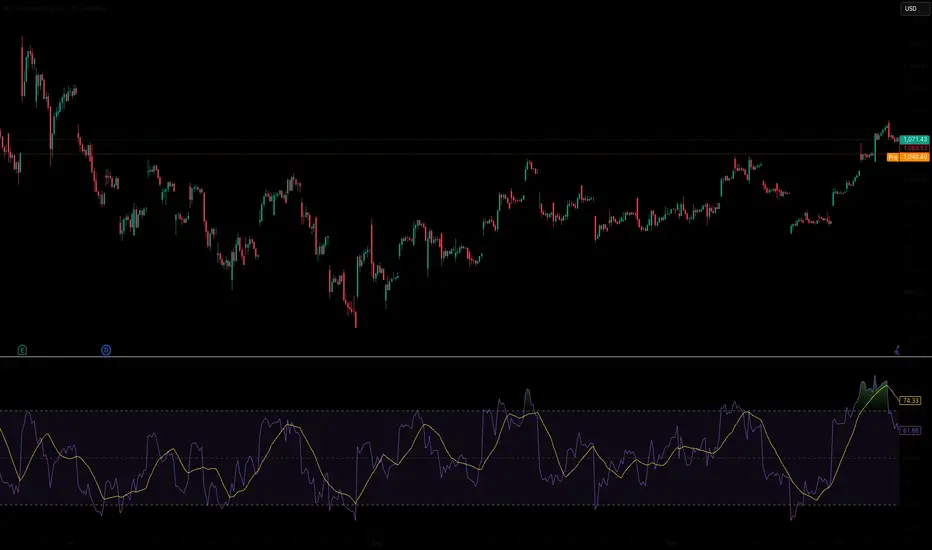
Micron hit an all-time intraday high of $1,255.00 on June 25, with a record close of $1,213.37 that day, before a July selloff carried it to an intraday low near $737.88 on July 29. Friday's $1,015.80 close is almost exactly the early-September level reached after a 6.1% single-session gain on September 4, making it a retest rather than a fresh breakout.
Trend structure remains constructive. On September 14, Micron sat 48.1% above its 200-day SMA of $622.07 and 4.1% above its 100-day average of $885.09, and Friday's close puts it above the 50-day SMA near $927.28 as well. Momentum was the weaker link: the 14-day RSI was hovering around 47 just before Friday's advance, a neutral reading, and the MACD stood at a modest +9.18. Beta is high at 2.22.
Resistance sits at $1,036.13, the ceiling of the August bounce, with a structural swing high near $1,040 just above it. Support begins at Thursday's $977.50 breakout close, followed by the $953.50 session low, the 50-day average near $927.28, and the 50-day EMA around $913.15. Deeper structural support lies between $770.10 and $737.88. With options implying an 11% move after earnings, the market is pricing a range of roughly $904 to $1,128 from Friday's close.
Bull Case
Multi-year contracts lock in a meaningful share of Micron's DRAM and NAND volume, and RBC's Pajjuri has argued current valuation barely credits those strategic customer agreements. Micron trades at a forward P/E of about 6 times fiscal 2027 estimates, and SK hynix does not expect supply and demand to balance until 2030 at the earliest, partly because HBM needs about three times the wafer capacity of ordinary DRAM. TD Cowen's Krish Sankar called Micron mid-cycle on demand, expects a fiscal Q1 2027 EPS guide of about $37 against a $35 Street estimate, and holds a $1,600 price target. Wall Street's rating split is 29 Buys to one Hold, with an average target of $1,563.93.
Bear Case
Goldman's Schneider keeps a Hold rating with a $1,100 target, flagging concern over longer-term supply additions by rivals, mainly in China. ChangXin Memory Technologies (CXMT) is reportedly preparing to enter the NAND flash market, adding a competitor to Micron, SanDisk, and SK hynix. Sankar noted Micron is about 80% of the way through its gross-margin expansion cycle, meaning upward earnings revisions should slow even if demand stays strong. GuruFocus estimates a fair value of $638.38, which would make the stock 53.1% overvalued. New factories capable of easing the shortage may not reach full production until 2028 or 2029.
Risk Implications for Traders
An implied post-earnings move of about 11% exceeds Micron's four-report average of 8.14%, with past reactions ranging from 2.82% to 15.74%. Because the stock has already advanced about 9.63% into the print, a beat that only matches elevated whisper numbers could produce a sell-the-news reaction. Guidance carries more weight than the quarter itself.
Macro risks include a 10-year Treasury yield near 5% (its highest since 2023), Brent crude above $100 a barrel, possible broad semiconductor tariffs, and a patent dispute with Netlist. On MEXC, MU futures trading volume rose roughly 267% month over month in August.
With a beta of 2.22, traders can use $977.50 and the $927.28 50-day average as reference levels to define risk before September 30, while those waiting for confirmation may prefer a sustained close above $1,036.13 before treating the retest as a breakout.
Conclusion
Micron enters its September 30 report with three forces pulling on the stock at once: an industry warning of worsening shortages, a record margin profile that leaves little room for error, and a macro backdrop where yields, oil, and AI-spending anxiety can swing sentiment in a day. The guidance of about $50 billion in revenue at an 86% gross margin sets a high bar, but analysts from RBC and Goldman Sachs both expect a beat. With $977.50 now the first support and $1,036.13 the next test, the question is whether earnings confirm that scarcity still sets the price, or the market has already paid for the good news.
Disclaimer: This analysis is for informational purposes only and does not constitute investment advice. Data reflects a specific point in time and is subject to change.
- Micron
 MU closed at $977.50 on Thursday, September 17, up 5.50%, then added 3.92% on Friday to finish at $1,015.80, a two-session gain of roughly 9.63%.
- Intel CEO Lip-Bu Tan said memory prices have climbed between five and seven times and that the shortage could worsen in 2027, reviving the scarcity narrative that powers Micron's pricing.
- Micron's guidance calls for roughly $50 billion in fiscal Q4 revenue at an 86% gross margin, following $41.46 billion in fiscal Q3 revenue and an 84.9% non-GAAP gross margin.
- Options traders are pricing an implied post-earnings move of about 11%, compared with an average absolute move of 8.14% across Micron's last four reports.
- Bulls point to 16 strategic customer agreements and a $1,563.93 average price target, while bears cite competition from China's CXMT, a record-margin peak, and a stock trading far above some intrinsic value estimates.
- Macro pressure is real: a 10-year Treasury yield near 5%, Brent crude above $100, and possible semiconductor tariffs keep the risk of another AI-trade wobble alive.
What Micron Actually Announced, and What Intel's CEO Added
The numbers driving the conversation come from Micron's fiscal third-quarter report in late June, when revenue reached $41.46 billion, up from $9.30 billion a year earlier, with an 84.9% non-GAAP gross margin and adjusted earnings of $25.11 per share. Management guided fiscal fourth-quarter revenue to about $50 billion, well above the $43.58 billion LSEG consensus at the time, along with an 86% gross margin. Micron also disclosed 16 strategic customer agreements, 14 of which carry roughly $100 billion in minimum contracted revenue. CEO Sanjay Mehrotra told analysts in June that customers understand shortages will take considerable time to ease, with industry supply improving only gradually in 2028.
The new ingredient arrived on Tuesday, September 15, when Intel CEO Lip-Bu Tan spoke at the AI Infrastructure Summit in Santa Clara, saying memory production capacity is very limited, prices have climbed five to seven times, and the bottleneck could worsen next year. His remarks echoed a July warning from SK hynix CEO Kwak Noh-jung, who said 2027 would be the worst year for supply in the industry's history. TrendForce estimates server DRAM contract prices rose 64% in the second half of 2025 and could climb another 270% during 2026.
Why the Stock Rose: Scarcity Is Back in Control
Thursday's session carried the first leg. Micron gained 5.50%, closing at $977.50 from a $926.55 prior close, with an intraday range of $953.50 to $986.20. The broader tape helped, as the Nasdaq Composite rose 1.7% and the S&P 500 added 1.1%. SK hynix gained about 5% alongside Micron, showing the move was sector-wide.
Friday extended it. Micron rose another 3.92% to close at $1,015.80 after RBC Capital Markets analyst Srini Pajjuri reiterated an Outperform rating and a $1,500 price target, expecting fiscal Q4 revenue of $50 billion, adjusted EPS of $31.09, and an 86.7% gross margin. He argued the DRAM upcycle could have another five quarters to run and that his Asia supply-chain checks point to HBM price increases of 80% to 100% in 2027. Goldman Sachs analyst James Schneider expects $51.9 billion in revenue, EPS of $32.54, and an 87.3% gross margin. Deutsche Bank's Melissa Weathers sees DRAM bit demand growing about 21% annually through 2030.
The rebound matters because of where it started. On Monday, September 14, Micron closed near $921 after Anthropic CEO Dario Amodei called for AI developers to slow the pace of frontier model development, a stance OpenAI's Sam Altman and SpaceX's Elon Musk said they supported. Chip stocks sold off on fear that slower AI progress could delay data center orders, even though analysts noted no clear evidence yet that major tech companies were cutting infrastructure spending.
The Technical Picture
Micron hit an all-time intraday high of $1,255.00 on June 25, with a record close of $1,213.37 that day, before a July selloff carried it to an intraday low near $737.88 on July 29. Friday's $1,015.80 close is almost exactly the early-September level reached after a 6.1% single-session gain on September 4, making it a retest rather than a fresh breakout.
Trend structure remains constructive. On September 14, Micron sat 48.1% above its 200-day SMA of $622.07 and 4.1% above its 100-day average of $885.09, and Friday's close puts it above the 50-day SMA near $927.28 as well. Momentum was the weaker link: the 14-day RSI was hovering around 47 just before Friday's advance, a neutral reading, and the MACD stood at a modest +9.18. Beta is high at 2.22.
Resistance sits at $1,036.13, the ceiling of the August bounce, with a structural swing high near $1,040 just above it. Support begins at Thursday's $977.50 breakout close, followed by the $953.50 session low, the 50-day average near $927.28, and the 50-day EMA around $913.15. Deeper structural support lies between $770.10 and $737.88. With options implying an 11% move after earnings, the market is pricing a range of roughly $904 to $1,128 from Friday's close.
Bull Case
Multi-year contracts lock in a meaningful share of Micron's DRAM and NAND volume, and RBC's Pajjuri has argued current valuation barely credits those strategic customer agreements. Micron trades at a forward P/E of about 6 times fiscal 2027 estimates, and SK hynix does not expect supply and demand to balance until 2030 at the earliest, partly because HBM needs about three times the wafer capacity of ordinary DRAM. TD Cowen's Krish Sankar called Micron mid-cycle on demand, expects a fiscal Q1 2027 EPS guide of about $37 against a $35 Street estimate, and holds a $1,600 price target. Wall Street's rating split is 29 Buys to one Hold, with an average target of $1,563.93.
Bear Case
Goldman's Schneider keeps a Hold rating with a $1,100 target, flagging concern over longer-term supply additions by rivals, mainly in China. ChangXin Memory Technologies (CXMT) is reportedly preparing to enter the NAND flash market, adding a competitor to Micron, SanDisk, and SK hynix. Sankar noted Micron is about 80% of the way through its gross-margin expansion cycle, meaning upward earnings revisions should slow even if demand stays strong. GuruFocus estimates a fair value of $638.38, which would make the stock 53.1% overvalued. New factories capable of easing the shortage may not reach full production until 2028 or 2029.
Risk Implications for Traders
An implied post-earnings move of about 11% exceeds Micron's four-report average of 8.14%, with past reactions ranging from 2.82% to 15.74%. Because the stock has already advanced about 9.63% into the print, a beat that only matches elevated whisper numbers could produce a sell-the-news reaction. Guidance carries more weight than the quarter itself.
Macro risks include a 10-year Treasury yield near 5% (its highest since 2023), Brent crude above $100 a barrel, possible broad semiconductor tariffs, and a patent dispute with Netlist. On MEXC, MU futures trading volume rose roughly 267% month over month in August.
With a beta of 2.22, traders can use $977.50 and the $927.28 50-day average as reference levels to define risk before September 30, while those waiting for confirmation may prefer a sustained close above $1,036.13 before treating the retest as a breakout.
Conclusion
Micron enters its September 30 report with three forces pulling on the stock at once: an industry warning of worsening shortages, a record margin profile that leaves little room for error, and a macro backdrop where yields, oil, and AI-spending anxiety can swing sentiment in a day. The guidance of about $50 billion in revenue at an 86% gross margin sets a high bar, but analysts from RBC and Goldman Sachs both expect a beat. With $977.50 now the first support and $1,036.13 the next test, the question is whether earnings confirm that scarcity still sets the price, or the market has already paid for the good news.
Disclaimer: This analysis is for informational purposes only and does not constitute investment advice. Data reflects a specific point in time and is subject to change.

Exención de responsabilidad
La información y las publicaciones no constituyen, ni deben considerarse como, asesoramiento o recomendaciones financieras, de inversión, de trading u otro tipo, proporcionadas o respaldadas por TradingView. Obtenga más información en Condiciones de uso.
Exención de responsabilidad
La información y las publicaciones no constituyen, ni deben considerarse como, asesoramiento o recomendaciones financieras, de inversión, de trading u otro tipo, proporcionadas o respaldadas por TradingView. Obtenga más información en Condiciones de uso.