
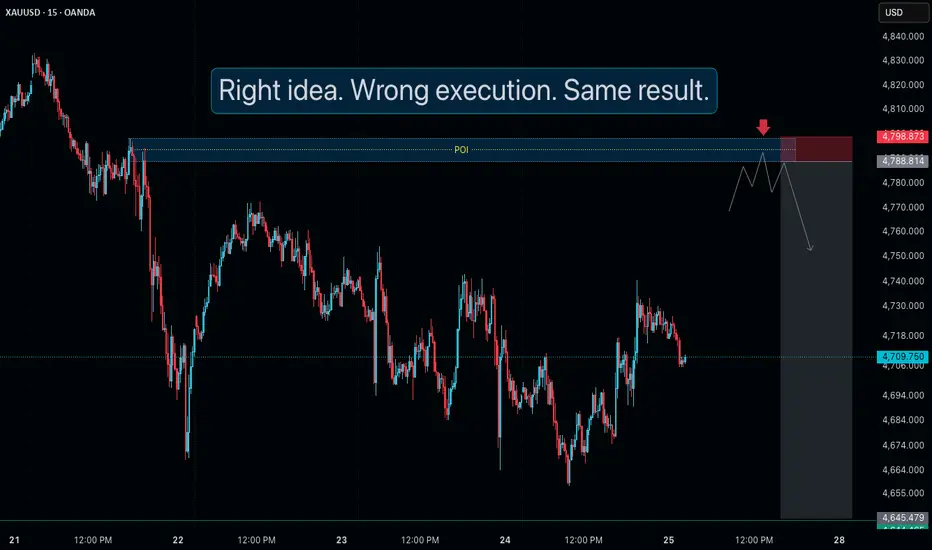
Why Good Analysis Still Leads to Bad Results
“The analysis was right.
The execution wasn’t.”
Many traders reach a stage where they can read the market well.
They understand structure.
They identify levels.
They anticipate direction correctly.
And yet…
the results don’t match the analysis.
Trades still lose.
Profits feel inconsistent.
Confidence becomes confusing.
The Illusion of “Being Right”
Being right about direction is not enough.
You can:
• Predict the move correctly
• Mark the right zones
• Understand the narrative
…and still lose money.
Because trading is not about being right.
It’s about executing correctly.
Where Good Analysis Breaks Down
The gap appears in execution:
• Entering too early
• Entering too late
• Ignoring confirmation
• Forcing trades at key levels
• Poor risk management
• Emotional exits
The idea is correct.
The timing is not.
Why This Feels Frustrating
Because it creates confusion.
You think:
• “I knew this would happen”
• “My analysis was correct”
• “Why didn’t I profit?”
This is one of the most dangerous phases.
It builds false confidence.
And hides real mistakes.
The Missing Skill
Most traders focus on:
• Learning more concepts
• Adding more tools
• Improving analysis
But the real skill is:
• Precision
• Timing
• Patience
• Consistent execution
Professionals don’t just see the market well.
They act at the right moment.
What Professionals Do Differently
They:
• Wait for confirmation, not prediction
• Accept missing early entries
• Focus on execution rules
• Treat risk as part of the plan
• Separate analysis from action
They don’t trade ideas.
They trade execution.
A Simple Reality Check
Ask yourself:
“If I followed my rules perfectly,
would this trade still be taken?”
If the answer is no,
the issue is not your analysis.
It’s your discipline.
Understanding the market is one skill.
Acting correctly is another.
📘 Shared by ChartIsMirror
Do your losses come from wrong analysis…
or from how you execute it?
“The analysis was right.
The execution wasn’t.”
Many traders reach a stage where they can read the market well.
They understand structure.
They identify levels.
They anticipate direction correctly.
And yet…
the results don’t match the analysis.
Trades still lose.
Profits feel inconsistent.
Confidence becomes confusing.
The Illusion of “Being Right”
Being right about direction is not enough.
You can:
• Predict the move correctly
• Mark the right zones
• Understand the narrative
…and still lose money.
Because trading is not about being right.
It’s about executing correctly.
Where Good Analysis Breaks Down
The gap appears in execution:
• Entering too early
• Entering too late
• Ignoring confirmation
• Forcing trades at key levels
• Poor risk management
• Emotional exits
The idea is correct.
The timing is not.
Why This Feels Frustrating
Because it creates confusion.
You think:
• “I knew this would happen”
• “My analysis was correct”
• “Why didn’t I profit?”
This is one of the most dangerous phases.
It builds false confidence.
And hides real mistakes.
The Missing Skill
Most traders focus on:
• Learning more concepts
• Adding more tools
• Improving analysis
But the real skill is:
• Precision
• Timing
• Patience
• Consistent execution
Professionals don’t just see the market well.
They act at the right moment.
What Professionals Do Differently
They:
• Wait for confirmation, not prediction
• Accept missing early entries
• Focus on execution rules
• Treat risk as part of the plan
• Separate analysis from action
They don’t trade ideas.
They trade execution.
A Simple Reality Check
Ask yourself:
“If I followed my rules perfectly,
would this trade still be taken?”
If the answer is no,
the issue is not your analysis.
It’s your discipline.
Understanding the market is one skill.
Acting correctly is another.
📘 Shared by ChartIsMirror
Do your losses come from wrong analysis…
or from how you execute it?

Publicaciones relacionadas
Exención de responsabilidad
La información y las publicaciones no constituyen, ni deben considerarse como, asesoramiento o recomendaciones financieras, de inversión, de trading u otro tipo, proporcionadas o respaldadas por TradingView. Obtenga más información en Condiciones de uso.
Publicaciones relacionadas
Exención de responsabilidad
La información y las publicaciones no constituyen, ni deben considerarse como, asesoramiento o recomendaciones financieras, de inversión, de trading u otro tipo, proporcionadas o respaldadas por TradingView. Obtenga más información en Condiciones de uso.