
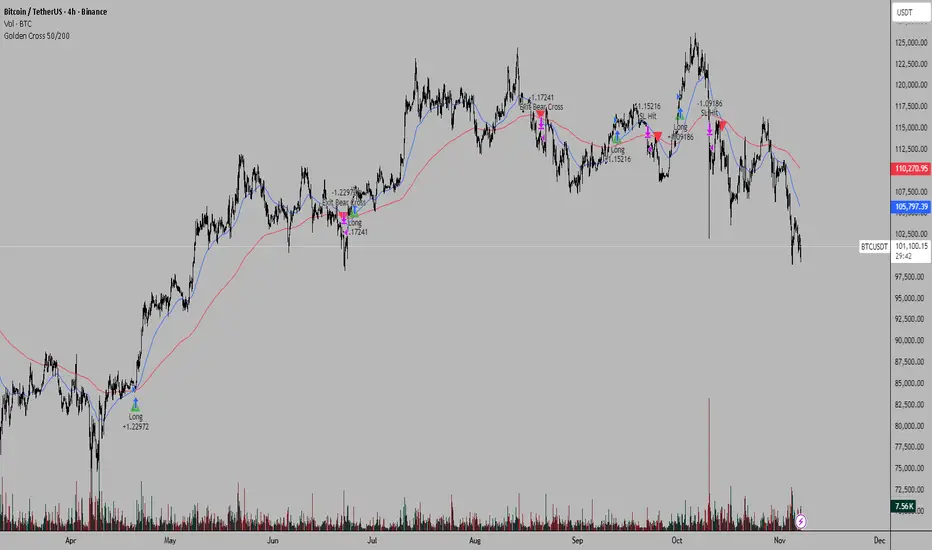
There are two main approaches to seeking consistent profits through the study of price history: the discretionary approach, based on experience and logical reasoning, and the quantitative approach, focused on identifying and exploiting behavioral patterns under specific market conditions.
Contrary to what’s usually thought, neither approach is exclusively intuitive or mechanical. Discretionary traders don’t operate solely on intuition, and quantitative ones don’t lack reasoning when building their systems. Both share fundamental elements: they rely on analyzing price history, spotting repetitive patterns, and applying statistical knowledge and risk management.
The main difference lies in flexibility. Discretionary traders enjoy greater freedom to make decisions, which can be harmful for inexperienced investors but a huge advantage for seasoned ones. Quantitative traders, on the other hand, follow strict rules, which reduces emotional influence and often allows automating processes to generate profits consistently.
This article is dedicated to exploring some vital concepts and ideas for developing solid and effective quantitative trading.
Key concepts about systems
• Quantitative systems require strict entry and exit rules
A quantitative system must be based on clear and objective rules for trade entries and exits. Though it seems obvious, many educational resources highlight metrics like win rates without considering the subjectivity in the systems they present, making reliable calculations impossible. Before evaluating a system’s stats, the investor must ensure all parameters are quantifiable and precisely defined.
• Trading systems are not universal
Each market has its own nature, which can be studied based on its historical record. For example:
• Trending markets, like SPY or Tesla, are driven by factors such as economic growth or market sentiment, making them ideal for systems that aim to capture directional moves.
• Range-bound markets, like Forex, are influenced by central banks promoting stability, limiting extreme moves and favoring ranges under normal conditions.
Applying a trending system to a pair like EUR/USD, which tends to consolidate, can lead to disappointing results. Similarly, using a mean-reversion system in a strongly directional market like the SPY ETF is illogical and usually ineffective. Plus, traditional markets have a structural bias favoring bulls over bears, which can significantly impact the performance of certain strategies.
On the other hand, timeframe is a critical factor when developing and evaluating quantitative systems. In lower timeframes, volatility from news, emotions, or high-frequency trading makes it hard to apply trending systems. Instead, higher timeframes (H4, D, W) offer more stability, improving the performance of many systems by reducing market noise.
• An effective quantitative trading system must be backed by a broad and detailed historical record
The larger the volume of data analyzed, the greater the confidence in the system’s ability to produce predictable results in the future.
A key aspect in developing quantitative trading systems is ensuring consistency in results. Consistency in a system’s performance across different timeframes (D, H4, H1) is an indicator of its robustness and adaptability. For example, a system that generates solid and stable returns across multiple timeframes shows greater reliability than one that only works well in a specific timeframe.
• We should avoid trading systems with unstable equity curves or large drawdowns
A quantitative trading system must be designed to generate consistent profits with controlled risk. That’s why it’s essential to avoid systems with unstable equity curves (erratic fluctuations in gains) or large drawdowns (maximum accumulated losses). These issues indicate a lack of robustness and can jeopardize the system’s long-term viability.
• A high win rate doesn’t guarantee consistent profitability
A common mistake among investors is assuming a high win rate ensures high and sustainable profitability. However, a quantitative trading system’s profitability depends on multiple factors beyond the win rate, such as the risk-reward ratio, market exposure, and operational costs.
For example, trending systems can generate larger profits but often have lower win rates due to greater market exposure, while systems with high win rates may offer limited returns because of shorter exposure and accumulated costs from high trade volume.
• Commissions and the number of trades must be factored into system testing
Failing to include these costs in the analysis can create a misleading perception of the system’s profitability, artificially inflating results.
Even a system with a stable and consistent equity curve doesn’t guarantee success if commissions aren’t considered, especially in strategies with low win rates or high trade volume.
• The risk-reward ratio must be adapted to the system
There’s no universal formula that guarantees profitability in all scenarios based solely on this parameter. However, using an inappropriate risk-reward ratio for the chosen system can lead to costly mistakes.
For example, applying a tight (low) risk-reward ratio in trending systems, or a high risk-reward ratio in mean-reversion systems or those exploiting small patterns, is an inconsistency that often results in significant losses for traders.
• About backtesting in TradingView
When a system is quantified on the TradingView platform, by default, profits and losses are calculated relative to the percentage of volatility. This means our margin per trade will generate losses or gains based on price movement.
For example, if our entry occurs on a bullish engulfing candle that closes above the EMA 20, and our SL is placed at the candle’s low, the losses from the entry point to the SL will be highly variable and depend on the volatility percentage, not on solid position management (like setting a 20% SL per entry, which would mean adjusting leverage). We could get three trades right in a row, and it’d only take the entry candle of the fourth trade to be huge for the losses to be disproportionate if the SL triggers.
This is especially important to keep in mind when backtesting systems on low timeframes, where volatility is extremely low. Without accounting for leverage and fixed loss percentages per trade, we might discard highly profitable systems, since the platform—calculating gains and losses based on volatility percentage—will always show poor profitability.
An inexperienced investor might face a system with a 60% win rate and a 1:1 risk-reward ratio, but if the backtesting is done on a 5-minute chart (where volatility is low), they’ll likely discard it due to the apparent poor profitability.
Conclusions
Developing effective quantitative systems requires an approach that integrates clear rules, rigorous testing, and a deep understanding of market dynamics. In upcoming articles, I’ll dive deeper into the topic, plus share my views and experience on other investment approaches.
Contrary to what’s usually thought, neither approach is exclusively intuitive or mechanical. Discretionary traders don’t operate solely on intuition, and quantitative ones don’t lack reasoning when building their systems. Both share fundamental elements: they rely on analyzing price history, spotting repetitive patterns, and applying statistical knowledge and risk management.
The main difference lies in flexibility. Discretionary traders enjoy greater freedom to make decisions, which can be harmful for inexperienced investors but a huge advantage for seasoned ones. Quantitative traders, on the other hand, follow strict rules, which reduces emotional influence and often allows automating processes to generate profits consistently.
This article is dedicated to exploring some vital concepts and ideas for developing solid and effective quantitative trading.
Key concepts about systems
• Quantitative systems require strict entry and exit rules
A quantitative system must be based on clear and objective rules for trade entries and exits. Though it seems obvious, many educational resources highlight metrics like win rates without considering the subjectivity in the systems they present, making reliable calculations impossible. Before evaluating a system’s stats, the investor must ensure all parameters are quantifiable and precisely defined.
• Trading systems are not universal
Each market has its own nature, which can be studied based on its historical record. For example:
• Trending markets, like SPY or Tesla, are driven by factors such as economic growth or market sentiment, making them ideal for systems that aim to capture directional moves.
• Range-bound markets, like Forex, are influenced by central banks promoting stability, limiting extreme moves and favoring ranges under normal conditions.
Applying a trending system to a pair like EUR/USD, which tends to consolidate, can lead to disappointing results. Similarly, using a mean-reversion system in a strongly directional market like the SPY ETF is illogical and usually ineffective. Plus, traditional markets have a structural bias favoring bulls over bears, which can significantly impact the performance of certain strategies.
On the other hand, timeframe is a critical factor when developing and evaluating quantitative systems. In lower timeframes, volatility from news, emotions, or high-frequency trading makes it hard to apply trending systems. Instead, higher timeframes (H4, D, W) offer more stability, improving the performance of many systems by reducing market noise.
• An effective quantitative trading system must be backed by a broad and detailed historical record
The larger the volume of data analyzed, the greater the confidence in the system’s ability to produce predictable results in the future.
A key aspect in developing quantitative trading systems is ensuring consistency in results. Consistency in a system’s performance across different timeframes (D, H4, H1) is an indicator of its robustness and adaptability. For example, a system that generates solid and stable returns across multiple timeframes shows greater reliability than one that only works well in a specific timeframe.
• We should avoid trading systems with unstable equity curves or large drawdowns
A quantitative trading system must be designed to generate consistent profits with controlled risk. That’s why it’s essential to avoid systems with unstable equity curves (erratic fluctuations in gains) or large drawdowns (maximum accumulated losses). These issues indicate a lack of robustness and can jeopardize the system’s long-term viability.
• A high win rate doesn’t guarantee consistent profitability
A common mistake among investors is assuming a high win rate ensures high and sustainable profitability. However, a quantitative trading system’s profitability depends on multiple factors beyond the win rate, such as the risk-reward ratio, market exposure, and operational costs.
For example, trending systems can generate larger profits but often have lower win rates due to greater market exposure, while systems with high win rates may offer limited returns because of shorter exposure and accumulated costs from high trade volume.
• Commissions and the number of trades must be factored into system testing
Failing to include these costs in the analysis can create a misleading perception of the system’s profitability, artificially inflating results.
Even a system with a stable and consistent equity curve doesn’t guarantee success if commissions aren’t considered, especially in strategies with low win rates or high trade volume.
• The risk-reward ratio must be adapted to the system
There’s no universal formula that guarantees profitability in all scenarios based solely on this parameter. However, using an inappropriate risk-reward ratio for the chosen system can lead to costly mistakes.
For example, applying a tight (low) risk-reward ratio in trending systems, or a high risk-reward ratio in mean-reversion systems or those exploiting small patterns, is an inconsistency that often results in significant losses for traders.
• About backtesting in TradingView
When a system is quantified on the TradingView platform, by default, profits and losses are calculated relative to the percentage of volatility. This means our margin per trade will generate losses or gains based on price movement.
For example, if our entry occurs on a bullish engulfing candle that closes above the EMA 20, and our SL is placed at the candle’s low, the losses from the entry point to the SL will be highly variable and depend on the volatility percentage, not on solid position management (like setting a 20% SL per entry, which would mean adjusting leverage). We could get three trades right in a row, and it’d only take the entry candle of the fourth trade to be huge for the losses to be disproportionate if the SL triggers.
This is especially important to keep in mind when backtesting systems on low timeframes, where volatility is extremely low. Without accounting for leverage and fixed loss percentages per trade, we might discard highly profitable systems, since the platform—calculating gains and losses based on volatility percentage—will always show poor profitability.
An inexperienced investor might face a system with a 60% win rate and a 1:1 risk-reward ratio, but if the backtesting is done on a 5-minute chart (where volatility is low), they’ll likely discard it due to the apparent poor profitability.
Conclusions
Developing effective quantitative systems requires an approach that integrates clear rules, rigorous testing, and a deep understanding of market dynamics. In upcoming articles, I’ll dive deeper into the topic, plus share my views and experience on other investment approaches.

Clause de non-responsabilité
Les informations et publications ne sont pas destinées à être, et ne constituent pas, des conseils ou recommandations financiers, d'investissement, de trading ou autres fournis ou approuvés par TradingView. Pour en savoir plus, consultez les Conditions d'utilisation.
Clause de non-responsabilité
Les informations et publications ne sont pas destinées à être, et ne constituent pas, des conseils ou recommandations financiers, d'investissement, de trading ou autres fournis ou approuvés par TradingView. Pour en savoir plus, consultez les Conditions d'utilisation.