

28 May 2026, 9:05 AM London, UK
The morning tone is defined by a firmer dollar, renewed Middle East stress, and a market waiting for US core PCE and preliminary GDP later today. EUR/USD and GBP/USD have already extended lower, but both are close enough to support that the next trade is more about event reaction than chasing yesterday's move. USD/JPY remains the cleanest volatility story, with 160.00 barriers, intervention anxiety, and decaying gamma turning a quiet range into a convexity setup. The other dominant theme is the post-RBNZ repricing shock: AUD/NZD has broken the backbone of its year-long bull trend as hawkish New Zealand policy guidance meets cooler Australian inflation. Across majors, the tactical edge is in traps, acceptance and forced-positioning cleanup, not in naive trend extrapolation.
--------------------
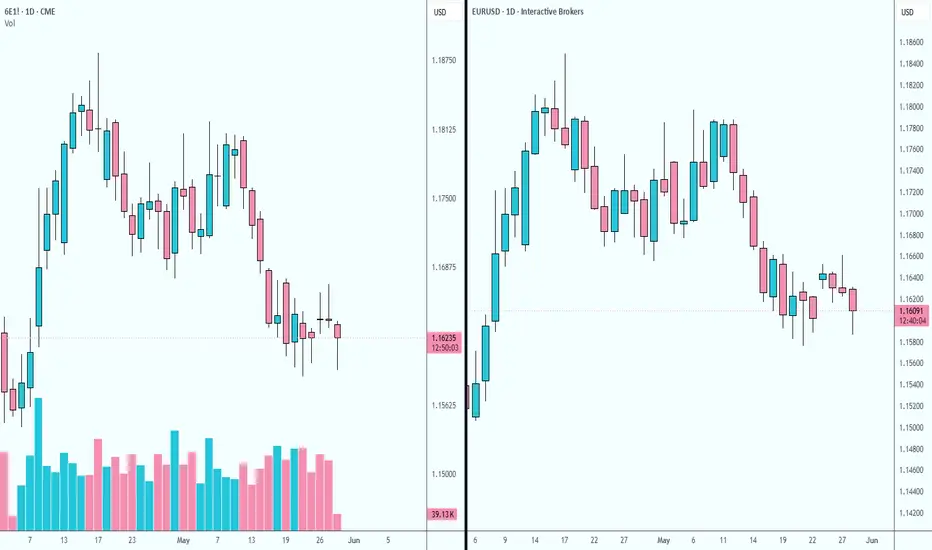
EUR/USD — Spot: 1.1614
Technical Analysis
- The pair remains slightly bearish, below flat long-term averages and beneath the 1.1669 daily cloud base.
- 1.1669 and the 1.1682 200-day average are the key overhead levels, while the 1.1569 lower Bollinger band is the clean support below today's 1.1586 sweep.
- The rebound from the session low has not repaired the structure. A hold below 1.1630 keeps sellers in control into US data.
Sell-side Research
- JP Morgan upgraded its dollar profile, saying FX differentiation is rising and that US equity outperformance can keep supporting USD strength.
- Danske says the rising EUR/USD trend has ended, with relative US nominal growth now stronger and EUR/USD expected to trend toward 1.12 over the coming year.
Market Chatter
- US core PCE and preliminary GDP are due later today, keeping the lower-1.16s vulnerable to a data-driven range break.
- Low realised volatility and repeated option selling have left the pair compressed, but cheapening volatility raises the risk of a sharper breakout when the catalyst lands.
- Middle East headlines still dominate intraday risk appetite, while hawkish ECB comments have so far failed to lift the euro.
Strategy
The downside trigger has played, but selling into 1.1586/1.1600 before PCE is poor value. The underpriced path is range expansion after the data: accept below 1.1586 for continuation, or squeeze toward 1.1650/69 if late dollar buyers are trapped.
--------------------
GBP/USD — Spot: 1.3406
Technical Analysis
- Tuesday's downside jolt has extended, with spot now below the 1.3423 200-day average and prior 1.3435 floor.
- 1.3423/35 is the first reclaimed-resistance test, followed by the 1.3477 100-day average. The session low at 1.3368 and 1.3376 prior daily low define support.
- A close back above 1.3477 is needed to repair sterling's bullish path. Until then, rebounds look corrective.
Sell-side Research
- JP Morgan has turned neutral on GBP, keeping 2Q GBP/USD at 1.34 but lowering the 4Q target to 1.28 after EUR/USD revisions.
- Deutsche Bank is constructive on GBP, arguing too much negativity is priced and that the UK current-account position has improved.
Market Chatter
- Cable fell in Asia as US-Iran tensions escalated, with risk assets softer and US 10-year Treasury yields firmer.
- Desk levels flag 1.3400/05 under pressure, with 1.3375/80 and 1.3350/55 next if support fails.
- Futures positioning shows asset managers still heavily short sterling at a multi-year extreme, leaving a squeeze risk if US data disappoints the dollar.
Strategy
The break has already paid and spot is near support, so fresh shorts need discipline. Prefer selling a failed rebound into 1.3423/35, while a quick reclaim would squeeze late dollar buyers. Below 1.3368, downside acceptance becomes cleaner.
--------------------
USD/JPY — Spot: 159.46
Technical Analysis
- The pair remains bid above its short-term technical base, but the latest push above 159.50 has already faded from 159.65.
- 159.50/70 is the immediate battlefield, with the 160.00 barrier above. Support sits near 159.17/30, then 159.07/21 from the rising hourly cloud area.
- Acceptance above 159.65 would reopen the 160 test. A fast drop below 159.30 turns the move into a bull-trap warning.
Sell-side Research
- Credit Agricole CIB says USD/JPY above 159 leaves the pair at risk of another wave of Japan intervention pressure.
- The bank argues a hawkish BoJ hike in June or much weaker oil would be needed to materially improve the yen's prospects.
Market Chatter
- Intervention threat and long gamma from exotic barriers around 160.00 have suppressed spot, but many structures expire over the next week.
- Today's expiries are supportive below spot, with 158.50/80 around $1.7bn, 159.00/45 around $2.6bn, and $847mn at 159.50/70.
- Clustered stops sit near 159.65 above and 159.17 below, keeping both breakout and false-break risk live.
Strategy
The underpriced risk is convexity, not spot chasing. A 159.65 stop-run can test 160.00 as gamma decays, but official-pressure fear makes acceptance essential. Use options or reduced spot, and treat a fast return below 159.30 as the trap.
--------------------
USD/CAD — Spot: 1.3854
Technical Analysis
- The pair has extended the May rebound and is holding above the 1.3843 pivot resistance area.
- 1.3885 from the 100-week average is the next clean cap, with the 1.3967 2026 high beyond. Reclaimed support is 1.3843, then today's 1.3833 low.
- The move is stretched, but while 1.3833/43 holds, the trend-resumption risk remains topside.
Sell-side Research
- No relevant data at the moment.
Market Chatter
- Persistent US inflation concerns and diverging Fed-BoC expectations have supported the pair's slow grind higher.
- WTI has bounced today, but the CAD terms-of-trade impulse has not stopped USD/CAD from holding near the session highs.
- Retail traders remain heavily short the pair, creating local squeeze fuel if 1.3885 comes into view.
Strategy
Shorts are still the exposed side after 1.3843 accepted, but chasing into 1.3885 is late. The underpriced path is a final squeeze if 1.3833/43 holds. A quick loss of that zone would flip the setup into a bull trap.
--------------------
AUD/USD — Spot: 0.7124
Technical Analysis
- The Aussie is back in the middle of its recent range, with daily indicators still confirming downside risk.
- 0.7183 from the May 18 high and 0.7197 pivot resistance cap rebounds. The 0.7101 lower Bollinger band has been tested, with 0.7080 the deeper range floor.
- The intraday reclaim from 0.7098 warns against chasing support, but the broader setup remains fragile below 0.7145.
Sell-side Research
- MUFG says a lot of good news is already priced in AUD, limiting upside even if geopolitical optimism improves.
- Societe Generale says the market built the biggest long AUD position since 2013, making the currency vulnerable if the bullish story disappoints.
Market Chatter
- Cooler Australian CPI has reduced RBA hike pressure, while cross-selling through AUD/NZD has dominated the AUD setback.
- Middle East tensions and firmer Brent in Asia have weighed on risk appetite, adding to the headwinds for pro-cyclical FX.
- Stop-liquidity sits near 0.7080 below and 0.7128 above, making the current area a trap-prone battlefield.
Strategy
The bearish story is valid, but the 0.7098 sweep has already flushed sellers. The better trade is failed strength near 0.7128/0.7145, or accepted downside below 0.7080. Until then, avoid paying for an already visible AUD liquidation.
--------------------
EUR/GBP — Spot: 0.8664
Technical Analysis
- The euro's reversal remains intact, with positive short-term momentum and spot holding around the 20-day average area.
- 0.8674 Fibonacci and the 0.8680 100-day average are the next resistance tests. Support sits at 0.8649 from Wednesday's session low, then 0.8619.
- Today's 0.8669 rejection is diagnostic. Acceptance above 0.8680 is needed to turn the rebound into cleaner continuation.
Sell-side Research
- JP Morgan keeps an upward-sloping EUR/GBP path, with 0.87 for 2Q and 0.89 for 4Q as later UK fiscal risks persist.
- Deutsche Bank is constructive on GBP and neutral on EUR, a relative view that argues against chasing EUR/GBP strength blindly.
Market Chatter
- EUR/GBP demand has added cross-driven pressure on cable, with the cross holding buoyant near Wednesday's high.
- Resistance is watched around 0.8680 and the upper daily technical zone near 0.8684/0.8701.
- The prior downside break has failed, so fresh shorts now need a clean move back under 0.8649 to regain control.
Strategy
The cross has reached the prior rejection zone, so the underpriced path is not automatic upside. Let 0.8669/0.8680 decide. Acceptance keeps range-rebound pressure alive, while a quick fall back below 0.8649 traps late euro buyers.
--------------------
AUD/NZD — Spot: 1.2097
Technical Analysis
- The cross has reversed sharply from 1.2279/1.2288 after the RBNZ shock, putting the year-long bull trend under pressure.
- The 1.2100/22 55-day average cluster was the trend backbone and has now been damaged by Wednesday's close near 1.2097.
- Demand appeared at 1.2066/51, but rebounds need to reclaim 1.2100/22 quickly or the break becomes accepted.
Sell-side Research
- Societe Generale says rate differentials suggest scope for further AUD/NZD correction after the hawkish RBNZ hold and softer Australian data.
- Bank of America has become more cautious on AUD/NZD, flagging potential reversal risk from widening trans-Tasman tax differentials.
- Goldman Sachs says any reversal is likely NZD-led, with a NZD/USD break above 0.5891 pressuring existing kiwi shorts.
Market Chatter
- The selloff was macro-driven: hawkish RBNZ guidance and cooler Australian CPI combined to unwind carry exposure.
- Option desks report heavy directional downside plays, including structures that gain if the cross falls further and volatility rises.
- Leveraged futures positioning still favours AUD over NZD at multi-year extremes, turning the RBNZ shock into forced long-liquidation fuel.
Strategy
This is fresh reversal participation, not late trend-following. The market was long AUD/NZD, the RBNZ catalyst hit that position, and liquidation can continue while 1.2100/22 caps. Below 1.2065, the underpriced path is another forced unwind.
--------------------
Market Summary
EUR/USD — 1.1614 — Wait for event
- Market consensus: Banks lean USD-positive, while compressed volatility raises breakout risk around US data.
- Recommendation: Do not chase support. Trade post-PCE acceptance below 1.1586 or squeeze toward 1.1650/69.
GBP/USD — 1.3406 — Rebound risk
- Market consensus: Macro pressure is bearish, but extreme sterling shorts leave event-driven squeeze risk.
- Recommendation: Sell failed rebounds near 1.3423/35, but avoid fresh shorts if support reclaims.
USD/JPY — 159.46 — Options preferred
- Market consensus: Barrier gamma and intervention fear cap spot, but decaying structures increase breakout risk.
- Recommendation: Use options around 159.65/160.00, and treat a fast 159.30 loss as trap confirmation.
USD/CAD — 1.3854 — Constructive
- Market consensus: US inflation concerns and retail shorts support topside, despite firmer oil.
- Recommendation: Stay constructive above 1.3833/43, but avoid chasing directly into 1.3885.
AUD/USD — 0.7124 — Trap watch
- Market consensus: Cooler CPI, AUD/NZD selling and heavy AUD ownership keep downside risk alive.
- Recommendation: Fade failed 0.7128/45 strength or follow accepted weakness below 0.7080.
EUR/GBP — 0.8664 — Range trading
- Market consensus: EUR/GBP demand is visible, but 0.8669/0.8680 must accept for continuation.
- Recommendation: Trade acceptance above 0.8680 or a quick rejection back below 0.8649.
AUD/NZD — 1.2097 — Bearish
- Market consensus: RBNZ repricing and crowded AUD/NZD longs point to further liquidation risk.
- Recommendation: Stay with the reversal while 1.2100/22 caps, adding conviction below 1.2065.
--------------------
Futures / Spot FX Context
Although the market review above is based primarily on spot FX analysis, listed FX futures may provide a relevant and transparent way for traders to express or hedge views on the same underlying currency themes. Futures prices may differ from spot prices due to factors such as interest rate differentials, contract expiry, liquidity, and basis, so traders should always refer to the appropriate futures contract and real-time market data before making any decision.
CME Group FX futures offer a centrally cleared, regulated marketplace where counterparty credit risk is mitigated through CME Clearing. They also provide transparent order-book pricing and execution rules, including a first-on-price, first-to-fill framework, which can support fairer access to liquidity across market participants. These features may make futures suitable vehicles for traders who want exposure to major FX themes within a standardized, exchange-traded framework.
When charting futures, the data provided could be delayed. Traders working with the ticker symbols discussed in this idea may prefer to use CME Group real-time data plan on TradingView: tradingview.com/cme/.
This consideration is particularly important for shorter-term traders, whereas it may be less critical for those focused on longer-term trading strategies.
General Disclaimer:
The trade ideas presented herein are solely for illustrative purposes forming a part of a case study intended to demonstrate key principles in risk management within the context of the specific market scenarios discussed. These ideas are not to be interpreted as investment recommendations or financial advice. They do not endorse or promote any specific trading strategies, financial products, or services. The information provided is based on data believed to be reliable; however, its accuracy or completeness cannot be guaranteed. Trading in financial markets involves risks, including the potential loss of principal. Each individual should conduct their own research and consult with professional financial advisors before making any investment decisions. The author or publisher of this content bears no responsibility for any actions taken based on the information provided or for any resultant financial or other losses.
The morning tone is defined by a firmer dollar, renewed Middle East stress, and a market waiting for US core PCE and preliminary GDP later today. EUR/USD and GBP/USD have already extended lower, but both are close enough to support that the next trade is more about event reaction than chasing yesterday's move. USD/JPY remains the cleanest volatility story, with 160.00 barriers, intervention anxiety, and decaying gamma turning a quiet range into a convexity setup. The other dominant theme is the post-RBNZ repricing shock: AUD/NZD has broken the backbone of its year-long bull trend as hawkish New Zealand policy guidance meets cooler Australian inflation. Across majors, the tactical edge is in traps, acceptance and forced-positioning cleanup, not in naive trend extrapolation.
--------------------
EUR/USD — Spot: 1.1614
Technical Analysis
- The pair remains slightly bearish, below flat long-term averages and beneath the 1.1669 daily cloud base.
- 1.1669 and the 1.1682 200-day average are the key overhead levels, while the 1.1569 lower Bollinger band is the clean support below today's 1.1586 sweep.
- The rebound from the session low has not repaired the structure. A hold below 1.1630 keeps sellers in control into US data.
Sell-side Research
- JP Morgan upgraded its dollar profile, saying FX differentiation is rising and that US equity outperformance can keep supporting USD strength.
- Danske says the rising EUR/USD trend has ended, with relative US nominal growth now stronger and EUR/USD expected to trend toward 1.12 over the coming year.
Market Chatter
- US core PCE and preliminary GDP are due later today, keeping the lower-1.16s vulnerable to a data-driven range break.
- Low realised volatility and repeated option selling have left the pair compressed, but cheapening volatility raises the risk of a sharper breakout when the catalyst lands.
- Middle East headlines still dominate intraday risk appetite, while hawkish ECB comments have so far failed to lift the euro.
Strategy
The downside trigger has played, but selling into 1.1586/1.1600 before PCE is poor value. The underpriced path is range expansion after the data: accept below 1.1586 for continuation, or squeeze toward 1.1650/69 if late dollar buyers are trapped.
--------------------
GBP/USD — Spot: 1.3406
Technical Analysis
- Tuesday's downside jolt has extended, with spot now below the 1.3423 200-day average and prior 1.3435 floor.
- 1.3423/35 is the first reclaimed-resistance test, followed by the 1.3477 100-day average. The session low at 1.3368 and 1.3376 prior daily low define support.
- A close back above 1.3477 is needed to repair sterling's bullish path. Until then, rebounds look corrective.
Sell-side Research
- JP Morgan has turned neutral on GBP, keeping 2Q GBP/USD at 1.34 but lowering the 4Q target to 1.28 after EUR/USD revisions.
- Deutsche Bank is constructive on GBP, arguing too much negativity is priced and that the UK current-account position has improved.
Market Chatter
- Cable fell in Asia as US-Iran tensions escalated, with risk assets softer and US 10-year Treasury yields firmer.
- Desk levels flag 1.3400/05 under pressure, with 1.3375/80 and 1.3350/55 next if support fails.
- Futures positioning shows asset managers still heavily short sterling at a multi-year extreme, leaving a squeeze risk if US data disappoints the dollar.
Strategy
The break has already paid and spot is near support, so fresh shorts need discipline. Prefer selling a failed rebound into 1.3423/35, while a quick reclaim would squeeze late dollar buyers. Below 1.3368, downside acceptance becomes cleaner.
--------------------
USD/JPY — Spot: 159.46
Technical Analysis
- The pair remains bid above its short-term technical base, but the latest push above 159.50 has already faded from 159.65.
- 159.50/70 is the immediate battlefield, with the 160.00 barrier above. Support sits near 159.17/30, then 159.07/21 from the rising hourly cloud area.
- Acceptance above 159.65 would reopen the 160 test. A fast drop below 159.30 turns the move into a bull-trap warning.
Sell-side Research
- Credit Agricole CIB says USD/JPY above 159 leaves the pair at risk of another wave of Japan intervention pressure.
- The bank argues a hawkish BoJ hike in June or much weaker oil would be needed to materially improve the yen's prospects.
Market Chatter
- Intervention threat and long gamma from exotic barriers around 160.00 have suppressed spot, but many structures expire over the next week.
- Today's expiries are supportive below spot, with 158.50/80 around $1.7bn, 159.00/45 around $2.6bn, and $847mn at 159.50/70.
- Clustered stops sit near 159.65 above and 159.17 below, keeping both breakout and false-break risk live.
Strategy
The underpriced risk is convexity, not spot chasing. A 159.65 stop-run can test 160.00 as gamma decays, but official-pressure fear makes acceptance essential. Use options or reduced spot, and treat a fast return below 159.30 as the trap.
--------------------
USD/CAD — Spot: 1.3854
Technical Analysis
- The pair has extended the May rebound and is holding above the 1.3843 pivot resistance area.
- 1.3885 from the 100-week average is the next clean cap, with the 1.3967 2026 high beyond. Reclaimed support is 1.3843, then today's 1.3833 low.
- The move is stretched, but while 1.3833/43 holds, the trend-resumption risk remains topside.
Sell-side Research
- No relevant data at the moment.
Market Chatter
- Persistent US inflation concerns and diverging Fed-BoC expectations have supported the pair's slow grind higher.
- WTI has bounced today, but the CAD terms-of-trade impulse has not stopped USD/CAD from holding near the session highs.
- Retail traders remain heavily short the pair, creating local squeeze fuel if 1.3885 comes into view.
Strategy
Shorts are still the exposed side after 1.3843 accepted, but chasing into 1.3885 is late. The underpriced path is a final squeeze if 1.3833/43 holds. A quick loss of that zone would flip the setup into a bull trap.
--------------------
AUD/USD — Spot: 0.7124
Technical Analysis
- The Aussie is back in the middle of its recent range, with daily indicators still confirming downside risk.
- 0.7183 from the May 18 high and 0.7197 pivot resistance cap rebounds. The 0.7101 lower Bollinger band has been tested, with 0.7080 the deeper range floor.
- The intraday reclaim from 0.7098 warns against chasing support, but the broader setup remains fragile below 0.7145.
Sell-side Research
- MUFG says a lot of good news is already priced in AUD, limiting upside even if geopolitical optimism improves.
- Societe Generale says the market built the biggest long AUD position since 2013, making the currency vulnerable if the bullish story disappoints.
Market Chatter
- Cooler Australian CPI has reduced RBA hike pressure, while cross-selling through AUD/NZD has dominated the AUD setback.
- Middle East tensions and firmer Brent in Asia have weighed on risk appetite, adding to the headwinds for pro-cyclical FX.
- Stop-liquidity sits near 0.7080 below and 0.7128 above, making the current area a trap-prone battlefield.
Strategy
The bearish story is valid, but the 0.7098 sweep has already flushed sellers. The better trade is failed strength near 0.7128/0.7145, or accepted downside below 0.7080. Until then, avoid paying for an already visible AUD liquidation.
--------------------
EUR/GBP — Spot: 0.8664
Technical Analysis
- The euro's reversal remains intact, with positive short-term momentum and spot holding around the 20-day average area.
- 0.8674 Fibonacci and the 0.8680 100-day average are the next resistance tests. Support sits at 0.8649 from Wednesday's session low, then 0.8619.
- Today's 0.8669 rejection is diagnostic. Acceptance above 0.8680 is needed to turn the rebound into cleaner continuation.
Sell-side Research
- JP Morgan keeps an upward-sloping EUR/GBP path, with 0.87 for 2Q and 0.89 for 4Q as later UK fiscal risks persist.
- Deutsche Bank is constructive on GBP and neutral on EUR, a relative view that argues against chasing EUR/GBP strength blindly.
Market Chatter
- EUR/GBP demand has added cross-driven pressure on cable, with the cross holding buoyant near Wednesday's high.
- Resistance is watched around 0.8680 and the upper daily technical zone near 0.8684/0.8701.
- The prior downside break has failed, so fresh shorts now need a clean move back under 0.8649 to regain control.
Strategy
The cross has reached the prior rejection zone, so the underpriced path is not automatic upside. Let 0.8669/0.8680 decide. Acceptance keeps range-rebound pressure alive, while a quick fall back below 0.8649 traps late euro buyers.
--------------------
AUD/NZD — Spot: 1.2097
Technical Analysis
- The cross has reversed sharply from 1.2279/1.2288 after the RBNZ shock, putting the year-long bull trend under pressure.
- The 1.2100/22 55-day average cluster was the trend backbone and has now been damaged by Wednesday's close near 1.2097.
- Demand appeared at 1.2066/51, but rebounds need to reclaim 1.2100/22 quickly or the break becomes accepted.
Sell-side Research
- Societe Generale says rate differentials suggest scope for further AUD/NZD correction after the hawkish RBNZ hold and softer Australian data.
- Bank of America has become more cautious on AUD/NZD, flagging potential reversal risk from widening trans-Tasman tax differentials.
- Goldman Sachs says any reversal is likely NZD-led, with a NZD/USD break above 0.5891 pressuring existing kiwi shorts.
Market Chatter
- The selloff was macro-driven: hawkish RBNZ guidance and cooler Australian CPI combined to unwind carry exposure.
- Option desks report heavy directional downside plays, including structures that gain if the cross falls further and volatility rises.
- Leveraged futures positioning still favours AUD over NZD at multi-year extremes, turning the RBNZ shock into forced long-liquidation fuel.
Strategy
This is fresh reversal participation, not late trend-following. The market was long AUD/NZD, the RBNZ catalyst hit that position, and liquidation can continue while 1.2100/22 caps. Below 1.2065, the underpriced path is another forced unwind.
--------------------
Market Summary
EUR/USD — 1.1614 — Wait for event
- Market consensus: Banks lean USD-positive, while compressed volatility raises breakout risk around US data.
- Recommendation: Do not chase support. Trade post-PCE acceptance below 1.1586 or squeeze toward 1.1650/69.
GBP/USD — 1.3406 — Rebound risk
- Market consensus: Macro pressure is bearish, but extreme sterling shorts leave event-driven squeeze risk.
- Recommendation: Sell failed rebounds near 1.3423/35, but avoid fresh shorts if support reclaims.
USD/JPY — 159.46 — Options preferred
- Market consensus: Barrier gamma and intervention fear cap spot, but decaying structures increase breakout risk.
- Recommendation: Use options around 159.65/160.00, and treat a fast 159.30 loss as trap confirmation.
USD/CAD — 1.3854 — Constructive
- Market consensus: US inflation concerns and retail shorts support topside, despite firmer oil.
- Recommendation: Stay constructive above 1.3833/43, but avoid chasing directly into 1.3885.
AUD/USD — 0.7124 — Trap watch
- Market consensus: Cooler CPI, AUD/NZD selling and heavy AUD ownership keep downside risk alive.
- Recommendation: Fade failed 0.7128/45 strength or follow accepted weakness below 0.7080.
EUR/GBP — 0.8664 — Range trading
- Market consensus: EUR/GBP demand is visible, but 0.8669/0.8680 must accept for continuation.
- Recommendation: Trade acceptance above 0.8680 or a quick rejection back below 0.8649.
AUD/NZD — 1.2097 — Bearish
- Market consensus: RBNZ repricing and crowded AUD/NZD longs point to further liquidation risk.
- Recommendation: Stay with the reversal while 1.2100/22 caps, adding conviction below 1.2065.
--------------------
Futures / Spot FX Context
Although the market review above is based primarily on spot FX analysis, listed FX futures may provide a relevant and transparent way for traders to express or hedge views on the same underlying currency themes. Futures prices may differ from spot prices due to factors such as interest rate differentials, contract expiry, liquidity, and basis, so traders should always refer to the appropriate futures contract and real-time market data before making any decision.
CME Group FX futures offer a centrally cleared, regulated marketplace where counterparty credit risk is mitigated through CME Clearing. They also provide transparent order-book pricing and execution rules, including a first-on-price, first-to-fill framework, which can support fairer access to liquidity across market participants. These features may make futures suitable vehicles for traders who want exposure to major FX themes within a standardized, exchange-traded framework.
When charting futures, the data provided could be delayed. Traders working with the ticker symbols discussed in this idea may prefer to use CME Group real-time data plan on TradingView: tradingview.com/cme/.
This consideration is particularly important for shorter-term traders, whereas it may be less critical for those focused on longer-term trading strategies.
General Disclaimer:
The trade ideas presented herein are solely for illustrative purposes forming a part of a case study intended to demonstrate key principles in risk management within the context of the specific market scenarios discussed. These ideas are not to be interpreted as investment recommendations or financial advice. They do not endorse or promote any specific trading strategies, financial products, or services. The information provided is based on data believed to be reliable; however, its accuracy or completeness cannot be guaranteed. Trading in financial markets involves risks, including the potential loss of principal. Each individual should conduct their own research and consult with professional financial advisors before making any investment decisions. The author or publisher of this content bears no responsibility for any actions taken based on the information provided or for any resultant financial or other losses.

Clause de non-responsabilité
Les informations et publications ne sont pas destinées à être, et ne constituent pas, des conseils ou recommandations financiers, d'investissement, de trading ou autres fournis ou approuvés par TradingView. Pour en savoir plus, consultez les Conditions d'utilisation.
Clause de non-responsabilité
Les informations et publications ne sont pas destinées à être, et ne constituent pas, des conseils ou recommandations financiers, d'investissement, de trading ou autres fournis ou approuvés par TradingView. Pour en savoir plus, consultez les Conditions d'utilisation.