

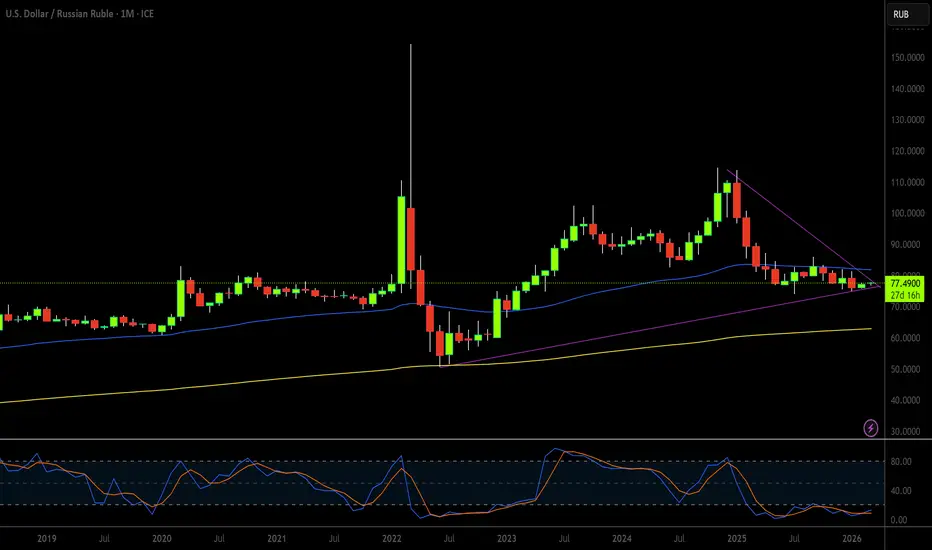
The USD/RUB exchange rate remains a premier barometer for global risk. This currency pair sits at the intersection of Western finance and Eastern energy. Investors must look beyond simple charts to understand its trajectory. Current volatility stems from a complex mix of war, technology, and shifting trade routes.
The Macroeconomic Tug-of-War
The Russian Central Bank maintains an aggressive stance to combat inflation. High interest rates support the Ruble by making domestic savings attractive. Conversely, the U.S. Federal Reserve balances cooling inflation with labor market stability. This interest rate spread dictates the immediate flow of capital. Strong U.S. economic data often bolsters the Dollar against all emerging currencies.
Geopolitical Chokepoints and Energy Shocks
Recent analysis highlights the Strait of Hormuz as a critical trigger for USD/RUB movement. A potential blockade would skyrocket global energy prices instantly. Moscow initially gains from higher oil revenues during such crises. However, long-term instability in the Middle East threatens Russia's strategic alliances. A regime collapse in Tehran could leave Moscow isolated in the region.
Geostrategy and the Pivot to the East
Russia is aggressively decoupling from Western financial systems. The Kremlin prioritizes trade in Yuan and other "friendly" currencies. This shift reduces the direct impact of U.S. sanctions on the Ruble. However, it increases dependency on the Chinese economic health. Geostrategy now dictates currency reserves more than traditional economic theory.
Industry Trends: The Sanction-Proof Business Model
Russian industries are adopting a "fortress" business model. Companies focus on internal supply chains to mitigate external shocks. This self-reliance stabilizes the domestic economy during periods of Ruble weakness. Energy firms are also investing in independent tanker fleets. These "shadow fleets" ensure consistent export volumes despite Western price caps.
Leadership and Company Culture in Crisis
Corporate Russia has embraced a culture of rapid adaptation. Management teams now prioritize agility over long-term stability. Leadership styles have become increasingly centralized and assertive. This top-down approach allows firms to pivot quickly when new sanctions emerge. Such resilience provides an unexpected floor for the Ruble's value.
High-Tech Innovation and Patent Analysis
Russia is accelerating its "technological sovereignty" program. Patent filings in domestic software and industrial hardware have surged. Russian engineers are replacing Western tech with homegrown alternatives. This innovation reduces the demand for foreign currency to fund imports. Patent analysis shows a heavy focus on energy extraction and aerospace technology.
Cyber Security and Financial Infrastructure
The stability of the Ruble depends on robust cybersecurity. Russia has developed the SPFS as an alternative to the SWIFT system. This infrastructure protects financial transactions from external interference. Constant cyber-attacks require state-of-the-art defense mechanisms. Success in this domain prevents catastrophic bank runs and currency collapses.
The Future Outlook for USD/RUB
The USD/RUB pair will remain highly sensitive to geopolitical headlines. Energy prices provide the primary support for the Ruble today. Yet, technological isolation presents a significant long-term challenge for Russia. Investors must monitor both the Strait of Hormuz and Silicon Valley. The future of this pair lies in the balance between oil and innovation.

The5ers Funding Forex Traders & Growth Program. Get Funded with up to $2.56M
We Trade Forex - Come Join Us!
the5ers.com
We Trade Forex - Come Join Us!
the5ers.com
Clause de non-responsabilité
Les informations et publications ne sont pas destinées à être, et ne constituent pas, des conseils ou recommandations financiers, d'investissement, de trading ou autres fournis ou approuvés par TradingView. Pour en savoir plus, consultez les Conditions d'utilisation.