
💀 💀 💀
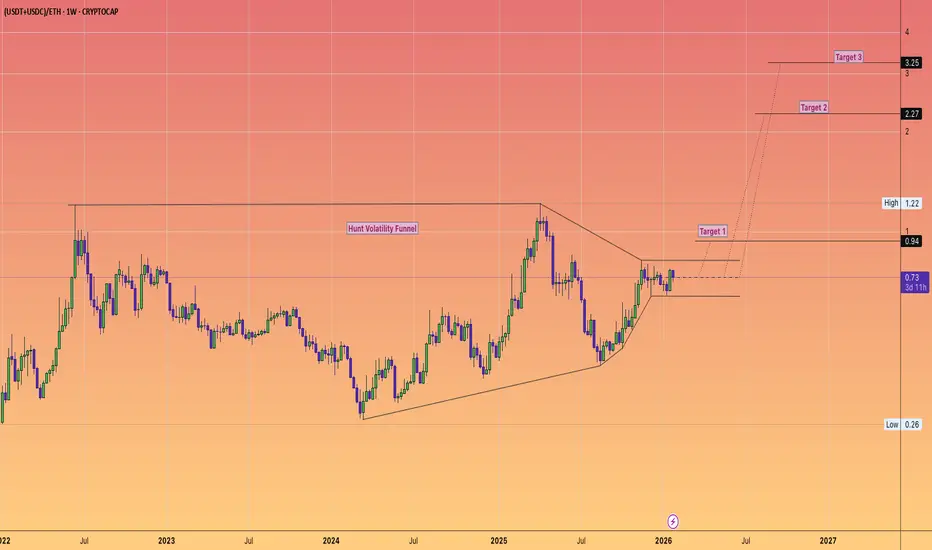
Watch the Stablecoin/ETH Market Cap ratio carefully.
A spike here isn't always 'Dry Powder' waiting to buy.
The Trap: If ETH breaks the $2,400 support level, we could see a 'Liquidation Spiral' that sends the ratio to all-time highs.
This isn't new money coming in—it's ETH value vanishing.
Safe Haven: Cash is King until ETH reclaims its 200-day SMA at $3,400."
#ETH #Ethereum #Stablecoins #MarketCrash #LiquidityTrap #CryptoAnalysis TheCryptoSniper #HVF
what does AI say:
📉 The Doomsday Ratio: (USDT + USDC) / ETH
In a crash, this ratio spikes vertically. But unlike a "healthy" spike (where new money enters), this is a "Deleveraging Spike."
1. The ETH Collapse (The Denominator Shrinks)
Revenue Compression: Layer 2s are so efficient now that they are starving the Mainnet of fees. Without a high "burn" rate, ETH is becoming slightly inflationary again, losing its "Ultra Sound Money" appeal.
The ETF "Exodus": If institutional investors see ETH as a "leveraged claim on ecosystem activity" that isn't growing, they may rotate back to Gold or Bitcoin. A sustained outflow from spot ETFs could trigger a -40% re-rating.
The Liquidation Spiral: Since many "loopers" use ETH as collateral to borrow stablecoins, a price drop below $2,400 could trigger a cascade of liquidations on Aave/Compound, forcing more ETH onto the market and crushing its market cap.
2. The TradFi Standoff (The Numerator Stagnates)
The "Trust Gap": If the ratio increases simply because ETH is dying, TradFi institutions won't "buy the dip" with new USDC. They will wait for more regulatory "Supervision" rather than just "Legislation".
The Yield Trap: If stablecoins like USDT/USDC don't offer higher yields than risk-free US Treasuries (currently highly competitive in 2026), there is no incentive for a corporate treasurer to move cash onto the blockchain.
Watch the Stablecoin/ETH Market Cap ratio carefully.
A spike here isn't always 'Dry Powder' waiting to buy.
The Trap: If ETH breaks the $2,400 support level, we could see a 'Liquidation Spiral' that sends the ratio to all-time highs.
This isn't new money coming in—it's ETH value vanishing.
Safe Haven: Cash is King until ETH reclaims its 200-day SMA at $3,400."
#ETH #Ethereum #Stablecoins #MarketCrash #LiquidityTrap #CryptoAnalysis TheCryptoSniper #HVF
what does AI say:
📉 The Doomsday Ratio: (USDT + USDC) / ETH
In a crash, this ratio spikes vertically. But unlike a "healthy" spike (where new money enters), this is a "Deleveraging Spike."
1. The ETH Collapse (The Denominator Shrinks)
Revenue Compression: Layer 2s are so efficient now that they are starving the Mainnet of fees. Without a high "burn" rate, ETH is becoming slightly inflationary again, losing its "Ultra Sound Money" appeal.
The ETF "Exodus": If institutional investors see ETH as a "leveraged claim on ecosystem activity" that isn't growing, they may rotate back to Gold or Bitcoin. A sustained outflow from spot ETFs could trigger a -40% re-rating.
The Liquidation Spiral: Since many "loopers" use ETH as collateral to borrow stablecoins, a price drop below $2,400 could trigger a cascade of liquidations on Aave/Compound, forcing more ETH onto the market and crushing its market cap.
2. The TradFi Standoff (The Numerator Stagnates)
The "Trust Gap": If the ratio increases simply because ETH is dying, TradFi institutions won't "buy the dip" with new USDC. They will wait for more regulatory "Supervision" rather than just "Legislation".
The Yield Trap: If stablecoins like USDT/USDC don't offer higher yields than risk-free US Treasuries (currently highly competitive in 2026), there is no incentive for a corporate treasurer to move cash onto the blockchain.
Note
T1 Hit#USDC
#USDT
#ETH
Transaction en cours
#eth marketcap appears ready for another leg down vs #stablecoins
Clause de non-responsabilité
Les informations et publications ne sont pas destinées à être, et ne constituent pas, des conseils ou recommandations financiers, d'investissement, de trading ou autres fournis ou approuvés par TradingView. Pour en savoir plus, consultez les Conditions d'utilisation.
Clause de non-responsabilité
Les informations et publications ne sont pas destinées à être, et ne constituent pas, des conseils ou recommandations financiers, d'investissement, de trading ou autres fournis ou approuvés par TradingView. Pour en savoir plus, consultez les Conditions d'utilisation.