
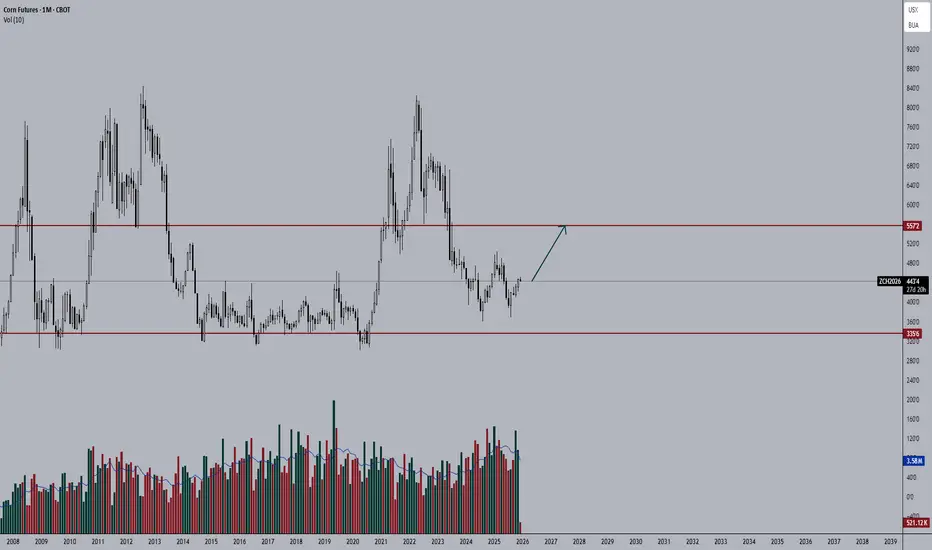
China’s demand for agricultural commodities—especially soybeans and corn—is a direct function of the country’s “agricultural revolution,” characterized by a significant dietary shift toward animal-based foods. Per capita dairy consumption has skyrocketed from 3.1 kg in 1982 to 12.6 kg in 2025, a factor that drives the need for intensive livestock feed. This massive feed demand forces China to rely on imports, even as the government implements subsidy policies to boost domestic grain production.
U.S. corn is currently competitive (at times even cheaper than Brazilian corn in 2025 due to logistical bottlenecks at Santos). Additionally, there are no active anti-dumping duties on U.S. corn at the moment.
U.S. corn is currently competitive (at times even cheaper than Brazilian corn in 2025 due to logistical bottlenecks at Santos). Additionally, there are no active anti-dumping duties on U.S. corn at the moment.
Trade fermée: cible de profit atteinte

Clause de non-responsabilité
Les informations et publications ne sont pas destinées à être, et ne constituent pas, des conseils ou recommandations financiers, d'investissement, de trading ou autres fournis ou approuvés par TradingView. Pour en savoir plus, consultez les Conditions d'utilisation.
Clause de non-responsabilité
Les informations et publications ne sont pas destinées à être, et ne constituent pas, des conseils ou recommandations financiers, d'investissement, de trading ou autres fournis ou approuvés par TradingView. Pour en savoir plus, consultez les Conditions d'utilisation.