
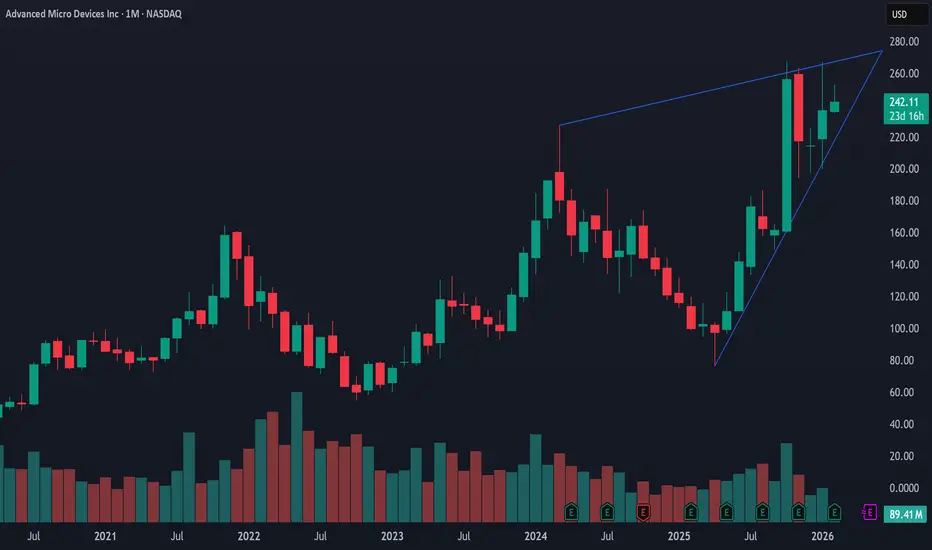
Advanced Micro Devices (AMD) recently delivered a solid Q4 earnings beat, surpassing Wall Street’s revenue and profit forecasts. Demand for AI chips remains exceptionally high, particularly within the data center segment. Despite these strong results, AMD’s stock price retreated as investors demanded more specific future guidance.
Technological Dominance and Patent Power
AMD's competitive edge stems from its revolutionary "chiplet" architecture. This modular design allows the company to mix and match components for maximum efficiency. Recent patent filings reveal a strategic focus on 3D silicon stacking and heterogeneous computing. These innovations accelerate data movement between the processor and memory. Such breakthroughs allow AMD to challenge Nvidia's dominance in the high-performance computing market.
The TSMC Trap: A Geopolitical Bottleneck
AMD’s greatest strength is also its most significant vulnerability. The company relies almost exclusively on TSMC in Taiwan for its most advanced chips. A potential Chinese invasion of Taiwan would immediately sever AMD’s vital supply chain. Furthermore, a global embargo on China would block AMD from one of its largest consumer markets. This geographic concentration represents a critical risk that no amount of innovation can fully mitigate.
Strategic Leadership and Corporate Culture
Under Dr. Lisa Su, AMD has transformed into an execution powerhouse. The leadership team prioritizes long-term roadmaps over short-term marketing gimmicks. This culture of engineering excellence has successfully captured a larger share of the lucrative server market. Management consistently hits its targets, building deep trust with enterprise clients and cloud providers.
Macroeconomic Pressures and Business Agility
High interest rates and global inflation create a challenging environment for growth-oriented technology stocks. However, AMD’s "fabless" business model provides a necessary buffer. By avoiding the massive costs of owning factories, AMD maintains high profit margins. This financial flexibility allows the company to reinvest heavily in R&D during economic downturns.
Cybersecurity and Scientific Integrity
Security is now a primary differentiator in the semiconductor industry. AMD integrates "Infinity Guard" technology directly into its silicon to prevent sophisticated hardware attacks. This focus on cybersecurity attracts high-security government and corporate contracts. As science pushes toward smaller transistors, AMD’s commitment to hardware-level encryption remains a vital selling point.
The Bottom Line for Investors
AMD remains a titan of high-tech innovation and strategic growth. Its patent portfolio and AI roadmap signal long-term industry leadership. However, savvy investors must monitor the rising tensions in the Taiwan Strait. AMD’s future depends as much on global diplomacy as it does on technological genius.
Technological Dominance and Patent Power
AMD's competitive edge stems from its revolutionary "chiplet" architecture. This modular design allows the company to mix and match components for maximum efficiency. Recent patent filings reveal a strategic focus on 3D silicon stacking and heterogeneous computing. These innovations accelerate data movement between the processor and memory. Such breakthroughs allow AMD to challenge Nvidia's dominance in the high-performance computing market.
The TSMC Trap: A Geopolitical Bottleneck
AMD’s greatest strength is also its most significant vulnerability. The company relies almost exclusively on TSMC in Taiwan for its most advanced chips. A potential Chinese invasion of Taiwan would immediately sever AMD’s vital supply chain. Furthermore, a global embargo on China would block AMD from one of its largest consumer markets. This geographic concentration represents a critical risk that no amount of innovation can fully mitigate.
Strategic Leadership and Corporate Culture
Under Dr. Lisa Su, AMD has transformed into an execution powerhouse. The leadership team prioritizes long-term roadmaps over short-term marketing gimmicks. This culture of engineering excellence has successfully captured a larger share of the lucrative server market. Management consistently hits its targets, building deep trust with enterprise clients and cloud providers.
Macroeconomic Pressures and Business Agility
High interest rates and global inflation create a challenging environment for growth-oriented technology stocks. However, AMD’s "fabless" business model provides a necessary buffer. By avoiding the massive costs of owning factories, AMD maintains high profit margins. This financial flexibility allows the company to reinvest heavily in R&D during economic downturns.
Cybersecurity and Scientific Integrity
Security is now a primary differentiator in the semiconductor industry. AMD integrates "Infinity Guard" technology directly into its silicon to prevent sophisticated hardware attacks. This focus on cybersecurity attracts high-security government and corporate contracts. As science pushes toward smaller transistors, AMD’s commitment to hardware-level encryption remains a vital selling point.
The Bottom Line for Investors
AMD remains a titan of high-tech innovation and strategic growth. Its patent portfolio and AI roadmap signal long-term industry leadership. However, savvy investors must monitor the rising tensions in the Taiwan Strait. AMD’s future depends as much on global diplomacy as it does on technological genius.

Stock N Roll!
Pernyataan Penyangkalan
Informasi dan publikasi ini tidak dimaksudkan, dan bukan merupakan, saran atau rekomendasi keuangan, investasi, trading, atau jenis lainnya yang diberikan atau didukung oleh TradingView. Baca selengkapnya di Ketentuan Penggunaan.
Stock N Roll!
Pernyataan Penyangkalan
Informasi dan publikasi ini tidak dimaksudkan, dan bukan merupakan, saran atau rekomendasi keuangan, investasi, trading, atau jenis lainnya yang diberikan atau didukung oleh TradingView. Baca selengkapnya di Ketentuan Penggunaan.