
Most traders would look at a 46% win rate and dismiss it. Losing more trades than you win sounds like a failing strategy. If that is your reaction, you are thinking about trading incorrectly — and that mistake is probably costing you money.
The math that matters:
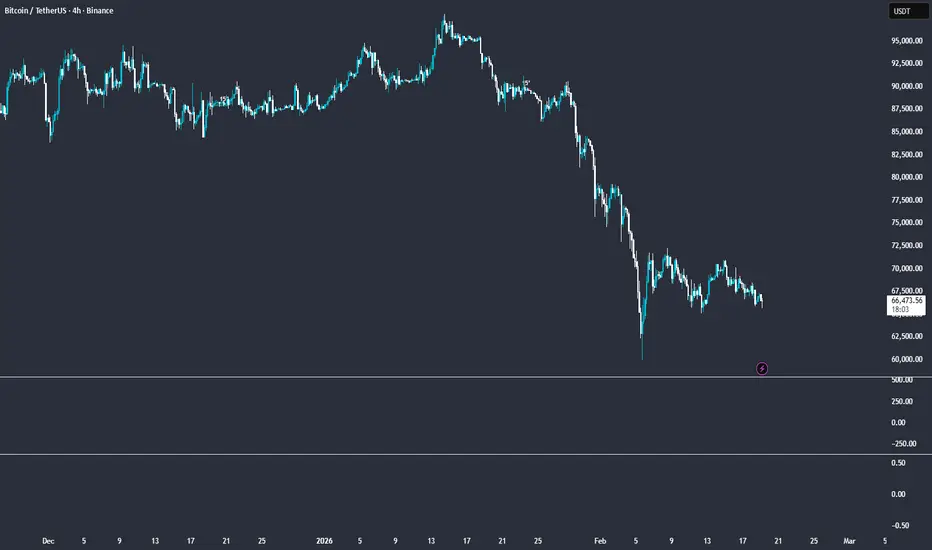
These are real numbers from backtesting an SMC confluence model on BTCUSDT 4H, January 2021 through February 2026 (5 full years including the bear market), with 0.075% commission per trade, 3 ticks of slippage, and 10% equity per trade:
| Metric | Value |
|---|---|
| Total trades | 90 |
| Win rate | 45.56% |
| Net P&L | +14.36% |
| Profit factor | 1.95 |
| Max drawdown | 1.36% |
The system wins fewer than half its trades. And it still generated positive returns over 5 years across bull and bear markets. How?
Because the average win is roughly twice the size of the average loss.
This is positive expectancy:
Expectancy = (Win% x Avg Win) - (Loss% x Avg Loss)
When your profit factor is 1.95, it means for every dollar you lose, you recover nearly two. The individual trade does not matter. The series does.
Why this matters psychologically:
Mark Douglas wrote something that changed how I approach every trade: "There is a random distribution between wins and losses for any given set of variables that define an edge."
Random distribution. You cannot know which specific trade will win or lose. You only know that over 50, 100, 500 trades, the math will play out in your favor — if you have an edge and you execute it consistently.
The problem for most traders is that they cannot tolerate the randomness. They win three in a row and increase size. They lose two in a row and abandon the strategy. They chase a higher win rate because 46% feels wrong.
But feeling has nothing to do with profitability. Data does.
How structure-based trading solves this:
When I was building algorithmic systems for a fund, the models did not have opinions about individual trades. They had rules. Entry conditions met? Take the trade. Not met? Do nothing.
That is exactly how a structural SMC approach works:
1. Break of Structure confirms directional bias
2. Order Block defines the entry zone
3. Fair Value Gap provides confluence
4. Liquidity sweep confirms institutional activity
When all conditions align, you take the trade. When they do not, you do nothing. No discretion. No "I think the market looks bullish today."
Douglas called this "the zone" — effortless execution without emotional interference. It is the natural result of removing subjective interpretation. When the structure is objective, your only job is to manage risk and follow the system.
The real question is not "How do I win more trades?"
It is: "Do I have a positive expectancy system, and can I execute it without interference?"
If the answer to both is yes, a 46% win rate is not just acceptable. It is profitable. Across 5 years. Through a bear market. With real commissions.
Disclaimer: This is educational content, not financial advice. Past performance does not guarantee future results. A positive expectancy system can still produce losses over any given period.
The math that matters:
These are real numbers from backtesting an SMC confluence model on BTCUSDT 4H, January 2021 through February 2026 (5 full years including the bear market), with 0.075% commission per trade, 3 ticks of slippage, and 10% equity per trade:
| Metric | Value |
|---|---|
| Total trades | 90 |
| Win rate | 45.56% |
| Net P&L | +14.36% |
| Profit factor | 1.95 |
| Max drawdown | 1.36% |
The system wins fewer than half its trades. And it still generated positive returns over 5 years across bull and bear markets. How?
Because the average win is roughly twice the size of the average loss.
This is positive expectancy:
Expectancy = (Win% x Avg Win) - (Loss% x Avg Loss)
When your profit factor is 1.95, it means for every dollar you lose, you recover nearly two. The individual trade does not matter. The series does.
Why this matters psychologically:
Mark Douglas wrote something that changed how I approach every trade: "There is a random distribution between wins and losses for any given set of variables that define an edge."
Random distribution. You cannot know which specific trade will win or lose. You only know that over 50, 100, 500 trades, the math will play out in your favor — if you have an edge and you execute it consistently.
The problem for most traders is that they cannot tolerate the randomness. They win three in a row and increase size. They lose two in a row and abandon the strategy. They chase a higher win rate because 46% feels wrong.
But feeling has nothing to do with profitability. Data does.
How structure-based trading solves this:
When I was building algorithmic systems for a fund, the models did not have opinions about individual trades. They had rules. Entry conditions met? Take the trade. Not met? Do nothing.
That is exactly how a structural SMC approach works:
1. Break of Structure confirms directional bias
2. Order Block defines the entry zone
3. Fair Value Gap provides confluence
4. Liquidity sweep confirms institutional activity
When all conditions align, you take the trade. When they do not, you do nothing. No discretion. No "I think the market looks bullish today."
Douglas called this "the zone" — effortless execution without emotional interference. It is the natural result of removing subjective interpretation. When the structure is objective, your only job is to manage risk and follow the system.
The real question is not "How do I win more trades?"
It is: "Do I have a positive expectancy system, and can I execute it without interference?"
If the answer to both is yes, a 46% win rate is not just acceptable. It is profitable. Across 5 years. Through a bear market. With real commissions.
Disclaimer: This is educational content, not financial advice. Past performance does not guarantee future results. A positive expectancy system can still produce losses over any given period.

Pernyataan Penyangkalan
Informasi dan publikasi ini tidak dimaksudkan, dan bukan merupakan, saran atau rekomendasi keuangan, investasi, trading, atau jenis lainnya yang diberikan atau didukung oleh TradingView. Baca selengkapnya di Ketentuan Penggunaan.
Pernyataan Penyangkalan
Informasi dan publikasi ini tidak dimaksudkan, dan bukan merupakan, saran atau rekomendasi keuangan, investasi, trading, atau jenis lainnya yang diberikan atau didukung oleh TradingView. Baca selengkapnya di Ketentuan Penggunaan.