
Strategies to Protect Capital During Economic Downturns
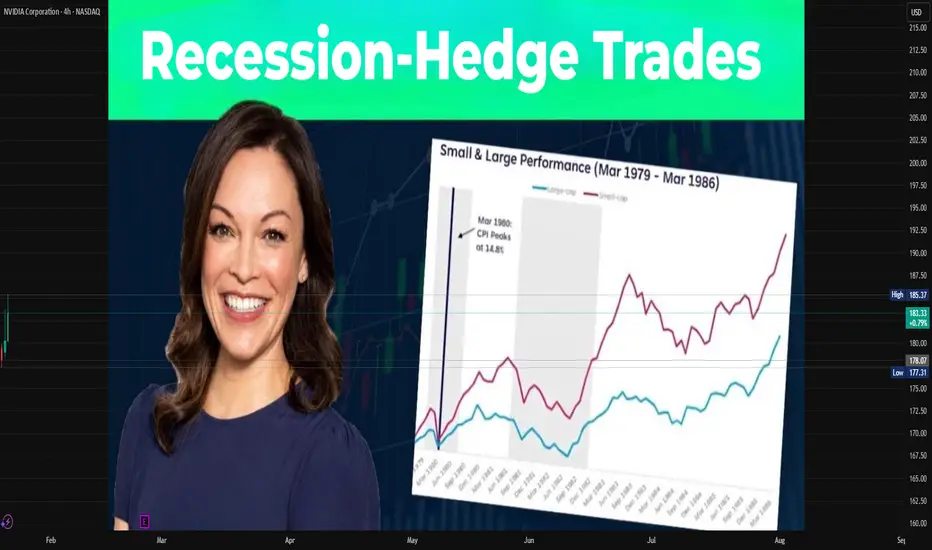
A recession is a phase of economic contraction marked by falling GDP growth, declining corporate earnings, rising unemployment, and tightening financial conditions. For investors and traders, recessions are challenging because traditional risk assets—especially equities—tend to underperform, volatility rises, and correlations across markets often increase. Recession-hedge trades are strategies designed to protect capital, reduce portfolio drawdowns, and in some cases generate profits when economic conditions deteriorate.
This essay explains the concept of recession-hedge trades, why they work, and the major asset classes and strategies commonly used as effective hedges during downturns.
1. Why Recession-Hedge Trades Are Necessary
Most portfolios are structurally biased toward growth. Equities, high-yield bonds, commodities linked to industrial demand, and emerging markets all perform best when economic activity is expanding. During recessions:
Corporate profits shrink
Consumer spending weakens
Credit defaults increase
Central banks may cut rates, but often after damage is already done
As a result, portfolios without protection can experience steep drawdowns. Recession-hedge trades act as insurance, helping offset losses from risk assets and providing liquidity when it is most valuable.
2. Core Characteristics of Effective Recession Hedges
A good recession hedge usually has one or more of the following traits:
Negative or low correlation with equities
Benefits from falling interest rates
Performs well during risk-off sentiment
Preserves capital during volatility spikes
Maintains liquidity in stressed markets
No single hedge is perfect. Most professional investors combine several hedges to diversify protection.
3. Government Bonds and Duration Trades
One of the most classic recession-hedge trades is long-duration government bonds, particularly sovereign bonds issued by stable economies.
Why they work:
Central banks typically cut interest rates during recessions.
Falling yields increase bond prices.
Investors seek safety, driving demand for government debt.
Common trades:
Long 10-year or 30-year government bonds
Bond ETFs focused on long duration
Yield-curve steepener or flattener trades, depending on policy expectations
Limitations:
If inflation is high, bonds may not perform well.
In stagflationary recessions, bond returns can be muted.
4. Gold and Precious Metals
Gold is one of the most widely used recession and crisis hedges.
Why gold works:
Acts as a store of value during uncertainty
Performs well when real interest rates fall
Benefits from currency debasement and monetary easing
Related trades:
Physical gold or gold ETFs
Gold mining stocks (higher risk, higher beta)
Silver as a secondary hedge
Limitations:
Gold does not generate income.
Performance can lag if the recession is deflationary and the dollar strengthens sharply.
5. Defensive Equity Sectors
Not all equities perform poorly during recessions. Defensive sectors tend to show relative resilience.
Key defensive sectors:
Consumer staples (food, beverages, household goods)
Utilities
Healthcare and pharmaceuticals
Telecom services
Why they work:
Demand for essential goods and services remains stable.
Earnings volatility is lower compared to cyclical sectors.
Typical strategy:
Rotate out of cyclicals (autos, metals, real estate, discretionary)
Increase allocation to defensive stocks or ETFs
Limitations:
Still exposed to market risk
Can underperform sharply during deep market panics
6. Cash and Short-Term Instruments
Holding cash or cash-equivalent instruments is often underestimated as a recession hedge.
Why cash is powerful:
Zero volatility
Provides flexibility and liquidity
Allows buying distressed assets later at attractive valuations
Instruments used:
Treasury bills
Money market funds
Short-term fixed-income funds
During severe downturns, cash is not just defensive—it becomes a strategic weapon.
7. Volatility Trades (VIX and Options)
Recessions are associated with sharp spikes in market volatility. Volatility hedges can be highly effective.
Common volatility trades:
Long VIX futures or VIX ETFs
Buying put options on major indices
Put spreads or collar strategies
Why they work:
Volatility rises rapidly during market stress
Option premiums increase when fear dominates markets
Limitations:
Carry costs can be high
Timing is critical—volatility products decay over time
8. Currency Hedges and Safe-Haven Currencies
Certain currencies tend to appreciate during global downturns.
Typical safe-haven currencies:
US Dollar
Japanese Yen
Swiss Franc
Why they work:
Capital flows toward perceived safety
Funding currencies strengthen as risk trades unwind
Strategies:
Long USD against emerging market currencies
Long JPY during global risk-off phases
Limitations:
Currency markets are influenced by central bank interventions
Safe-haven behavior can change over time
9. Short Cyclical and High-Beta Assets
More aggressive recession-hedge trades involve short positions in assets that are highly sensitive to economic growth.
Common short targets:
Cyclical stocks (metals, construction, autos)
Small-cap indices
High-yield (junk) bonds
Overleveraged companies
Why they work:
Earnings collapse faster in cyclicals
Credit stress hurts leveraged firms the most
Risks:
Short squeezes
Policy stimulus can trigger sharp counter-trend rallies
10. Alternative and Tactical Hedges
Advanced investors also use alternative hedges such as:
Trend-following strategies (CTAs)
Managed futures
Market-neutral or long-short funds
Tail-risk hedge funds
These strategies aim to profit from sustained trends and large market dislocations rather than traditional asset relationships.
11. Building a Balanced Recession-Hedge Portfolio
A well-constructed recession hedge does not rely on a single trade. Instead, it combines:
Bonds for rate-cut exposure
Gold for monetary instability
Cash for flexibility
Defensive equities for income
Options or volatility for tail risk
The goal is not to eliminate losses entirely, but to smooth returns, reduce emotional stress, and preserve capital for future opportunities.
Conclusion
Recession-hedge trades are essential tools for navigating economic downturns. They shift portfolios from growth dependence toward resilience and capital preservation. While no hedge works perfectly in every recession, a diversified and disciplined approach can significantly reduce downside risk.
A recession is a phase of economic contraction marked by falling GDP growth, declining corporate earnings, rising unemployment, and tightening financial conditions. For investors and traders, recessions are challenging because traditional risk assets—especially equities—tend to underperform, volatility rises, and correlations across markets often increase. Recession-hedge trades are strategies designed to protect capital, reduce portfolio drawdowns, and in some cases generate profits when economic conditions deteriorate.
This essay explains the concept of recession-hedge trades, why they work, and the major asset classes and strategies commonly used as effective hedges during downturns.
1. Why Recession-Hedge Trades Are Necessary
Most portfolios are structurally biased toward growth. Equities, high-yield bonds, commodities linked to industrial demand, and emerging markets all perform best when economic activity is expanding. During recessions:
Corporate profits shrink
Consumer spending weakens
Credit defaults increase
Central banks may cut rates, but often after damage is already done
As a result, portfolios without protection can experience steep drawdowns. Recession-hedge trades act as insurance, helping offset losses from risk assets and providing liquidity when it is most valuable.
2. Core Characteristics of Effective Recession Hedges
A good recession hedge usually has one or more of the following traits:
Negative or low correlation with equities
Benefits from falling interest rates
Performs well during risk-off sentiment
Preserves capital during volatility spikes
Maintains liquidity in stressed markets
No single hedge is perfect. Most professional investors combine several hedges to diversify protection.
3. Government Bonds and Duration Trades
One of the most classic recession-hedge trades is long-duration government bonds, particularly sovereign bonds issued by stable economies.
Why they work:
Central banks typically cut interest rates during recessions.
Falling yields increase bond prices.
Investors seek safety, driving demand for government debt.
Common trades:
Long 10-year or 30-year government bonds
Bond ETFs focused on long duration
Yield-curve steepener or flattener trades, depending on policy expectations
Limitations:
If inflation is high, bonds may not perform well.
In stagflationary recessions, bond returns can be muted.
4. Gold and Precious Metals
Gold is one of the most widely used recession and crisis hedges.
Why gold works:
Acts as a store of value during uncertainty
Performs well when real interest rates fall
Benefits from currency debasement and monetary easing
Related trades:
Physical gold or gold ETFs
Gold mining stocks (higher risk, higher beta)
Silver as a secondary hedge
Limitations:
Gold does not generate income.
Performance can lag if the recession is deflationary and the dollar strengthens sharply.
5. Defensive Equity Sectors
Not all equities perform poorly during recessions. Defensive sectors tend to show relative resilience.
Key defensive sectors:
Consumer staples (food, beverages, household goods)
Utilities
Healthcare and pharmaceuticals
Telecom services
Why they work:
Demand for essential goods and services remains stable.
Earnings volatility is lower compared to cyclical sectors.
Typical strategy:
Rotate out of cyclicals (autos, metals, real estate, discretionary)
Increase allocation to defensive stocks or ETFs
Limitations:
Still exposed to market risk
Can underperform sharply during deep market panics
6. Cash and Short-Term Instruments
Holding cash or cash-equivalent instruments is often underestimated as a recession hedge.
Why cash is powerful:
Zero volatility
Provides flexibility and liquidity
Allows buying distressed assets later at attractive valuations
Instruments used:
Treasury bills
Money market funds
Short-term fixed-income funds
During severe downturns, cash is not just defensive—it becomes a strategic weapon.
7. Volatility Trades (VIX and Options)
Recessions are associated with sharp spikes in market volatility. Volatility hedges can be highly effective.
Common volatility trades:
Long VIX futures or VIX ETFs
Buying put options on major indices
Put spreads or collar strategies
Why they work:
Volatility rises rapidly during market stress
Option premiums increase when fear dominates markets
Limitations:
Carry costs can be high
Timing is critical—volatility products decay over time
8. Currency Hedges and Safe-Haven Currencies
Certain currencies tend to appreciate during global downturns.
Typical safe-haven currencies:
US Dollar
Japanese Yen
Swiss Franc
Why they work:
Capital flows toward perceived safety
Funding currencies strengthen as risk trades unwind
Strategies:
Long USD against emerging market currencies
Long JPY during global risk-off phases
Limitations:
Currency markets are influenced by central bank interventions
Safe-haven behavior can change over time
9. Short Cyclical and High-Beta Assets
More aggressive recession-hedge trades involve short positions in assets that are highly sensitive to economic growth.
Common short targets:
Cyclical stocks (metals, construction, autos)
Small-cap indices
High-yield (junk) bonds
Overleveraged companies
Why they work:
Earnings collapse faster in cyclicals
Credit stress hurts leveraged firms the most
Risks:
Short squeezes
Policy stimulus can trigger sharp counter-trend rallies
10. Alternative and Tactical Hedges
Advanced investors also use alternative hedges such as:
Trend-following strategies (CTAs)
Managed futures
Market-neutral or long-short funds
Tail-risk hedge funds
These strategies aim to profit from sustained trends and large market dislocations rather than traditional asset relationships.
11. Building a Balanced Recession-Hedge Portfolio
A well-constructed recession hedge does not rely on a single trade. Instead, it combines:
Bonds for rate-cut exposure
Gold for monetary instability
Cash for flexibility
Defensive equities for income
Options or volatility for tail risk
The goal is not to eliminate losses entirely, but to smooth returns, reduce emotional stress, and preserve capital for future opportunities.
Conclusion
Recession-hedge trades are essential tools for navigating economic downturns. They shift portfolios from growth dependence toward resilience and capital preservation. While no hedge works perfectly in every recession, a diversified and disciplined approach can significantly reduce downside risk.

Hye Guys,Welcome to a professional trading journey built on precision, discipline, and smart money concepts.
📞 Phone: +91 93159 78955
💬 WhatsApp: wa.link/kdkejz
📩 Contact Mail: globalwolfstreet@gmail.com
📞 Phone: +91 93159 78955
💬 WhatsApp: wa.link/kdkejz
📩 Contact Mail: globalwolfstreet@gmail.com
Publikasi terkait
Pernyataan Penyangkalan
Informasi dan publikasi ini tidak dimaksudkan, dan bukan merupakan, saran atau rekomendasi keuangan, investasi, trading, atau jenis lainnya yang diberikan atau didukung oleh TradingView. Baca selengkapnya di Ketentuan Penggunaan.
Hye Guys,Welcome to a professional trading journey built on precision, discipline, and smart money concepts.
📞 Phone: +91 93159 78955
💬 WhatsApp: wa.link/kdkejz
📩 Contact Mail: globalwolfstreet@gmail.com
📞 Phone: +91 93159 78955
💬 WhatsApp: wa.link/kdkejz
📩 Contact Mail: globalwolfstreet@gmail.com
Publikasi terkait
Pernyataan Penyangkalan
Informasi dan publikasi ini tidak dimaksudkan, dan bukan merupakan, saran atau rekomendasi keuangan, investasi, trading, atau jenis lainnya yang diberikan atau didukung oleh TradingView. Baca selengkapnya di Ketentuan Penggunaan.