
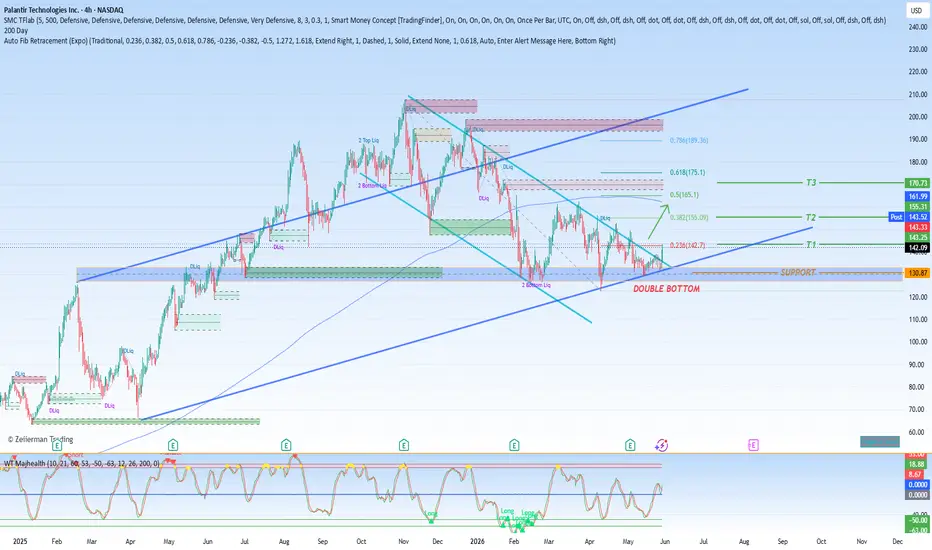
For a considerable period, Palantir Technologies (NASDAQ: PLTR) stood out as one of the best-performing artificial intelligence (AI) stocks available to public market investors. The company, known for its sophisticated data analytics platforms and its deep ties to government and defense contracts, regularly saw its share price climb to new record highs. Enthusiasm around Palantir's artificial intelligence platform (AIP) and its ability to win large-scale enterprise deals fueled a powerful rally that made early investors substantial gains.
However, that momentum has noticeably cooled over the past six months or so. The market's once-unwavering enthusiasm for Palantir has waned, and the stock has given back a meaningful portion of its earlier gains. Palantir shares peaked back in October, and since reaching that high-water mark, the stock has fallen by approximately 35%. That decline represents a significant course correction, especially for a company that had been viewed as a relentless upward mover in the AI space.
What makes Palantir's recent performance particularly notable is its divergence from the broader AI stock rally. Unlike most other AI-focused companies, which have continued to see strong buying interest and have either held their ground or resumed climbing after minor pullbacks, Palantir has been trading largely sideways—with a slight downward tilt—since the beginning of April. This sideways-to-lower price action suggests that the factors driving the stock's previous ascent may be losing steam, or that investors are reassessing the company's valuation in light of new competitive dynamics, profit-taking pressures, or concerns about the pace of commercial adoption.
For investors considering whether to buy the dip, the decision hinges on several key questions. Is the 35% decline a temporary overreaction that presents a compelling entry point, or does it signal deeper challenges that could continue to weigh on the stock? Has Palantir's valuation simply become too rich relative to its growth prospects, or is the market failing to appreciate the full potential of its AI-driven government and commercial pipelines? And how should one weigh the company's impressive revenue growth and contract wins against concerns about cash flow, dilution, and rising competition from the likes of Microsoft, Amazon, and emerging AI-focused startups?
Ultimately, buying the dip in Palantir requires a willingness to accept continued volatility and a belief that the company's long-term strategic positioning in the AI and defense analytics space will ultimately justify a higher valuation. For patient investors with a high risk tolerance, the current pullback may indeed represent an opportunity. For those with shorter time horizons or lower tolerance for sharp swings, however, the sideways drift since April may be a signal that clearer signs of a renewed uptrend are needed before committing fresh capital.
However, that momentum has noticeably cooled over the past six months or so. The market's once-unwavering enthusiasm for Palantir has waned, and the stock has given back a meaningful portion of its earlier gains. Palantir shares peaked back in October, and since reaching that high-water mark, the stock has fallen by approximately 35%. That decline represents a significant course correction, especially for a company that had been viewed as a relentless upward mover in the AI space.
What makes Palantir's recent performance particularly notable is its divergence from the broader AI stock rally. Unlike most other AI-focused companies, which have continued to see strong buying interest and have either held their ground or resumed climbing after minor pullbacks, Palantir has been trading largely sideways—with a slight downward tilt—since the beginning of April. This sideways-to-lower price action suggests that the factors driving the stock's previous ascent may be losing steam, or that investors are reassessing the company's valuation in light of new competitive dynamics, profit-taking pressures, or concerns about the pace of commercial adoption.
For investors considering whether to buy the dip, the decision hinges on several key questions. Is the 35% decline a temporary overreaction that presents a compelling entry point, or does it signal deeper challenges that could continue to weigh on the stock? Has Palantir's valuation simply become too rich relative to its growth prospects, or is the market failing to appreciate the full potential of its AI-driven government and commercial pipelines? And how should one weigh the company's impressive revenue growth and contract wins against concerns about cash flow, dilution, and rising competition from the likes of Microsoft, Amazon, and emerging AI-focused startups?
Ultimately, buying the dip in Palantir requires a willingness to accept continued volatility and a belief that the company's long-term strategic positioning in the AI and defense analytics space will ultimately justify a higher valuation. For patient investors with a high risk tolerance, the current pullback may indeed represent an opportunity. For those with shorter time horizons or lower tolerance for sharp swings, however, the sideways drift since April may be a signal that clearer signs of a renewed uptrend are needed before committing fresh capital.

Pernyataan Penyangkalan
Informasi dan publikasi ini tidak dimaksudkan, dan bukan merupakan, saran atau rekomendasi keuangan, investasi, trading, atau jenis lainnya yang diberikan atau didukung oleh TradingView. Baca selengkapnya di Ketentuan Penggunaan.
Pernyataan Penyangkalan
Informasi dan publikasi ini tidak dimaksudkan, dan bukan merupakan, saran atau rekomendasi keuangan, investasi, trading, atau jenis lainnya yang diberikan atau didukung oleh TradingView. Baca selengkapnya di Ketentuan Penggunaan.