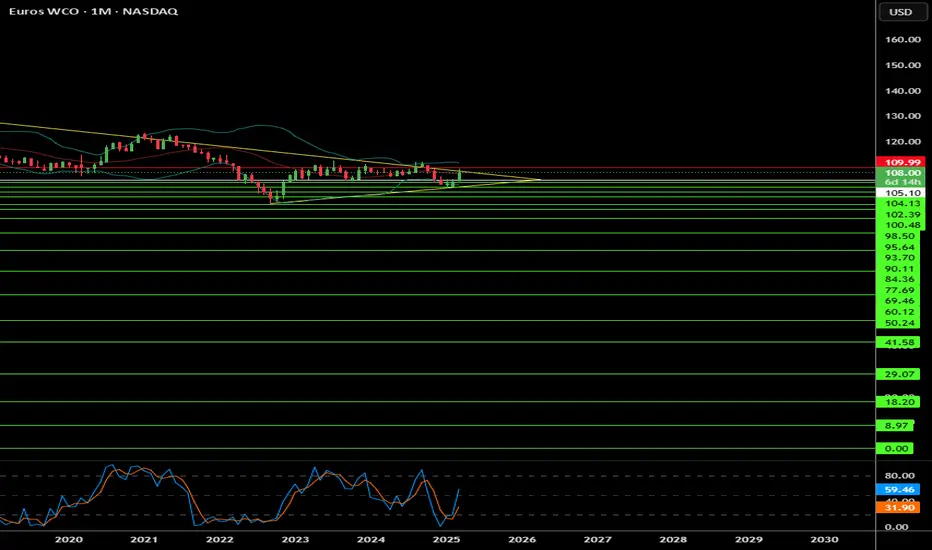
The Euro Currency Index stands at a crossroads, its future clouded by a confluence of political, economic, and social forces that threaten to unravel the very fabric of Europe. Rising nationalism, fueled by demographic shifts and economic fragility, is driving political instability across the continent. This unrest, particularly in economic powerhouses like Germany, triggers capital flight and erodes investor confidence. Meanwhile, geopolitical realignments—most notably the U.S.'s strategic pivot away from Europe—are weakening the euro's global standing. As these forces converge, the eurozone's once-solid foundation appears increasingly fragile, raising a critical question: is the stability of the euro merely an illusion?
Beneath the surface, deeper threats loom. Europe's aging population and shrinking workforce exacerbate economic stagnation, while the European Union's cohesion is tested by fragmentation risks, from Brexit's lingering effects to Italy's debt woes. These challenges are not isolated; they feed into a cycle of uncertainty that could destabilize financial markets and undermine the euro's value. Yet, history reminds us that Europe has weathered storms before. Its ability to adapt—through political unity, economic reform, and innovation—could determine whether the euro emerges stronger or succumbs to the pressures mounting against it.
The path forward is fraught with complexity, but it also presents an opportunity. Will Europe confront its demographic and political challenges head-on, or will it allow hidden vulnerabilities to dictate its fate? The answer may reshape not only the euro's trajectory but the future of global finance itself. As investors, policymakers, and citizens watch this drama unfold, one thing is clear: the euro's story is far from over, and its next chapter demands bold vision and decisive action. What do you see in the shadows of this unfolding crisis?
Beneath the surface, deeper threats loom. Europe's aging population and shrinking workforce exacerbate economic stagnation, while the European Union's cohesion is tested by fragmentation risks, from Brexit's lingering effects to Italy's debt woes. These challenges are not isolated; they feed into a cycle of uncertainty that could destabilize financial markets and undermine the euro's value. Yet, history reminds us that Europe has weathered storms before. Its ability to adapt—through political unity, economic reform, and innovation—could determine whether the euro emerges stronger or succumbs to the pressures mounting against it.
The path forward is fraught with complexity, but it also presents an opportunity. Will Europe confront its demographic and political challenges head-on, or will it allow hidden vulnerabilities to dictate its fate? The answer may reshape not only the euro's trajectory but the future of global finance itself. As investors, policymakers, and citizens watch this drama unfold, one thing is clear: the euro's story is far from over, and its next chapter demands bold vision and decisive action. What do you see in the shadows of this unfolding crisis?

Connecting the dots to Decode the Invisible. This post is a summary. To understand the rigged game, you need the evidence. Access the Full Analysis + Raw Sources (Lab Reports, Patents, Academic Research & Cyber Intel). See the reality here ➜ udisview.com
כתב ויתור
המידע והפרסומים אינם מיועדים להיות, ואינם מהווים, ייעוץ או המלצה פיננסית, השקעתית, מסחרית או מכל סוג אחר המסופקת או מאושרת על ידי TradingView. קרא עוד ב־תנאי השימוש.
Connecting the dots to Decode the Invisible. This post is a summary. To understand the rigged game, you need the evidence. Access the Full Analysis + Raw Sources (Lab Reports, Patents, Academic Research & Cyber Intel). See the reality here ➜ udisview.com
כתב ויתור
המידע והפרסומים אינם מיועדים להיות, ואינם מהווים, ייעוץ או המלצה פיננסית, השקעתית, מסחרית או מכל סוג אחר המסופקת או מאושרת על ידי TradingView. קרא עוד ב־תנאי השימוש.