OPEN-SOURCE SCRIPT
Multi-System (RSI2 + Squeeze + MACD/ADX)
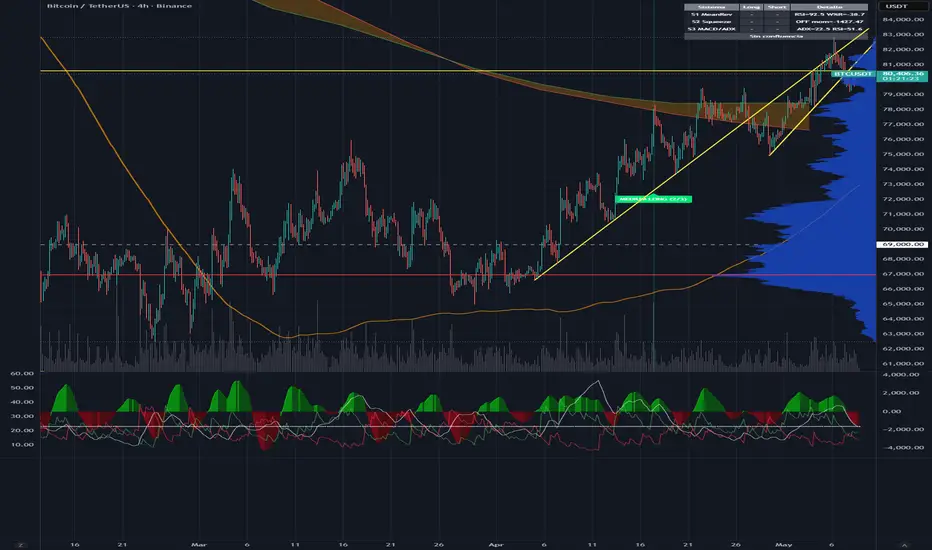
Confluence Multi-System combines three independent, well-documented signal frameworks into a single overlay and only fires alerts when two or more agree on direction. The goal is to filter noise: each system has its own logic and failure mode, so coincidence between them is statistically rarer and historically higher quality than any individual signal.
THE THREE SYSTEMS
System 1 — Mean Reversion (RSI-2 + Williams %R + 200 SMA)
Larry Connors-style countertrend setup. Trades only in the direction of the 200 SMA trend filter, requires RSI(2) at an extreme (<5 long, >95 short) and Williams %R(10) confirming (<-90 long, >-10 short). Designed for pullbacks within a trend, not reversals against it.
System 2 — TTM Squeeze
Classic John Carter volatility compression setup. Detects when Bollinger Bands(20, 2.0) contract inside Keltner Channels(20, 1.5) — a "squeeze" — then signals on the release in the direction of a linear-regression momentum oscillator. Catches breakouts after consolidation.
System 3 — Triple Confirmation (MACD + RSI + ADX)
Trend-following filter stack. Long requires MACD(12,26,9) bullish cross + RSI(14) > 50 + ADX(14) > 25. Short is the mirror. ADX gates out chop; RSI confirms the cross is in the dominant momentum side.
CONFLUENCE LOGIC
The indicator counts how many systems are signaling in the same direction on the same bar:
• 3/3 → STRONG signal (background tinted, label printed, dedicated alert)
• 2/3 → MEDIUM signal (lighter tint, dedicated alert)
• <2 → no signal, no alert
The minimum number of systems required can be configured (default 2). You can also disable any system individually if you want to test 2-of-2 confluence on specific pairs.
WHAT YOU SEE ON THE CHART
• Background tint on confluence bars (green/red strong, lime/fuchsia medium)
• Labels marking the bar where confluence first appears
• 200 SMA plotted as visual reference for the System 1 trend filter
• A status table (top-right) showing for each system: long/short state, key indicator values (RSI, Williams %R, ADX, squeeze state, momentum), plus a summary row with the current confluence level
ALERTS
Six alertconditions are exposed:
• STRONG LONG (3/3) / STRONG SHORT (3/3)
• MEDIUM LONG (2/3) / MEDIUM SHORT (2/3)
• ANY CONFLUENCE LONG / ANY CONFLUENCE SHORT (respect the configured minimum)
Alerts include ticker, interval, and close price via standard TradingView placeholders.
INPUTS
All three systems are fully parametrized: SMA length, RSI/Williams %R lengths and thresholds, Bollinger and Keltner lengths and multipliers, MACD periods, ADX length and minimum strength. Defaults match the original published values for each framework.
USE CASES
• Day trading on lower timeframes — wait for 2/3 or 3/3 to enter, exit on opposite confluence or your own stop
• Swing trading on 1H/4H/Daily — confluence becomes rare but high quality
• As a confirmation layer over your own strategy — read the table to see which systems agree before pulling the trigger
NOTES AND DISCLAIMERS
This is an indicator, not a strategy — it does not place orders, manage stops, or compute P&L. Win-rate ranges referenced for each underlying system come from the original literature (Connors, Carter, Wilder/Appel) and are heavily dependent on instrument, timeframe, and exit logic. Past performance does not guarantee future results. Always backtest with your own exit rules before trading live.
Open source — fork it, adapt the thresholds, plug in your own systems.
THE THREE SYSTEMS
System 1 — Mean Reversion (RSI-2 + Williams %R + 200 SMA)
Larry Connors-style countertrend setup. Trades only in the direction of the 200 SMA trend filter, requires RSI(2) at an extreme (<5 long, >95 short) and Williams %R(10) confirming (<-90 long, >-10 short). Designed for pullbacks within a trend, not reversals against it.
System 2 — TTM Squeeze
Classic John Carter volatility compression setup. Detects when Bollinger Bands(20, 2.0) contract inside Keltner Channels(20, 1.5) — a "squeeze" — then signals on the release in the direction of a linear-regression momentum oscillator. Catches breakouts after consolidation.
System 3 — Triple Confirmation (MACD + RSI + ADX)
Trend-following filter stack. Long requires MACD(12,26,9) bullish cross + RSI(14) > 50 + ADX(14) > 25. Short is the mirror. ADX gates out chop; RSI confirms the cross is in the dominant momentum side.
CONFLUENCE LOGIC
The indicator counts how many systems are signaling in the same direction on the same bar:
• 3/3 → STRONG signal (background tinted, label printed, dedicated alert)
• 2/3 → MEDIUM signal (lighter tint, dedicated alert)
• <2 → no signal, no alert
The minimum number of systems required can be configured (default 2). You can also disable any system individually if you want to test 2-of-2 confluence on specific pairs.
WHAT YOU SEE ON THE CHART
• Background tint on confluence bars (green/red strong, lime/fuchsia medium)
• Labels marking the bar where confluence first appears
• 200 SMA plotted as visual reference for the System 1 trend filter
• A status table (top-right) showing for each system: long/short state, key indicator values (RSI, Williams %R, ADX, squeeze state, momentum), plus a summary row with the current confluence level
ALERTS
Six alertconditions are exposed:
• STRONG LONG (3/3) / STRONG SHORT (3/3)
• MEDIUM LONG (2/3) / MEDIUM SHORT (2/3)
• ANY CONFLUENCE LONG / ANY CONFLUENCE SHORT (respect the configured minimum)
Alerts include ticker, interval, and close price via standard TradingView placeholders.
INPUTS
All three systems are fully parametrized: SMA length, RSI/Williams %R lengths and thresholds, Bollinger and Keltner lengths and multipliers, MACD periods, ADX length and minimum strength. Defaults match the original published values for each framework.
USE CASES
• Day trading on lower timeframes — wait for 2/3 or 3/3 to enter, exit on opposite confluence or your own stop
• Swing trading on 1H/4H/Daily — confluence becomes rare but high quality
• As a confirmation layer over your own strategy — read the table to see which systems agree before pulling the trigger
NOTES AND DISCLAIMERS
This is an indicator, not a strategy — it does not place orders, manage stops, or compute P&L. Win-rate ranges referenced for each underlying system come from the original literature (Connors, Carter, Wilder/Appel) and are heavily dependent on instrument, timeframe, and exit logic. Past performance does not guarantee future results. Always backtest with your own exit rules before trading live.
Open source — fork it, adapt the thresholds, plug in your own systems.
סקריפט קוד פתוח
ברוח האמיתית של TradingView, יוצר הסקריפט הזה הפך אותו לקוד פתוח, כך שסוחרים יוכלו לעיין בו ולאמת את פעולתו. כל הכבוד למחבר! אמנם ניתן להשתמש בו בחינם, אך זכור כי פרסום חוזר של הקוד כפוף ל־כללי הבית שלנו.

כתב ויתור
המידע והפרסומים אינם מיועדים להיות, ואינם מהווים, ייעוץ או המלצה פיננסית, השקעתית, מסחרית או מכל סוג אחר המסופקת או מאושרת על ידי TradingView. קרא עוד ב־תנאי השימוש.
סקריפט קוד פתוח
ברוח האמיתית של TradingView, יוצר הסקריפט הזה הפך אותו לקוד פתוח, כך שסוחרים יוכלו לעיין בו ולאמת את פעולתו. כל הכבוד למחבר! אמנם ניתן להשתמש בו בחינם, אך זכור כי פרסום חוזר של הקוד כפוף ל־כללי הבית שלנו.
כתב ויתור
המידע והפרסומים אינם מיועדים להיות, ואינם מהווים, ייעוץ או המלצה פיננסית, השקעתית, מסחרית או מכל סוג אחר המסופקת או מאושרת על ידי TradingView. קרא עוד ב־תנאי השימוש.