
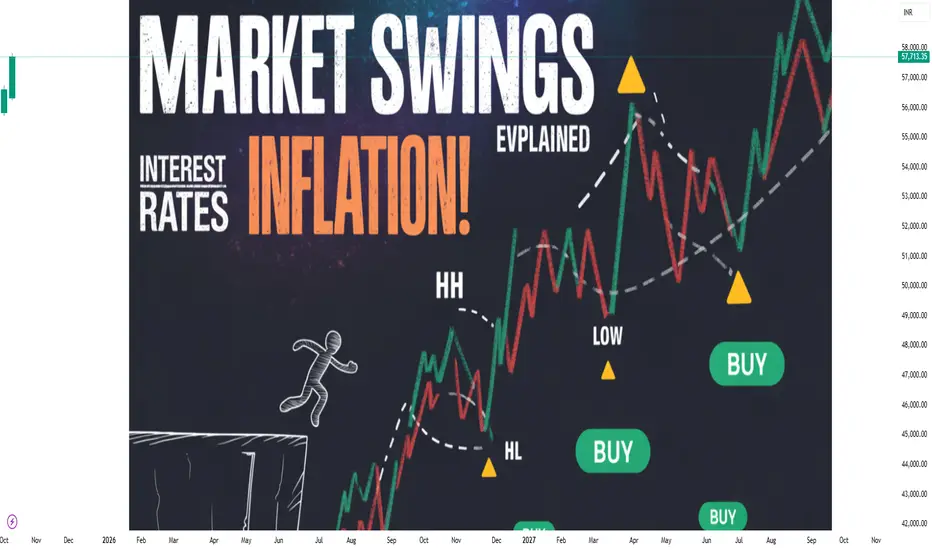
1. Market Swings: The Basics
Market swings are periods of significant upward or downward movement in asset prices. These movements can be gradual or abrupt, and they are influenced by multiple factors, including corporate earnings, geopolitical events, investor sentiment, and macroeconomic variables.
Volatility: Market swings are often measured by volatility indices, such as the VIX in the U.S., which reflect investor expectations of future market fluctuations.
Causes: While some market swings are triggered by company-specific news, broader swings are usually driven by macroeconomic changes, notably shifts in interest rates and inflation.
Impact on Investors: Sudden swings can create both opportunities and risks. Long-term investors may benefit from buying low during market dips, while short-term traders attempt to profit from rapid price movements.
2. Inflation: The Rising Tide of Prices
Inflation is the rate at which the general level of prices for goods and services rises, reducing the purchasing power of money. Central banks and governments monitor inflation closely, as both excessive and insufficient inflation can have adverse economic effects.
Types of Inflation:
Demand-pull inflation: Occurs when demand exceeds supply, leading to higher prices.
Cost-push inflation: Results from increased production costs, such as wages or raw materials, which businesses pass on to consumers.
Built-in inflation: Arises from adaptive expectations; as workers expect higher prices, they demand higher wages, which in turn increases costs.
Inflation and Market Swings:
Equities: Moderate inflation can be positive for stocks because companies may increase revenues as prices rise. However, high inflation erodes profit margins and can lead to market sell-offs.
Bonds: Rising inflation diminishes the real return on bonds, causing prices to fall and yields to rise.
Commodities: Typically, commodities like gold and oil perform well during inflationary periods as their prices often rise with general price levels.
3. Interest Rates: The Cost of Money
Interest rates represent the cost of borrowing money or the return for lending it. They are primarily determined by central banks through policy rates, which influence economic activity.
Role of Interest Rates in the Economy:
Monetary Policy Tool: Central banks adjust interest rates to control inflation and stabilize the economy.
Raising rates: Helps curb inflation by making borrowing expensive and reducing consumer spending.
Lowering rates: Stimulates the economy by making loans cheaper, encouraging spending and investment.
Influence on Investments:
Equities: Higher interest rates increase borrowing costs for companies, potentially reducing profits and causing stock prices to drop.
Bonds: Bond prices and yields move inversely. When rates rise, existing bond prices fall, as newer bonds offer higher yields.
Real Estate: Interest rate hikes make mortgages more expensive, often cooling housing markets.
4. The Interplay Between Inflation and Interest Rates
Interest rates and inflation are deeply intertwined. Central banks, like the Federal Reserve in the U.S. or the Reserve Bank of India, adjust interest rates primarily to manage inflation:
Rising Inflation → Higher Interest Rates: To control rising prices, central banks may increase rates to reduce money supply and borrowing.
Falling Inflation → Lower Interest Rates: To avoid deflation and stimulate growth, banks may lower rates to encourage spending.
This relationship directly impacts market swings:
Equity Markets: When interest rates rise sharply to combat inflation, stock markets may decline due to higher borrowing costs and lower consumer demand.
Bond Markets: Bonds are highly sensitive to interest rate changes. A sudden rate hike can trigger a sell-off, causing market volatility.
Currency Markets: Higher interest rates attract foreign investment, strengthening the local currency, while lower rates may weaken it, affecting imports, exports, and multinational profits.
5. How Market Swings Reflect Economic Sentiment
Market swings often act as a barometer for economic health:
Bull Markets: Characterized by rising asset prices, often occur during periods of moderate inflation and low-interest rates. Investors are optimistic about future growth.
Bear Markets: Defined by declining asset prices, often coincide with high inflation, rapid rate hikes, or economic uncertainty.
Short-Term Volatility: Day-to-day swings may result from news on inflation data releases, central bank meetings, or geopolitical tensions.
For example, if inflation data shows a sharp increase, investors may anticipate a rate hike, causing stocks and bonds to react immediately. Similarly, unexpected rate cuts during economic slowdown can trigger market rallies.
6. Real-World Examples
a) U.S. Federal Reserve and Inflation (2020–2023):
Post-pandemic, inflation surged globally due to supply chain disruptions and rising demand.
The Federal Reserve responded with a series of aggressive interest rate hikes.
Stock markets experienced high volatility, with sharp swings in technology and growth stocks particularly noticeable.
Bond markets reacted negatively, as yields rose in response to the rate hikes.
b) India’s Interest Rate Adjustments:
The Reserve Bank of India adjusts rates in response to inflation data like the Consumer Price Index (CPI) and Wholesale Price Index (WPI).
Rate hikes tend to slow economic growth and reduce market liquidity, while rate cuts can stimulate equity markets.
These moves often create swings in sectors like banking, real estate, and consumer goods.
7. Market Psychology and Inflation Expectations
Investor expectations about future inflation and interest rates play a crucial role in market swings:
Anticipatory Moves: Traders often price in expected rate hikes or inflation data before official announcements.
Behavioral Economics: Fear of rising inflation can lead to asset sell-offs, even if current inflation is moderate.
Safe Havens: During high inflation or economic uncertainty, investors flock to gold, government bonds, or stable currencies, influencing market prices.
8. Strategies to Navigate Market Swings Amid Inflation and Interest Rate Changes
Investors can adopt various approaches to mitigate risks and seize opportunities:
Diversification: Spreading investments across asset classes, sectors, and geographies reduces exposure to volatility.
Inflation-Protected Securities: Instruments like Treasury Inflation-Protected Securities (TIPS) offer protection against inflation.
Interest Rate-Sensitive Assets: Understanding which sectors benefit or suffer from rate changes can guide allocation decisions.
Active Monitoring: Regularly tracking central bank announcements, inflation reports, and macroeconomic indicators helps anticipate market swings.
Hedging: Using derivatives such as options or futures can protect portfolios against sudden market shifts.
9. Long-Term Implications
Persistent inflation or rapid interest rate changes can reshape market behavior:
Investment Patterns: Investors may shift from growth-oriented equities to dividend-paying or value stocks.
Borrowing Costs: Businesses may delay expansion due to higher loan rates, impacting stock valuations.
Global Capital Flows: Differences in interest rates across countries can lead to significant foreign investment movements, affecting currency and equity markets.
10. Conclusion
Market swings, interest rates, and inflation are deeply interconnected, forming the heartbeat of financial markets. Inflation influences purchasing power and corporate profitability, while interest rates serve as the central bank’s primary tool to maintain economic stability. Investors, traders, and policymakers must understand this interplay to navigate the uncertainty and capitalize on opportunities.
While market swings may seem unpredictable, they often reflect underlying economic realities. By analyzing interest rate trends, inflation data, and market psychology, participants can make informed decisions, balancing risk and reward in a constantly shifting financial landscape.
Ultimately, recognizing the symbiotic relationship between these elements not only helps in financial planning but also enhances comprehension of the broader economy—a vital skill in today’s complex, interconnected world.

Related publications
Disclaimer
The information and publications are not meant to be, and do not constitute, financial, investment, trading, or other types of advice or recommendations supplied or endorsed by TradingView. Read more in the Terms of Use.
Related publications
Disclaimer
The information and publications are not meant to be, and do not constitute, financial, investment, trading, or other types of advice or recommendations supplied or endorsed by TradingView. Read more in the Terms of Use.