
Most beginner traders think the market is moving randomly.
But after spending enough time in the charts, many traders notice one painful pattern:
“Price hits my stop loss… and then moves exactly in my direction.”
If this keeps happening to you, you are not alone.
This is one of the biggest reasons why retail traders lose confidence. The truth is, markets are heavily driven by liquidity, emotions, and smart money behavior — not just indicators.
In this article, we’ll understand why stop losses get hunted and how smarter traders avoid this common trap.
1. Smart Money Knows Where Retail Traders Place Stop Losses
Most retail traders learn the same concepts:
* Put stop loss below support
* Put stop loss above resistance
* Use equal highs and equal lows
* Follow common candlestick patterns
The problem?
Millions of traders place their stop losses in the exact same areas.
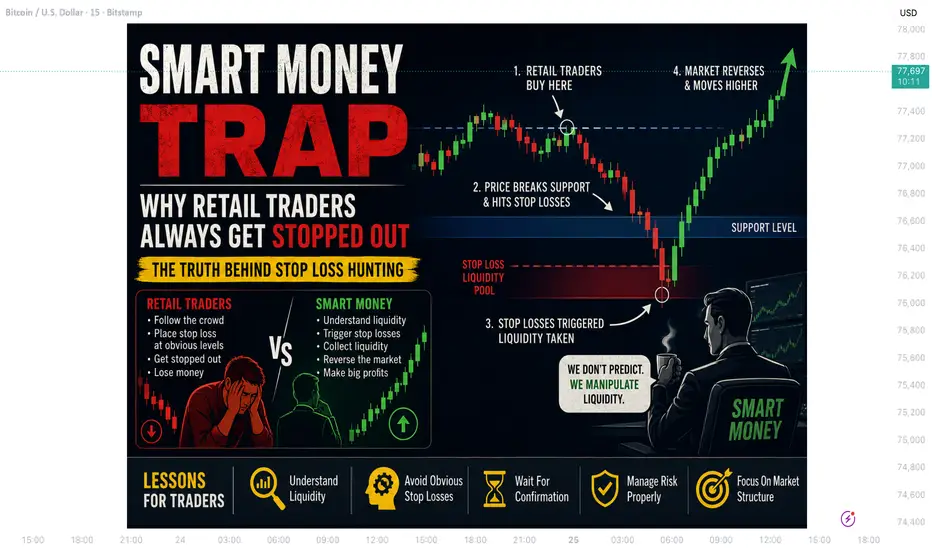
Large institutions and smart money players know this very well. These zones become liquidity pools where big players can collect orders before making the real move.
That’s why price often:
* breaks support slightly,
* hits stop losses,
* and then reverses strongly.
This is called a liquidity grab or stop hunt.
2. The Market Moves Toward Liquidity
The market needs liquidity to move.
Big traders cannot enter huge positions instantly because they need enough buyers and sellers on the other side. Retail stop losses provide that liquidity.
For example:
* Traders buy near support
* Their stop losses sit below support
* Smart money pushes price slightly lower
* Stop losses trigger
* Liquidity enters the market
* Big players buy at better prices
After that, the market suddenly moves upward.
To retail traders, it feels manipulated. In reality, it’s how markets naturally operate.
3. Tight Stop Losses Are a Big Mistake
Many traders use very small stop losses because they want:
* bigger risk-reward,
* quick profits,
* or higher lot sizes.
But markets do not move in perfectly straight lines.
Price constantly creates:
* small fake breakouts,
* volatility spikes,
* and liquidity sweeps.
If your stop loss is too tight, normal market movement can remove you from the trade before the real move begins.
Good traders understand that:
“A stop loss should be placed where the trade idea becomes invalid — not where emotions feel comfortable.”
4. Retail Traders Trade Emotionally
Smart money uses psychology against retail traders.
Most traders:
* panic during small pullbacks,
* chase breakout candles,
* enter late,
* and move stop losses emotionally.
This creates predictable behavior.
When everyone sees the same breakout, retail traders rush into trades together. Smart money often uses this emotional buying or selling pressure to trap traders before reversing the market.
Patience is one of the biggest advantages in trading.
5. How Professional Traders Avoid Stop Hunts
Professional traders focus more on structure and liquidity than indicators.
Some common habits of experienced traders:
* Avoid placing stop loss exactly at obvious levels
* Wait for confirmation after liquidity sweeps
* Trade with proper risk management
* Focus on market structure instead of emotions
* Understand where retail traders are trapped
Instead of chasing price, they wait for the market to reveal its true intention.
That small mindset shift changes everything.
6. Stop Loss Is Still Important
After reading this article, some traders may think:
“I should stop using stop loss.”
That is completely wrong.
Stop loss is essential in trading.
The goal is not to avoid stop losses completely. Even professional traders take losses regularly.
The real goal is:
* using smarter stop placement,
* managing risk properly,
* and understanding market behavior.
A controlled loss is always better than one emotional trade destroying your account.
7. Final Thoughts
The market is designed to test emotions.
Most retail traders lose because they follow the crowd, place obvious stop losses, and react emotionally to short-term movement.
Smart money understands liquidity, patience, and psychology.
The moment you stop trading emotionally and start understanding how liquidity works, your entire perspective on the market changes.
Remember:
The market does not move against you personally. It simply moves where liquidity exists.
And most of the time… retail stop losses are the liquidity
“Price hits my stop loss… and then moves exactly in my direction.”
If this keeps happening to you, you are not alone.
This is one of the biggest reasons why retail traders lose confidence. The truth is, markets are heavily driven by liquidity, emotions, and smart money behavior — not just indicators.
In this article, we’ll understand why stop losses get hunted and how smarter traders avoid this common trap.
1. Smart Money Knows Where Retail Traders Place Stop Losses
Most retail traders learn the same concepts:
* Put stop loss below support
* Put stop loss above resistance
* Use equal highs and equal lows
* Follow common candlestick patterns
The problem?
Millions of traders place their stop losses in the exact same areas.
Large institutions and smart money players know this very well. These zones become liquidity pools where big players can collect orders before making the real move.
That’s why price often:
* breaks support slightly,
* hits stop losses,
* and then reverses strongly.
This is called a liquidity grab or stop hunt.
2. The Market Moves Toward Liquidity
The market needs liquidity to move.
Big traders cannot enter huge positions instantly because they need enough buyers and sellers on the other side. Retail stop losses provide that liquidity.
For example:
* Traders buy near support
* Their stop losses sit below support
* Smart money pushes price slightly lower
* Stop losses trigger
* Liquidity enters the market
* Big players buy at better prices
After that, the market suddenly moves upward.
To retail traders, it feels manipulated. In reality, it’s how markets naturally operate.
3. Tight Stop Losses Are a Big Mistake
Many traders use very small stop losses because they want:
* bigger risk-reward,
* quick profits,
* or higher lot sizes.
But markets do not move in perfectly straight lines.
Price constantly creates:
* small fake breakouts,
* volatility spikes,
* and liquidity sweeps.
If your stop loss is too tight, normal market movement can remove you from the trade before the real move begins.
Good traders understand that:
“A stop loss should be placed where the trade idea becomes invalid — not where emotions feel comfortable.”
4. Retail Traders Trade Emotionally
Smart money uses psychology against retail traders.
Most traders:
* panic during small pullbacks,
* chase breakout candles,
* enter late,
* and move stop losses emotionally.
This creates predictable behavior.
When everyone sees the same breakout, retail traders rush into trades together. Smart money often uses this emotional buying or selling pressure to trap traders before reversing the market.
Patience is one of the biggest advantages in trading.
5. How Professional Traders Avoid Stop Hunts
Professional traders focus more on structure and liquidity than indicators.
Some common habits of experienced traders:
* Avoid placing stop loss exactly at obvious levels
* Wait for confirmation after liquidity sweeps
* Trade with proper risk management
* Focus on market structure instead of emotions
* Understand where retail traders are trapped
Instead of chasing price, they wait for the market to reveal its true intention.
That small mindset shift changes everything.
6. Stop Loss Is Still Important
After reading this article, some traders may think:
“I should stop using stop loss.”
That is completely wrong.
Stop loss is essential in trading.
The goal is not to avoid stop losses completely. Even professional traders take losses regularly.
The real goal is:
* using smarter stop placement,
* managing risk properly,
* and understanding market behavior.
A controlled loss is always better than one emotional trade destroying your account.
7. Final Thoughts
The market is designed to test emotions.
Most retail traders lose because they follow the crowd, place obvious stop losses, and react emotionally to short-term movement.
Smart money understands liquidity, patience, and psychology.
The moment you stop trading emotionally and start understanding how liquidity works, your entire perspective on the market changes.
Remember:
The market does not move against you personally. It simply moves where liquidity exists.
And most of the time… retail stop losses are the liquidity

Disclaimer
The information and publications are not meant to be, and do not constitute, financial, investment, trading, or other types of advice or recommendations supplied or endorsed by TradingView. Read more in the Terms of Use.
Disclaimer
The information and publications are not meant to be, and do not constitute, financial, investment, trading, or other types of advice or recommendations supplied or endorsed by TradingView. Read more in the Terms of Use.