
Introduction
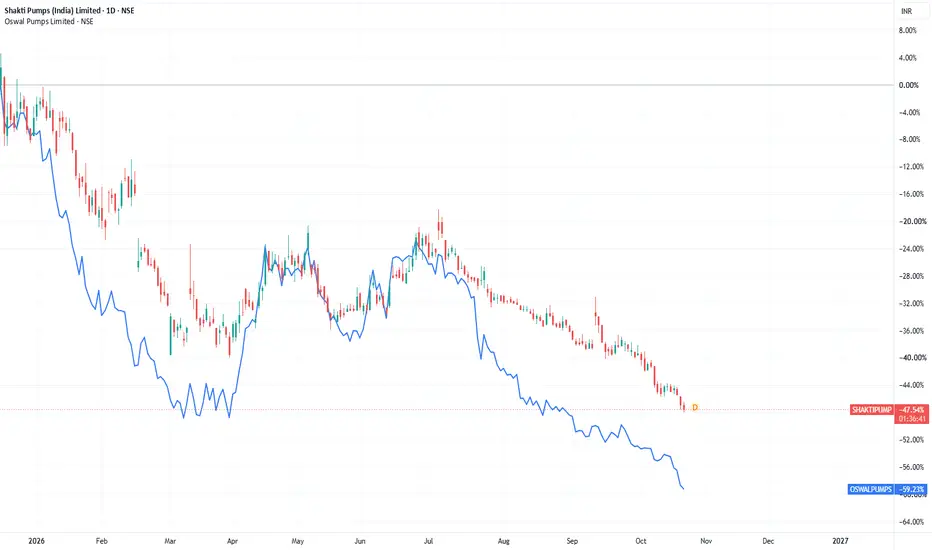
Pump stocks have corrected sharply from their previous highs. Is the solar-pump growth story over? Not necessarily! The bigger concern is whether companies can convert strong industry demand into sustainable profits and cash flow.
📉 How Severe Is the Correction?
🔍 6 Major Reasons Behind the Fall
1️⃣ Aggressive Tender Pricing
2️⃣ Profit Growth Is Weakening
3️⃣ Delays in Government Schemes
4️⃣ Valuation Reset
5️⃣ Working-Capital Pressure
6️⃣ Broader Market Weakness
🌞 Is the Solar-Pump Story Finished?
👀 What Should Investors Watch?
✅ Recovery in EBITDA margins
✅ Fresh government orders and timely execution
✅ Sustainable tender pricing
✅ Lower receivable days and stronger operating cash flow
✅ Improvement in quarterly earnings
✅ Stabilisation of share prices with supportive volume
🎯 Final Takeaway
Pump stocks have corrected sharply from their previous highs. Is the solar-pump growth story over? Not necessarily! The bigger concern is whether companies can convert strong industry demand into sustainable profits and cash flow.
📉 How Severe Is the Correction?
- Shakti Pumps: Approximately 48% below its reported 52-week high.
- Oswal Pumps: Approximately 68% below its reported 52-week high.
🔍 6 Major Reasons Behind the Fall
1️⃣ Aggressive Tender Pricing
- Intense competition for government contracts is forcing manufacturers to bid more aggressively.
- Higher order volumes do not necessarily translate into higher profits.
2️⃣ Profit Growth Is Weakening
- Shakti Pumps reported strong revenue growth but a sharp decline in net profit.
- Oswal Pumps experienced declines in both revenue and profit in Q1 FY27.
- Margin compression is making investors reassess future earnings.
3️⃣ Delays in Government Schemes
- Delays in the rollout of PM-KUSUM 2.0 and state-level programmes create uncertainty around fresh orders and execution.
- Manufacturers may compete more aggressively for available tenders.
4️⃣ Valuation Reset
- Investors previously priced in strong growth expectations.
- When earnings disappoint or margins shrink, valuation multiples can contract.
- A stock falling sharply does not automatically mean it is cheap.
5️⃣ Working-Capital Pressure
- Delayed payments from government agencies can increase receivables and tie up cash.
- Long cash-conversion cycles make expansion more difficult to finance.
6️⃣ Broader Market Weakness
- Small- and mid-cap selling adds pressure to volatile stocks.
- Market sentiment can amplify company-specific concerns.
🌞 Is the Solar-Pump Story Finished?
- Not necessarily.
- India's agricultural solarisation and renewable-energy ambitions offer a long-term opportunity.
- But investors must distinguish between industry growth and company profitability.
- The companies that execute orders efficiently, protect margins, collect payments on time and generate healthy cash flow may be better positioned to benefit.
👀 What Should Investors Watch?
✅ Recovery in EBITDA margins
✅ Fresh government orders and timely execution
✅ Sustainable tender pricing
✅ Lower receivable days and stronger operating cash flow
✅ Improvement in quarterly earnings
✅ Stabilisation of share prices with supportive volume
🎯 Final Takeaway
- The current correction reflects more than market sentiment—it raises questions about margins, order execution, working capital and valuation.
- Do not buy a stock simply because it has fallen 50% or 60% from its high.
- Wait for evidence that earnings pressure is easing and the price trend is stabilising.
- The long-term opportunity may remain intact, but sustainable profits—not just a large order book—will determine which companies emerge stronger.

Disclaimer
The information and publications are not meant to be, and do not constitute, financial, investment, trading, or other types of advice or recommendations supplied or endorsed by TradingView. Read more in the Terms of Use.
Disclaimer
The information and publications are not meant to be, and do not constitute, financial, investment, trading, or other types of advice or recommendations supplied or endorsed by TradingView. Read more in the Terms of Use.