
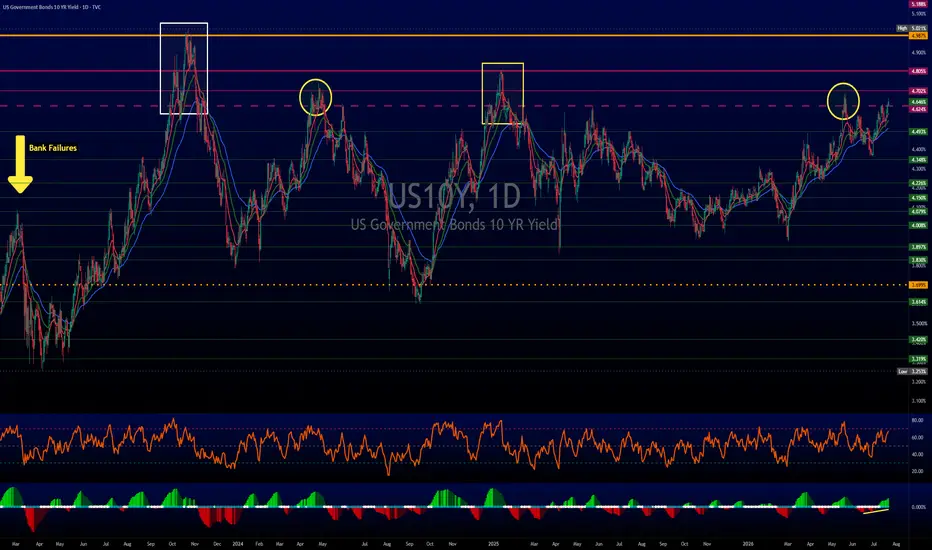
I prefer charts, they can’t lie. Unless of course they start fudging data, but that is another topic for another day, maybe…
Here’s a breakdown of the macro thesis outside of technical jargon. Like Nacho Libre would say, “the nitty gritty”, where the logic holds firm, where the trade offs lie, and the counter forces at play.
Supply/Demand Imbalance in Treasuries
Issuance Problem
U.S. Treasury continues to issue MASSIVE volumes of debt to fund federal deficits. When foreign central banks and traditional institutional buyers reduce their net purchases, the primary dealers must absorb the excess supply.
Price Discovery
To entice domestic private capital (pension funds, money market funds, insurance firms) to step in and absorb that supply, yields must rise to offer a sufficient risk/term premium.
Fed’s Dilemma: Print or Suffer Tightening
If long term yields surge high enough to threaten market functioning or make government debt service unsustainable, the Fed faces two stark options:
Option A: Yield Curve Control / QE
Mechanism
Fed steps in as the buyer of last resort to peg yields or buy Treasuries via balance sheet expansion.
Outcome
Expanding the balance sheet (monetizing the debt) increases money supply velocity. If done while inflation is still elevated, real yields turn negative, degrading the purchasing power of the USD and driving capital into tangible assets, commodities, and hard currencies.
Option B: Let Rates Float High
Mechanism
Fed refrains from quantitative easing, allows market supply and demand to dictate yields.
Outcome
Borrowing costs jump across mortgages, corporate credit, and municipal debt. This aggressively tightens financial conditions, slowing economic activity and squeezing regional banking balance sheets holding lower yielding duration risk.
Counter Perspective
The Flypaper Effect of High Yields:
At 5%+, U.S. Treasuries begin to aggressively compete with equities and corporate bonds for yield. Risk averse institutional capital often rotates heavily into risk free Treasuries at those levels, naturally capping the yield spike without requiring immediate Fed intervention.
Economic Slowdown
Higher long term yields act as a self correcting brake on economic growth. As mortgage rates and corporate debt costs rise, demand cools, eventually lowering inflation expectations and pulling yields back down.
Key Takeaway
Healthier technical footprint on the 10 Yr vs the 2 Yr confirms that long term fiscal deficits, debt supply, and inflation risks are currently pushing yields up far more aggressively than short term Fed policy expectations alone.
Here’s a breakdown of the macro thesis outside of technical jargon. Like Nacho Libre would say, “the nitty gritty”, where the logic holds firm, where the trade offs lie, and the counter forces at play.
Supply/Demand Imbalance in Treasuries
Issuance Problem
U.S. Treasury continues to issue MASSIVE volumes of debt to fund federal deficits. When foreign central banks and traditional institutional buyers reduce their net purchases, the primary dealers must absorb the excess supply.
Price Discovery
To entice domestic private capital (pension funds, money market funds, insurance firms) to step in and absorb that supply, yields must rise to offer a sufficient risk/term premium.
Fed’s Dilemma: Print or Suffer Tightening
If long term yields surge high enough to threaten market functioning or make government debt service unsustainable, the Fed faces two stark options:
Option A: Yield Curve Control / QE
Mechanism
Fed steps in as the buyer of last resort to peg yields or buy Treasuries via balance sheet expansion.
Outcome
Expanding the balance sheet (monetizing the debt) increases money supply velocity. If done while inflation is still elevated, real yields turn negative, degrading the purchasing power of the USD and driving capital into tangible assets, commodities, and hard currencies.
Option B: Let Rates Float High
Mechanism
Fed refrains from quantitative easing, allows market supply and demand to dictate yields.
Outcome
Borrowing costs jump across mortgages, corporate credit, and municipal debt. This aggressively tightens financial conditions, slowing economic activity and squeezing regional banking balance sheets holding lower yielding duration risk.
Counter Perspective
The Flypaper Effect of High Yields:
At 5%+, U.S. Treasuries begin to aggressively compete with equities and corporate bonds for yield. Risk averse institutional capital often rotates heavily into risk free Treasuries at those levels, naturally capping the yield spike without requiring immediate Fed intervention.
Economic Slowdown
Higher long term yields act as a self correcting brake on economic growth. As mortgage rates and corporate debt costs rise, demand cools, eventually lowering inflation expectations and pulling yields back down.
Key Takeaway
Healthier technical footprint on the 10 Yr vs the 2 Yr confirms that long term fiscal deficits, debt supply, and inflation risks are currently pushing yields up far more aggressively than short term Fed policy expectations alone.

Related publications
Disclaimer
The information and publications are not meant to be, and do not constitute, financial, investment, trading, or other types of advice or recommendations supplied or endorsed by TradingView. Read more in the Terms of Use.
Related publications
Disclaimer
The information and publications are not meant to be, and do not constitute, financial, investment, trading, or other types of advice or recommendations supplied or endorsed by TradingView. Read more in the Terms of Use.