

Overview
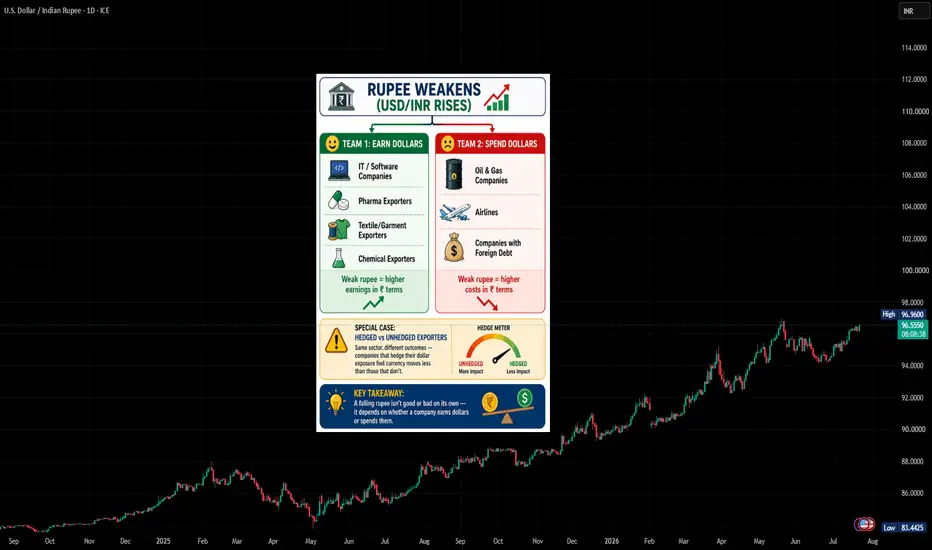
You've probably heard news like "Rupee falls to a new low against the Dollar" and wondered — is that good or bad for the stock market? The honest answer: it depends on which company you're looking at. Just like crude oil, a falling or rising rupee creates winners and losers across different sectors, all at once.
Why Does USD/INR Even Matter to Stocks?
Many Indian companies either earn money from other countries (in dollars) or spend money buying things from other countries (also often in dollars). Whenever the rupee weakens or strengthens against the dollar, it directly changes how much money these companies actually make or spend, once converted back to rupees.
Two Teams, Same News
Team 1: Companies That Benefit When Rupee Weakens (Dollar Rises)
These are companies that earn a large part of their revenue from exports — they get paid in dollars, and a weaker rupee means each dollar converts into more rupees.
IT / Software companies (they bill clients abroad in dollars)
Pharma companies with export business (many sell medicines internationally)
Textile and garment exporters
Chemical exporters
For these companies, a falling rupee is often good news — their export earnings become worth more in rupee terms.
Team 2: Companies That Suffer When Rupee Weakens
These are companies that import raw materials, machinery, or fuel — they pay in dollars, and a weaker rupee means those imports cost more rupees.
Oil and gas companies (crude oil is imported and priced in dollars)
Airlines (fuel and aircraft leasing costs are often dollar-linked)
Companies with heavy foreign debt (repaying dollar loans becomes costlier)
For these companies, a falling rupee is bad news — their costs rise even if nothing else about their business changed.
The Interesting Twist
Here's something that surprises a lot of beginners: even within the same sector, companies can react differently. Two IT companies might both be "exporters," but one may have hedged its dollar exposure (protected itself using financial contracts) while the other hasn't. So the same rupee move can help one and barely affect the other.
A Simple Way to Remember This
Ask yourself: "Does this company earn dollars, or spend dollars?"
Earns dollars (exporters) → usually benefits when rupee weakens
Spends dollars (importers, dollar-debt companies) → usually hurts when rupee weakens
It flips the other way when the rupee strengthens instead
Why This Matters for Your Trading
Next time you see "Rupee hits new low" in the news, resist the urge to assume it's automatically bad for the market. Ask which of your watchlist stocks earn in dollars versus spend in dollars — that's the real story behind the headline.
Beginner's Lesson
Currency moves, like commodity moves, don't affect every company equally. Building the habit of asking "who earns dollars, who spends dollars" turns a confusing headline into a clear, useful piece of information.
Conclusion
A weakening or strengthening rupee always creates winners and losers in the stock market — never just one or the other. Understanding which side a company sits on helps you read currency news with a lot more clarity.
Infographic and chart shown are for illustration and educational purposes only. Not investment advice. Please do your own research or consult a financial advisor before making any decisions.

📈 HK Trading Community | Market Structure & Indicator Updates
Telegram: t.me/trendstrike1000
Website: quantumedgepro.netlify.app/
Real traders are built through learning,not tip hunting.So Start Learning How the Market Really Works
Telegram: t.me/trendstrike1000
Website: quantumedgepro.netlify.app/
Real traders are built through learning,not tip hunting.So Start Learning How the Market Really Works
Related publications
Disclaimer
The information and publications are not meant to be, and do not constitute, financial, investment, trading, or other types of advice or recommendations supplied or endorsed by TradingView. Read more in the Terms of Use.