
Deep Dive on “Late Entry Trap” Mistakes (What traders keep repeating)
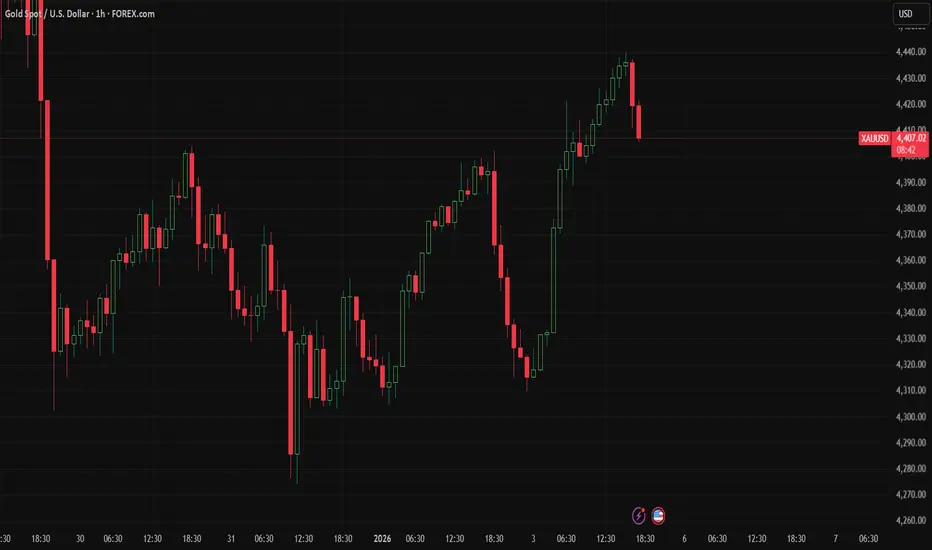
(Reference: the attached XAUUSD 1H chart)

This chart is a perfect example of a common trading failure pattern:
1) The real trader problem here (human behavior)
After a strong impulsive move, the brain does something dangerous:
A) “I missed it” becomes urgency
• When price runs without you, it creates pain.
• That pain turns into a decision like: “I must enter now to fix the regret.”
• This is not analysis. It’s emotional compensation.
B) Candle strength becomes “proof”
• Big green candles feel like confirmation.
• But strong candles are often the end of the easy part, not the beginning.
• Late buyers enter when smart money is already reducing risk, not increasing it.
C) Traders confuse movement with opportunity
• Movement looks like opportunity.
• But the best opportunities often come during reset, not during acceleration.
________________________________________
2) Deep explanation of each mistake (common + costly)
✅ Mistake 1 — Chasing after expansion (the “late momentum buy”)
What they do:
They buy after a long push because it “looks strong.”
Why it fails:
After expansion, the market naturally wants to:
• rebalance,
• cool down,
• or trap late participants.
Truth:
When you enter after expansion, you’re not early.
You’re the liquidity for someone else’s exit.
________________________________________
✅ Mistake 2 — Buying near the top (entering at worst risk zone)
What they do:
They enter where price already traveled a lot.
Why it fails:
• Your stop has to be bigger (because structure is far below).
• Your target becomes smaller (because price is already high).
• So the trade becomes bad math instantly.
Truth:
Late entry turns a good trend into a bad risk-reward trade.
________________________________________
✅ Mistake 3 — Entering during low participation (thin liquidity trap)
What they do:
They enter when the market “moves” but participation is weak.
Why it fails:
Thin participation = price can jump both ways easily:
• small orders move price too much,
• sudden wicks hit stops fast,
• reversals become sharp.
Truth:
In low participation, your stop becomes a magnet.
________________________________________
✅ Mistake 4 — Ignoring range behavior (trend fantasy inside a pause)
What they do:
They trade as if continuation is guaranteed.
What’s really happening:
After a run, price often enters a “rotation” phase:
• back-and-forth candles,
• fake breakouts,
• stop sweeps.
Truth:
A range after a push is not “rest before continuation.”
It’s often a trap-building zone.
________________________________________
✅ Mistake 5 — Confusing candle strength with trade quality
What they do:
They believe: “Strong candle = safe entry.”
Why it fails:
Strong candles often appear:
• right before pullback,
• right before profit-taking,
• right before consolidation.
Truth:
Strong candles can be the last invite before reversal.
________________________________________
✅ Mistake 6 — Overtrading after missing the first entry
What they do:
They attempt multiple entries:
• first entry fails → re-enter,
• second fails → re-enter again.
Why it fails:
Because they’re no longer trading the chart — they’re trading their ego.
Truth:
Multiple entries inside the same zone is often revenge trading in disguise.
________________________________________
✅ Mistake 7 — Widening stop-loss (the silent account killer)
What they do:
They widen SL because they “believe” the direction is right.
Why it fails:
Direction might be right — but timing is wrong.
Widening SL doesn’t fix timing; it just increases damage.
Truth:
A widened SL is not risk management.
It’s denial.
________________________________________
✅ Mistake 8 — No rebuild entry (entering without reset structure)
What they do:
They enter with no:
• pullback base,
• retest,
• clean trigger zone.
Why it fails:
Without rebuild, the market has no “support floor” to protect your entry.
So even a normal pullback looks like a stop hunt.
Truth:
No rebuild = no protection.
________________________________________
✅ Mistake 9 — Entering while conditions deteriorate (the “looks good but weak” trap)
What they do:
They ignore that momentum quality is weakening.
Why it fails:
Markets can still go up while strength fades — and then collapse quickly.
This is why late entries get punished:
• upside slows,
• downside snaps.
Truth:
When quality deteriorates, your entry becomes a coin flip.
________________________________________
✅ Mistake 10 — No re-entry rule (entering emotionally, not logically)
What they do:
They treat every re-entry like the first entry.
Why it fails:
Re-entry is a different trade type.
It requires confirmation that:
• the move reset,
• conditions stabilized,
• risk reduced.
Truth:
Without a re-entry rule, every missed move becomes a future loss.
________________________________________
3) Simple market reality (why this “danger window” exists)
After a strong bullish leg, the market is usually deciding between:
• Pullback (healthy reset)
• Range (trap + liquidity sweep)
• Final push (exhaustion move) → then sharp reversal
So late entries get punished because:
✅ risk is high (stretched price)
✅ reward is limited (less space left)
✅ noise is higher (range + sweeps)
________________________________________
✅ Solution: What MARAL does in this exact situation
Now we bring MARAL in.
4) MARAL’s core message here
MARAL prevents the “late entry trap” by doing two things:
A) It blocks entries when trade quality is not stable
Even if direction looks bullish, MARAL checks:
• Is the market in a clean trend or in a range?
• Is liquidity supportive or thin?
• Is execution safe or “avoid” conditions?
• Is the score improving or deteriorating?
• Is the market overextended?
If those conditions are not healthy, MARAL pushes you into WAIT / NO-TRADE / AVOID mode.
B) It forces a “reset rule” before re-entry
MARAL doesn’t allow “I missed it so I’ll chase.”
It demands a reset first, like:
• price cools down,
• structure rebuilds,
• liquidity improves,
• alignment becomes clean,
• execution window turns active again.
Only after this reset does it give re-entry permission.
________________________________________
5) MARAL’s practical outcome for the trader (what changes)
• It stops you from buying after the move (where most traders get trapped).
• It protects you during low-liquidity / mixed conditions.
• It prevents “revenge re-entry” and overtrading.
• It trains you to wait for permission, not candle excitement.
• It turns “missing a move” into a non-event: skip → wait → re-enter only when conditions reset.
________________________________________
Final punchline (Chapter 11 close)
Most traders don’t lose because they read direction wrong.
They lose because they enter at the wrong moment — late, stretched, and emotional.
This chapter is about eliminating that exact mistake.
#TradingPsychology #TraderMistakes #LateEntry #FOMO #RiskManagement #Liquidity #MarketStructure #Execution #NoTradeIsATrade #Discipline
Educational Purpose Only
This content is shared strictly for market education and trader awareness.
It explains common behavioral mistakes, market conditions, and execution concepts observed in real charts. This is not financial advice, not a buy/sell signal, and not a trading recommendation. Trading involves risk, and all decisions remain the responsibility of the individual trader. Past market behavior does not guarantee future results.
(Reference: the attached XAUUSD 1H chart)
This chart is a perfect example of a common trading failure pattern:
1) The real trader problem here (human behavior)
After a strong impulsive move, the brain does something dangerous:
A) “I missed it” becomes urgency
• When price runs without you, it creates pain.
• That pain turns into a decision like: “I must enter now to fix the regret.”
• This is not analysis. It’s emotional compensation.
B) Candle strength becomes “proof”
• Big green candles feel like confirmation.
• But strong candles are often the end of the easy part, not the beginning.
• Late buyers enter when smart money is already reducing risk, not increasing it.
C) Traders confuse movement with opportunity
• Movement looks like opportunity.
• But the best opportunities often come during reset, not during acceleration.
________________________________________
2) Deep explanation of each mistake (common + costly)
✅ Mistake 1 — Chasing after expansion (the “late momentum buy”)
What they do:
They buy after a long push because it “looks strong.”
Why it fails:
After expansion, the market naturally wants to:
• rebalance,
• cool down,
• or trap late participants.
Truth:
When you enter after expansion, you’re not early.
You’re the liquidity for someone else’s exit.
________________________________________
✅ Mistake 2 — Buying near the top (entering at worst risk zone)
What they do:
They enter where price already traveled a lot.
Why it fails:
• Your stop has to be bigger (because structure is far below).
• Your target becomes smaller (because price is already high).
• So the trade becomes bad math instantly.
Truth:
Late entry turns a good trend into a bad risk-reward trade.
________________________________________
✅ Mistake 3 — Entering during low participation (thin liquidity trap)
What they do:
They enter when the market “moves” but participation is weak.
Why it fails:
Thin participation = price can jump both ways easily:
• small orders move price too much,
• sudden wicks hit stops fast,
• reversals become sharp.
Truth:
In low participation, your stop becomes a magnet.
________________________________________
✅ Mistake 4 — Ignoring range behavior (trend fantasy inside a pause)
What they do:
They trade as if continuation is guaranteed.
What’s really happening:
After a run, price often enters a “rotation” phase:
• back-and-forth candles,
• fake breakouts,
• stop sweeps.
Truth:
A range after a push is not “rest before continuation.”
It’s often a trap-building zone.
________________________________________
✅ Mistake 5 — Confusing candle strength with trade quality
What they do:
They believe: “Strong candle = safe entry.”
Why it fails:
Strong candles often appear:
• right before pullback,
• right before profit-taking,
• right before consolidation.
Truth:
Strong candles can be the last invite before reversal.
________________________________________
✅ Mistake 6 — Overtrading after missing the first entry
What they do:
They attempt multiple entries:
• first entry fails → re-enter,
• second fails → re-enter again.
Why it fails:
Because they’re no longer trading the chart — they’re trading their ego.
Truth:
Multiple entries inside the same zone is often revenge trading in disguise.
________________________________________
✅ Mistake 7 — Widening stop-loss (the silent account killer)
What they do:
They widen SL because they “believe” the direction is right.
Why it fails:
Direction might be right — but timing is wrong.
Widening SL doesn’t fix timing; it just increases damage.
Truth:
A widened SL is not risk management.
It’s denial.
________________________________________
✅ Mistake 8 — No rebuild entry (entering without reset structure)
What they do:
They enter with no:
• pullback base,
• retest,
• clean trigger zone.
Why it fails:
Without rebuild, the market has no “support floor” to protect your entry.
So even a normal pullback looks like a stop hunt.
Truth:
No rebuild = no protection.
________________________________________
✅ Mistake 9 — Entering while conditions deteriorate (the “looks good but weak” trap)
What they do:
They ignore that momentum quality is weakening.
Why it fails:
Markets can still go up while strength fades — and then collapse quickly.
This is why late entries get punished:
• upside slows,
• downside snaps.
Truth:
When quality deteriorates, your entry becomes a coin flip.
________________________________________
✅ Mistake 10 — No re-entry rule (entering emotionally, not logically)
What they do:
They treat every re-entry like the first entry.
Why it fails:
Re-entry is a different trade type.
It requires confirmation that:
• the move reset,
• conditions stabilized,
• risk reduced.
Truth:
Without a re-entry rule, every missed move becomes a future loss.
________________________________________
3) Simple market reality (why this “danger window” exists)
After a strong bullish leg, the market is usually deciding between:
• Pullback (healthy reset)
• Range (trap + liquidity sweep)
• Final push (exhaustion move) → then sharp reversal
So late entries get punished because:
✅ risk is high (stretched price)
✅ reward is limited (less space left)
✅ noise is higher (range + sweeps)
________________________________________
✅ Solution: What MARAL does in this exact situation
Now we bring MARAL in.
4) MARAL’s core message here
MARAL prevents the “late entry trap” by doing two things:
A) It blocks entries when trade quality is not stable
Even if direction looks bullish, MARAL checks:
• Is the market in a clean trend or in a range?
• Is liquidity supportive or thin?
• Is execution safe or “avoid” conditions?
• Is the score improving or deteriorating?
• Is the market overextended?
If those conditions are not healthy, MARAL pushes you into WAIT / NO-TRADE / AVOID mode.
B) It forces a “reset rule” before re-entry
MARAL doesn’t allow “I missed it so I’ll chase.”
It demands a reset first, like:
• price cools down,
• structure rebuilds,
• liquidity improves,
• alignment becomes clean,
• execution window turns active again.
Only after this reset does it give re-entry permission.
________________________________________
5) MARAL’s practical outcome for the trader (what changes)
• It stops you from buying after the move (where most traders get trapped).
• It protects you during low-liquidity / mixed conditions.
• It prevents “revenge re-entry” and overtrading.
• It trains you to wait for permission, not candle excitement.
• It turns “missing a move” into a non-event: skip → wait → re-enter only when conditions reset.
________________________________________
Final punchline (Chapter 11 close)
Most traders don’t lose because they read direction wrong.
They lose because they enter at the wrong moment — late, stretched, and emotional.
This chapter is about eliminating that exact mistake.
#TradingPsychology #TraderMistakes #LateEntry #FOMO #RiskManagement #Liquidity #MarketStructure #Execution #NoTradeIsATrade #Discipline
Educational Purpose Only
This content is shared strictly for market education and trader awareness.
It explains common behavioral mistakes, market conditions, and execution concepts observed in real charts. This is not financial advice, not a buy/sell signal, and not a trading recommendation. Trading involves risk, and all decisions remain the responsibility of the individual trader. Past market behavior does not guarantee future results.
Note
Upcoming Chapters in This SeriesChapter 12 — The Waiting Skill
Why inactivity is often more profitable than constant trading.
Chapter 13 — The First Entry Illusion
Why the “first entry” is rarely the safest entry.
Chapter 14 — Range Is Not a Trend
Why most losses happen when traders trade chop like trend.
Chapter 15 — Confirmation Addiction
How waiting for “more confirmation” creates late entries.
Chapter 16 — Risk Is Decided Before Entry
Why entry timing matters more than stop placement.
Chapter 17 — Stop-Loss Respect
Why SL mistakes are discipline failures, not technical errors.
Chapter 18 — The Reversal Trap
Why trying to catch tops & bottoms destroys accounts.
Chapter 19 — When Not to Trade Is the Trade
Why no-trade decisions protect capital.
Chapter 20 — Trade Frequency vs Trade Quality
Why fewer trades often lead to better results.
Chapter 21 — The Professional Trader Mindset
What separates consistent traders after the system.
Purpose of This Series
• Trader awareness
• Execution discipline
• Behavioral correction
• Capital protection
No indicators.
No buy/sell signals.
No financial advice.
Educational Purpose Only
This content is shared strictly for educational and informational purposes.
It does not constitute financial advice or trade recommendations.
Trading involves risk, and decisions are the responsibility of the individual trader.
Please take time to read all chapters from 1 to 11 in sequence.
Each chapter is written from real trader behavior, real market situations, and mistakes repeatedly seen in live trading.
This is not theory. This is not hindsight perfection. These chapters reflect the actual reasons traders struggle, even when they understand direction, structure, or indicators.
Skipping chapters may miss the context. Reading them together reveals the full execution reality most traders face.

MARAL Execution Workflow, Long & Short Permission , Dynamic risk mapper & Deep Candle Intelligence
Context → Liquidity Event → Displacement → Structure Shift → POI Confirmation → Risk Clearance (Discretionary | Educational)
Context → Liquidity Event → Displacement → Structure Shift → POI Confirmation → Risk Clearance (Discretionary | Educational)
Disclaimer
The information and publications are not meant to be, and do not constitute, financial, investment, trading, or other types of advice or recommendations supplied or endorsed by TradingView. Read more in the Terms of Use.
MARAL Execution Workflow, Long & Short Permission , Dynamic risk mapper & Deep Candle Intelligence
Context → Liquidity Event → Displacement → Structure Shift → POI Confirmation → Risk Clearance (Discretionary | Educational)
Context → Liquidity Event → Displacement → Structure Shift → POI Confirmation → Risk Clearance (Discretionary | Educational)
Disclaimer
The information and publications are not meant to be, and do not constitute, financial, investment, trading, or other types of advice or recommendations supplied or endorsed by TradingView. Read more in the Terms of Use.