
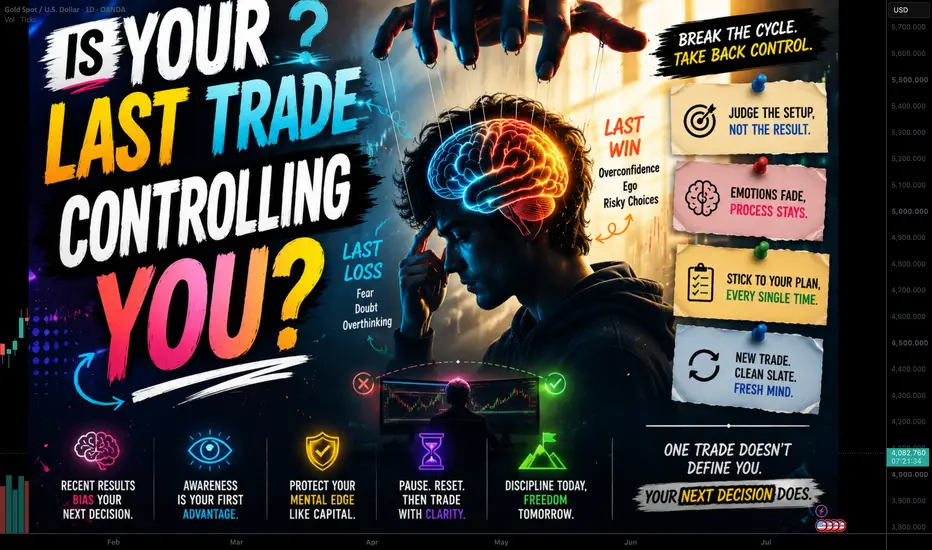
You close a trade, but sometimes the trade doesn't really leave you.
A big loss can make the next setup feel more dangerous than it actually is. A strong win can make an average setup look better than it is. Without realizing it, traders often carry the emotion of one trade directly into the next decision.
The chart may have changed. The setup may be completely different. But mentally, you may still be trading the previous trade.
1. A Loss Can Make You Too Careful
After a painful loss, hesitation feels natural. You find a valid setup, check your rules, and still struggle to enter because your mind remembers what happened last time.
The danger is simple: You are no longer judging the current setup on its own. You are using an old result to measure a new opportunity.
2. A Win Can Make You Feel Smarter Than You Are
Winning creates confidence, but sometimes that confidence quietly becomes overconfidence. After a good trade, traders may increase position size, enter faster, or ignore small warning signs.
Nothing about the next setup has improved just because your previous trade made money. The market doesn't give bonus probability for being on a winning streak.
3. Revenge Trading Isn't Always Obvious
Revenge trading isn't always aggressive clicking or doubling your position. Sometimes it's much quieter: Taking a setup you normally wouldn't take because you want to recover the previous loss.
You may call it an opportunity, but ask yourself: Would I take this exact trade if my last trade had been profitable?
4. Your Brain Loves Recent Results
Recent experiences are easy to remember, so they often feel more important than older ones. One bad trade can suddenly make you question a strategy that has worked across many trades.
This is where traders make unnecessary changes. They adjust rules, switch indicators, or abandon a plan because one recent result feels bigger than the complete picture.
5. Every Trade Needs a Fresh Decision
The next trade doesn't know whether you won or lost five minutes ago. It has its own setup, risk, and probability.
Before entering, ask: "Am I trading this setup, or am I reacting to my previous result?" That one question can expose a surprising number of emotional decisions.
6. Create Space Between Trades
You don't always need to immediately search for the next opportunity. After closing a position, give yourself enough time to mentally finish that trade.
Record the result, note any mistake, and move on. The purpose isn't to forget the trade: It's to stop carrying its emotion into the next one.
7. Judge the Process, Not the Previous Outcome
A good trade can lose, and a terrible trade can make money. If you allow the previous result to control your confidence, your decision-making will constantly move between fear and overconfidence.
Judge your next trade by your rules. Your last P&L should not decide the quality of your next setup.
Conclusion:
Many traders think they're reacting to the current market when they're actually reacting to their previous trade. A loss creates fear. A win creates confidence. Both can distort the next decision when left unchecked.
Your last trade should give you information, not instructions.
Remember: Close the position, review the decision, and leave the emotion behind. The next trade deserves a fresh mind.
A big loss can make the next setup feel more dangerous than it actually is. A strong win can make an average setup look better than it is. Without realizing it, traders often carry the emotion of one trade directly into the next decision.
The chart may have changed. The setup may be completely different. But mentally, you may still be trading the previous trade.
1. A Loss Can Make You Too Careful
After a painful loss, hesitation feels natural. You find a valid setup, check your rules, and still struggle to enter because your mind remembers what happened last time.
The danger is simple: You are no longer judging the current setup on its own. You are using an old result to measure a new opportunity.
2. A Win Can Make You Feel Smarter Than You Are
Winning creates confidence, but sometimes that confidence quietly becomes overconfidence. After a good trade, traders may increase position size, enter faster, or ignore small warning signs.
Nothing about the next setup has improved just because your previous trade made money. The market doesn't give bonus probability for being on a winning streak.
3. Revenge Trading Isn't Always Obvious
Revenge trading isn't always aggressive clicking or doubling your position. Sometimes it's much quieter: Taking a setup you normally wouldn't take because you want to recover the previous loss.
You may call it an opportunity, but ask yourself: Would I take this exact trade if my last trade had been profitable?
4. Your Brain Loves Recent Results
Recent experiences are easy to remember, so they often feel more important than older ones. One bad trade can suddenly make you question a strategy that has worked across many trades.
This is where traders make unnecessary changes. They adjust rules, switch indicators, or abandon a plan because one recent result feels bigger than the complete picture.
5. Every Trade Needs a Fresh Decision
The next trade doesn't know whether you won or lost five minutes ago. It has its own setup, risk, and probability.
Before entering, ask: "Am I trading this setup, or am I reacting to my previous result?" That one question can expose a surprising number of emotional decisions.
6. Create Space Between Trades
You don't always need to immediately search for the next opportunity. After closing a position, give yourself enough time to mentally finish that trade.
Record the result, note any mistake, and move on. The purpose isn't to forget the trade: It's to stop carrying its emotion into the next one.
7. Judge the Process, Not the Previous Outcome
A good trade can lose, and a terrible trade can make money. If you allow the previous result to control your confidence, your decision-making will constantly move between fear and overconfidence.
Judge your next trade by your rules. Your last P&L should not decide the quality of your next setup.
Conclusion:
Many traders think they're reacting to the current market when they're actually reacting to their previous trade. A loss creates fear. A win creates confidence. Both can distort the next decision when left unchecked.
Your last trade should give you information, not instructions.
Remember: Close the position, review the decision, and leave the emotion behind. The next trade deserves a fresh mind.

Related publications
Disclaimer
The information and publications are not meant to be, and do not constitute, financial, investment, trading, or other types of advice or recommendations supplied or endorsed by TradingView. Read more in the Terms of Use.
Related publications
Disclaimer
The information and publications are not meant to be, and do not constitute, financial, investment, trading, or other types of advice or recommendations supplied or endorsed by TradingView. Read more in the Terms of Use.