Divergence Secrets Who Should Trade Options?
Options are suitable for:
Traders looking for leverage with limited risk
Investors wanting to hedge positions
Experienced traders generating income
Anyone willing to learn market structure and volatility
But they require discipline, knowledge, and proper risk management.
Trend Line Break
Part 2 Support and ResistanceHow Time Decay Affects Option Traders
Time value decays rapidly near expiry. This is why buyers must be accurate about timing, while sellers benefit from time decay.
Buyers lose money if the market doesn’t move quickly.
Sellers gain even if the market doesn’t move at all.
This is why most experienced traders prefer option selling with risk controls.
Part 1 Support and ResistanceWhat Is Option Premium?
The premium is the price paid by the buyer to the seller to purchase the option. It represents the cost of owning the right.
Premium depends on factors like:
Current market price
Strike price
Time left to expiry
Volatility
Interest rates
Demand and supply
Two components decide the premium:
Intrinsic Value – Real value based on price difference.
Time Value – Extra value because the option has time before expiry.
As expiry approaches, time value decreases — this
Part 10 Trade Like Institutions How Option Prices Move
Option prices depend on multiple factors:
1. Movement of the underlying asset
Call option goes up when price rises.
Put option goes up when price falls.
2. Time Decay (Theta)
Options lose value as expiry gets closer.
This is good for sellers, bad for buyers.
3. Volatility (VIX)
Higher volatility increases option premiums.
During events (budget, news), premiums rise sharply.
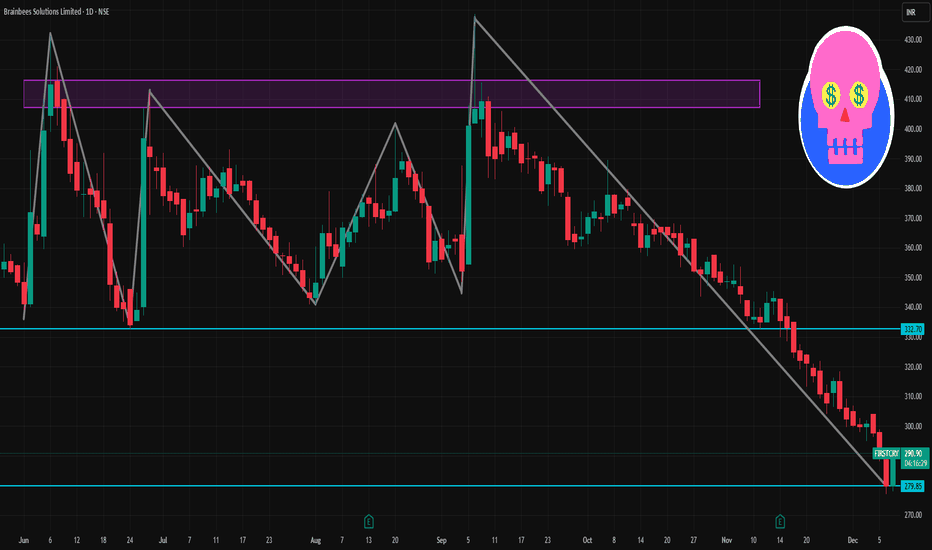
FIRSTCRY 1 Day Time Frame 📊 What the 1‑day chart for Brainbees Solutions currently shows
As of recent trading, the share price of Brainbees Solutions is around ₹ 279–290 on NSE.
The 52‑week high and low band shows a high near ~₹ 664–665 and a low around ~₹ 277–286.
That means at current ~₹ 280–290, the stock is very close to its 52‑week low — which may make the “day‑timeframe level” important for traders looking for a bounce or reversal.
Some technical‑analysis data (on certain days) show bearish momentum: for examp
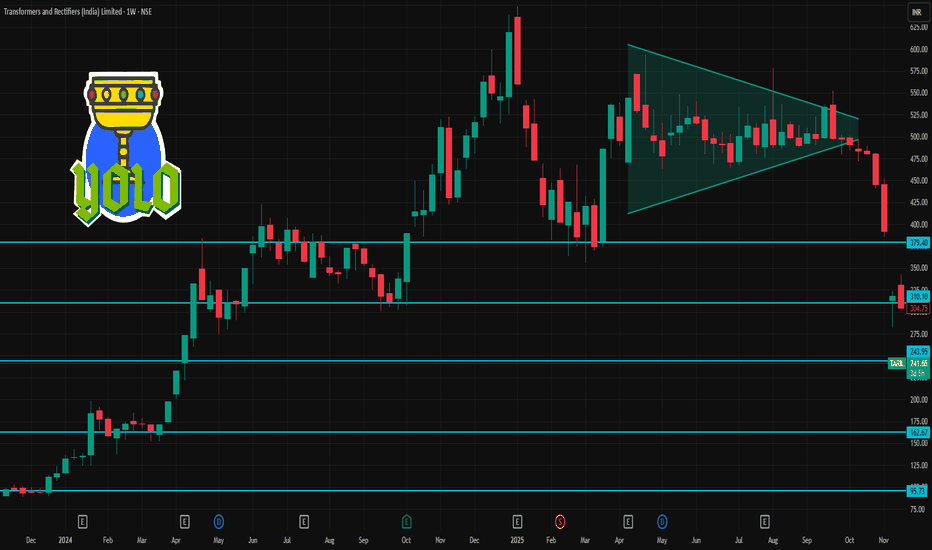
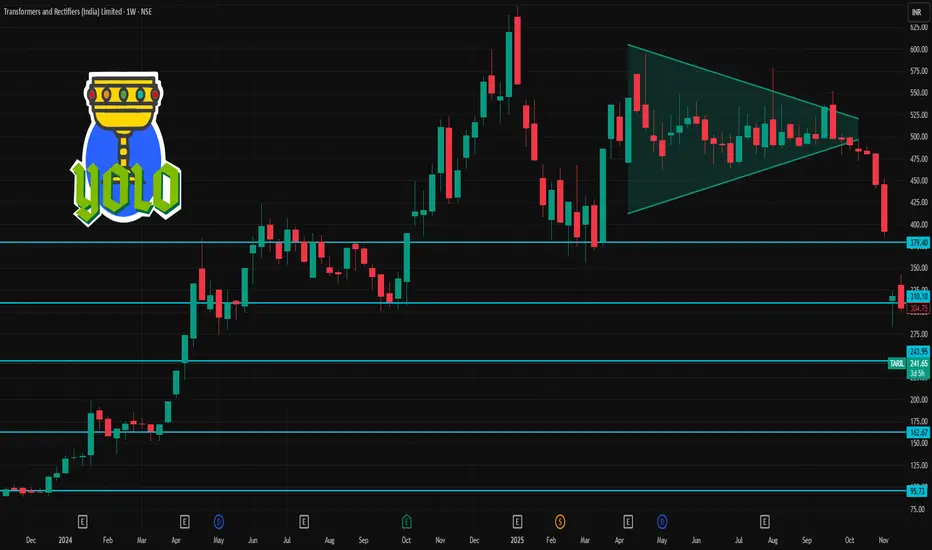
TRIL 1 Week Time Frame 📌 Latest Price & 1‑Week Snapshot
The stock is trading around ₹240–₹241 per share (NSE/BSE).
According to a recent summary, over the last 1 week the stock has moved approximately –7% to –7.4%.
52‑week range: Low ≈ ₹232–₹236, High ≈ ₹648–₹650.
Thus the stock is very near its 52‑week low — down roughly 63% from 52‑week high.
What this suggests (short‑term)
The share is currently at deep discount territory, close to 52‑week bottom — so for traders, this could mean limited downside (barring new
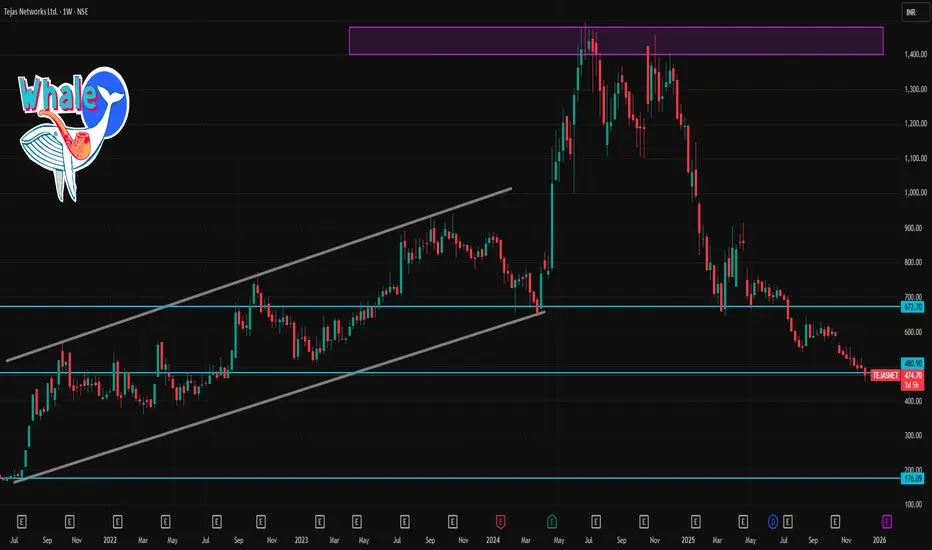
TEJASNET 1 Day Time Frame 📌 Recent Price & Context
According to a live quote on 9 Dec 2025, Tejas Networks is trading around ₹471–₹476.
Recent technical‑indicator feeds (on daily chart) show oversold conditions: e.g. RSI ~ 20 (oversold), MACD negative, ADX high — indicating downward momentum + volatility.
On weekly‑timeframe classification, some aggregator sources rate the trend as “strong sell.”
So at this moment, the bias is bearish to neutral, unless a reversal catalyst emerges.
🎯 Weekly Pivot / Key Levels (Suppo
Options Strategies: Spreads, Straddles, and Iron Condor1. Option Spreads
An option spread involves buying one option and simultaneously selling another option of the same type (call or put) but with different strike prices or expiries. Spreads are primarily used to limit risk, reduce premium cost, or target specific price zones.
Types of Option Spreads
a) Vertical Spreads
A vertical spread uses options with the same expiration date but different strike prices.
There are two kinds:
• Bull Call Spread
Used when the trader is moderately bullish.
Sector Rotation & Business Cycles1. Understanding the Business Cycle
The business cycle refers to the natural rise and fall of economic activity over time. It moves through four major phases:
1. Expansion
Economic growth accelerates.
Employment rises, consumer spending increases.
Corporate profits improve.
Interest rates usually remain moderate.
2. Peak
Growth reaches its maximum level.
Inflation may rise.
Central banks often raise interest rates to cool the economy.
Consumer demand becomes saturated.
3. Contraction
Market Participants: Retail, FII, DII, HNI & Market Makers1. Retail Investors
Retail investors are individual, non-professional participants who invest their personal capital in stocks, mutual funds, derivatives, or other financial instruments. They are the largest group in terms of numbers but typically hold small portions of total market capitalization.
Key Characteristics
Invest smaller amounts compared to institutions
Use brokers, mobile apps, and trading platforms
Often influenced by news, trends, macro events, and market sentiment
Tend to h
BUY TODAY SELL TOMORROW for 5%DON’T HAVE TIME TO MANAGE YOUR TRADES?
- Take BTST trades at 3:25 pm every day
- Try to exit by taking 4-7% profit of each trade
- SL can also be maintained as closing below the low of the breakout candle
Now, why do I prefer BTST over swing trades? The primary reason is that I have observed that 90% of the stocks give most of the movement in just 1-2 days and the rest of the time they either consolidate or fall
Trendline Breakout in LATENTVIEW
BUY TODAY SELL TOMORROW for 5%
Part 7 Trading Master Class How Option Pricing Works
The price of an option (premium) depends on many factors:
1. Underlying Price
If the market moves in the option’s direction (up for call, down for put), the premium rises.
2. Strike Price
Closer the strike to current price, higher the premium.
3. Time to Expiry
More time → higher premium (more chances of movement)
4. Volatility
Higher volatility → higher premium.
5. Interest rates and dividends
These have minor effects but still influence pricing models.
Part 6 Learn Institutional Trading Types of Option Based on Moneyness
In-The-Money (ITM)
Call Option: Strike < Market Price
Put Option: Strike > Market Price
At-The-Money (ATM)
Strike = Market Price (closest)
Out-Of-The-Money (OTM)
Call Option: Strike > Market Price
Put Option: Strike < Market Price
OTM options are cheaper but riskier.
BEL – Trendline Breakdown & Supply Zone Rejection | Bearish SetuBEL has rejected strongly from the higher-timeframe supply zone around ₹425–₹430, followed by a clean trendline breakdown. This breakdown signals weakening bullish momentum and opens the door for a deeper correction.
📌 Key Highlights
Strong rejection from the major supply zone.
Clear trendline break, indicating a shift in structure.
Price currently hovering near ₹408–₹410 support.
Expecting a pullback before continuation.
🎯 Entry Plan (Breakdown + Retest)
🔽 Preferred Entry Model
1. Breakd
Part 4 Learn Institutional Trading Advantages of Option Trading
1. Limited Risk for Buyers
Buyers can only lose the premium.
2. Leverage
You control a big position with small capital.
3. Flexibility
Can be used for speculation, hedging, income, blending multiple strategies.
4. Huge Earning Potential
Strong moves give massive percentage returns.
Part 3 Learn Institutional Trading Risks in Option Trading
1. Time Decay
Every day the option loses some value.
2. Volatility Crush
After major events (e.g., RBI policy, Budget), IV drops, reducing premium.
3. Wrong Direction
Small directional mistakes = big losses for buyers.
4. Unlimited Loss for Sellers
If market moves violently, sellers may face huge losses.
That’s why sellers usually hedge their positions.
Part 1 Ride The Big MovesTips for Beginners
✔ Start with buying options
You learn direction and risk without big losses.
✔ Focus on one index (like Nifty)
Better to understand one market deeply.
✔ Avoid trading near major news
Volatility can be unpredictable.
✔ Manage risk
Never trade with full capital.
✔ Keep emotions low
Discipline outweighs excitement in option trading.
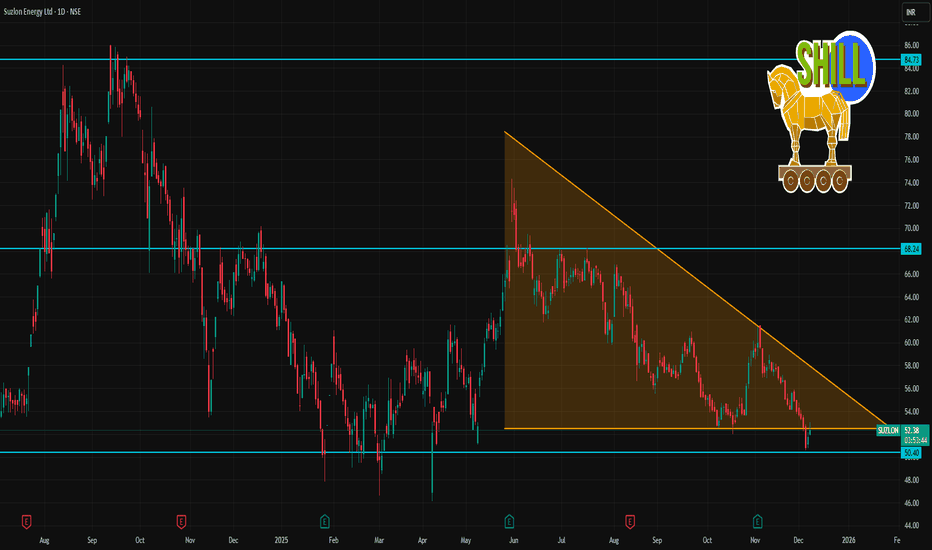
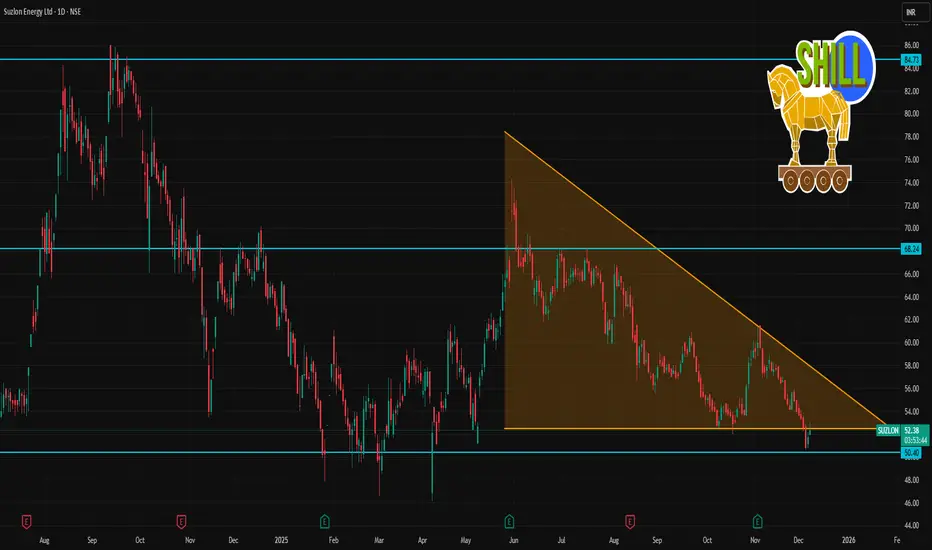
SUZLON 1 Day Time Frame 📈 Current Price & Range
Last close / recent quote: ~ ₹ 52.80–₹ 52.85.
Today’s intraday range (low → high): ₹ 51.89 → ₹ 53.00.
⚠️ Technical Bias / What It Suggests Short‑Term
Price is hovering near ₹ 52.8–53 region, just above immediate support — suggests a SHORT‑TERM indecision / consolidation.
Unless price clears ₹ 53.7 – 54 convincingly (with volume), upside may remain limited.
On downside, a breakdown below ₹ 51.0 – 50.9 could accelerate toward ₹ 49.5 – 50.1.
🧮 What to Watch / Confirm
Options Trading Basics1. What Are Options?
An option is a financial derivative whose value depends on an underlying asset such as stocks, indices, commodities, or currencies. Each option contract grants the buyer certain rights based on the type of option:
Call Option: Right to buy the underlying asset.
Put Option: Right to sell the underlying asset.
The price at which the transaction may occur is called the strike price, and the time until the contract expires is the expiration date.
2. Types of Options
A. Call
Algo Trading & Backtesting1. What Is Algorithmic Trading?
Algorithmic trading (algo trading or automated trading) uses computer programs to execute buy and sell orders based on predefined rules. These rules are written using logic, mathematics, technical indicators, statistical models, or machine learning.
Key characteristics:
Speed: Algorithms execute trades in milliseconds.
Accuracy: Orders are placed exactly as coded, without emotional interference.
Consistency: Strategies run the same way every time.
Scalabilit
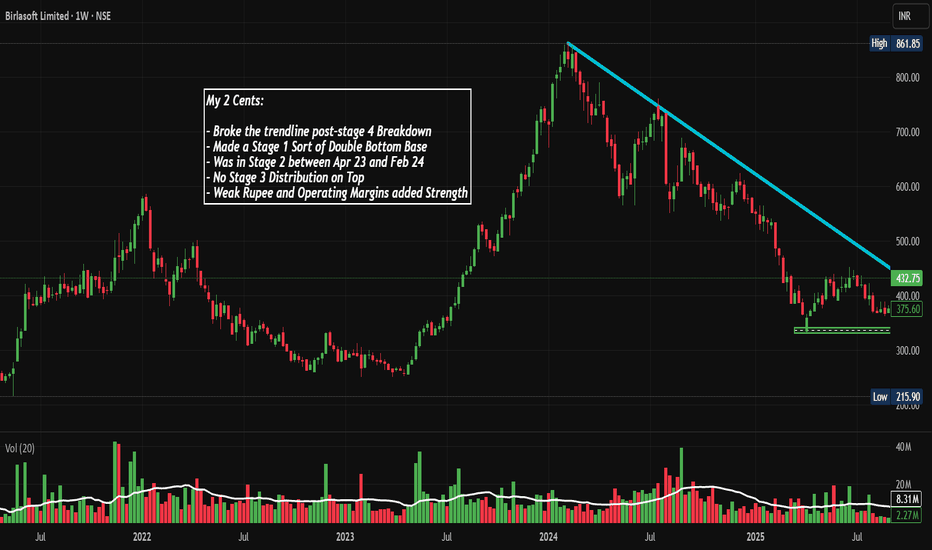
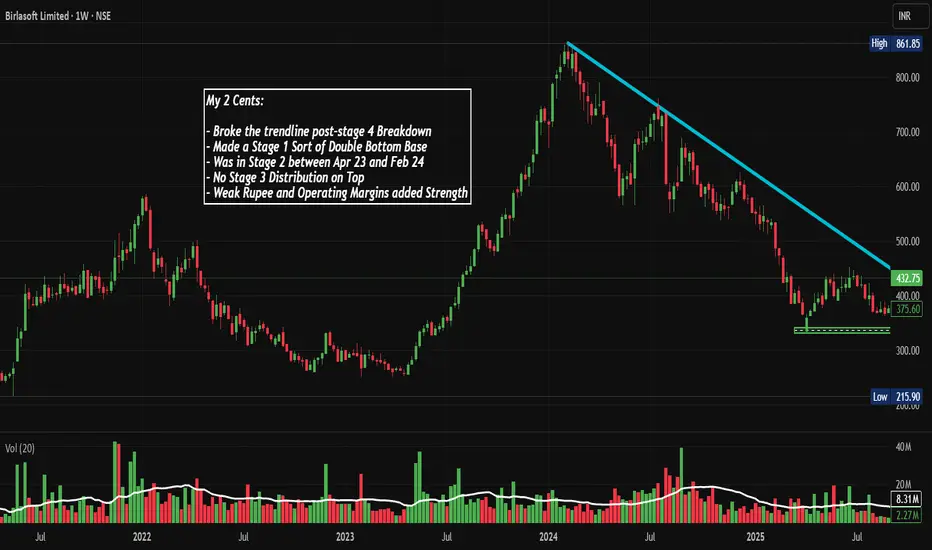
BSOFT: Trendline BO, Double Bottom Formation, Chart of the WeekIs NSE:BSOFT Technical Breakout Real? What the Charts Tell You About This Mid-Cap IT Giant's Next Move after Weaking Rupee and Strong Margins Recovery in Q2FY26. Let's Analyze in Chart of the Week.
As per the Latest SEBI Mandate, this isn't a Trading/Investment RECOMMENDATION nor for Educational Purposes; it is just for Informational purposes only. The chart data used is 3 Months old, as Showing Live Chart Data is not allowed according to the New SEBI Mandate.
Disclaimer: "I am not a SEBI R
Part 2 Support and Resistance Call Options Explained
A call option increases in value when the price of the underlying asset rises.
Example:
Nifty is at 20,000. A trader buys a Nifty 20,100 Call Option.
If Nifty crosses 20,100 before expiry, the call option gains value and the buyer profits.
Call option buyers expect the price to go up.
Call option sellers expect the price to stay below the strike.
XEducation
Part 1 Supprot and Resistance What Are Options?
Options are derivative contracts that give the trader a right, but not an obligation, to buy or sell an underlying asset at a pre-defined price (called the strike price) before or on a specific date (called the expiry).
There are two main types of options:
Call Option – gives the right to buy the underlying asset.
Put Option – gives the right to sell the underlying asset.
In options, the person who buys the contract is called the option buyer, and the one who sells (writes
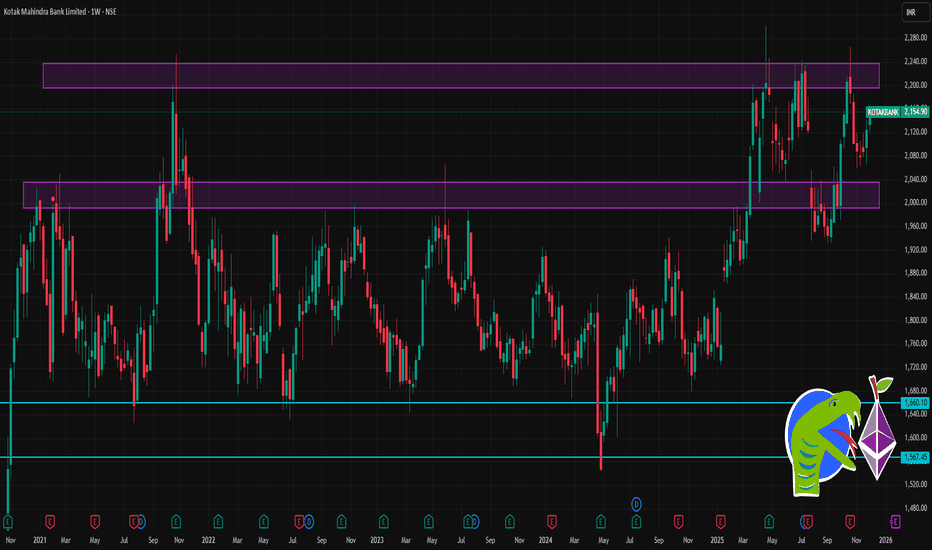
KOTAKBANK 1 Wek Time Frame 📊 Current snapshot
Recent closing price: ~ ₹ 2,154.90 on NSE.
52-week range: Low ~ ₹1,723.75, High ~ ₹2,301.90.
⚠️ What could change this near-term outlook
A close below ~₹ 2,090 could invalidate the bullish view and open up downside toward lower support zones.
Any sharp negative news (macroeconomy, banking sector, global markets) may lead to increased volatility — technical levels matter less during such events.
The stock is still a little below its 52-week high — upside might be limited