OPEN-SOURCE SCRIPT
Updated Breakout Pulse | Volume-Confirmed Support/Resistance Strategy
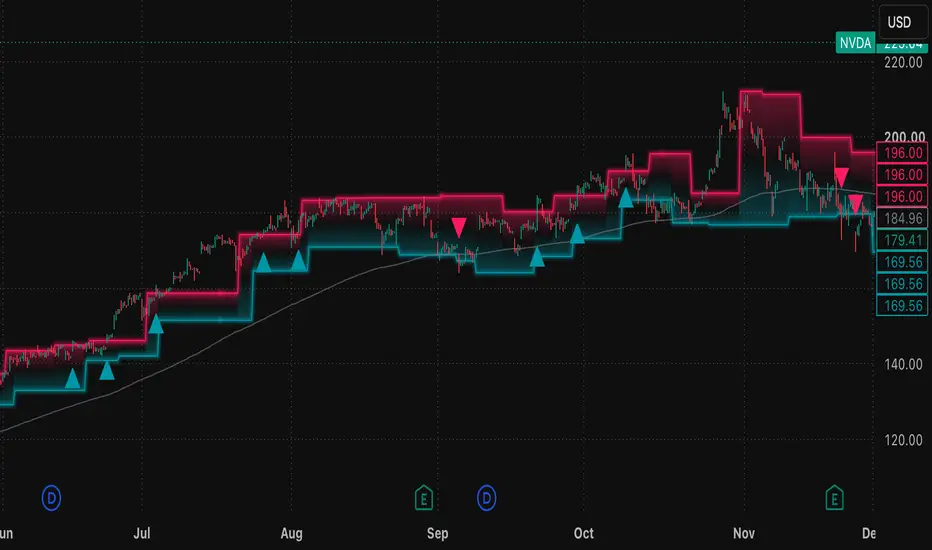
Breakout Pulse trades classic swing-structure breakouts, but only takes them when volume actually backs the move. Most S/R breakout systems get chopped up by fakeouts on thin trading — this strategy filters those out by requiring volume to spike above its recent average before an entry is allowed. It works on any liquid symbol with real traded volume (indices, stocks, futures, crypto)
How it works
Features
Tips
Warnings
How it works
- Support/Resistance is built from confirmed swing pivots (a true structural high/low, not a repainting real-time high/low).
- Volume confirmation: a breakout only counts if volume exceeds its moving average by a chosen multiplier — this is what separates a real institutional move from a low-conviction drift through the level.
- Optional trend filter: an EMA can restrict longs to uptrends and shorts to downtrends, so you're not fading the larger trend on every breakout.
- Risk management: stops anchor to the broken structural level itself (the old swing low/high, with a small ATR buffer) rather than an arbitrary distance — so the stop sits where the trade thesis is actually invalidated. Targets are ATR-multiple based.
- Position automatically flips on an opposite-direction breakout (no separate close signal needed).
Features
- Adjustable pivot lookback for S/R sensitivity
- Volume length + surge multiplier, fully configurable
- Optional EMA trend filter (toggle on/off)
- Structural or pure-ATR stop-loss mode
- ATR-based profit target
- Built-in backtest date range
- Position-based candle coloring
- Glow-style rendering on S/R lines
- Gradient channel fill between support and resistance
Tips
- Tighter pivots (5–8 bars) catch more breakouts but generate more noise; wider pivots (15–20) give cleaner, less frequent signals.
- Raise the volume multiplier (2.0+) on noisy symbols to demand stronger confirmation.
- Turn the EMA filter off if you want a purely mechanical breakout system with no directional bias.
- Backtest across multiple regimes (trending, ranging, high-volatility years) before trusting the results — breakout systems are regime-dependent by nature.
Warnings
- This is a backtesting/research template, not a signal service — past performance in the strategy tester does not guarantee future results.
- Pivot-based S/R has inherent confirmation lag (it needs bars on the right side to confirm a swing point); this is normal swing-structure behavior, not repainting or lookahead bias, but it does mean levels update a little after the swing actually formed.
- Volume-based logic needs a market with meaningful, real traded volume — avoid spot FX and thin/illiquid symbols where volume data isn't representative.
- Commission, slippage, and position sizing defaults are illustrative — adjust them to match your actual broker/exchange conditions before relying on any backtest number.
- Nothing here is financial advice; verify the strategy fits your own risk tolerance before trading it live.
Release Notes
Update thumbnailOpen-source script
In true TradingView spirit, the creator of this script has made it open-source, so that traders can review and verify its functionality. Kudos to the author! While you can use it for free, remember that republishing the code is subject to our House Rules.

Disclaimer
The information and publications are not meant to be, and do not constitute, financial, investment, trading, or other types of advice or recommendations supplied or endorsed by TradingView. Read more in the Terms of Use.
Open-source script
In true TradingView spirit, the creator of this script has made it open-source, so that traders can review and verify its functionality. Kudos to the author! While you can use it for free, remember that republishing the code is subject to our House Rules.
Disclaimer
The information and publications are not meant to be, and do not constitute, financial, investment, trading, or other types of advice or recommendations supplied or endorsed by TradingView. Read more in the Terms of Use.