OPEN-SOURCE SCRIPT
Laguerre Timeframe Oscillator
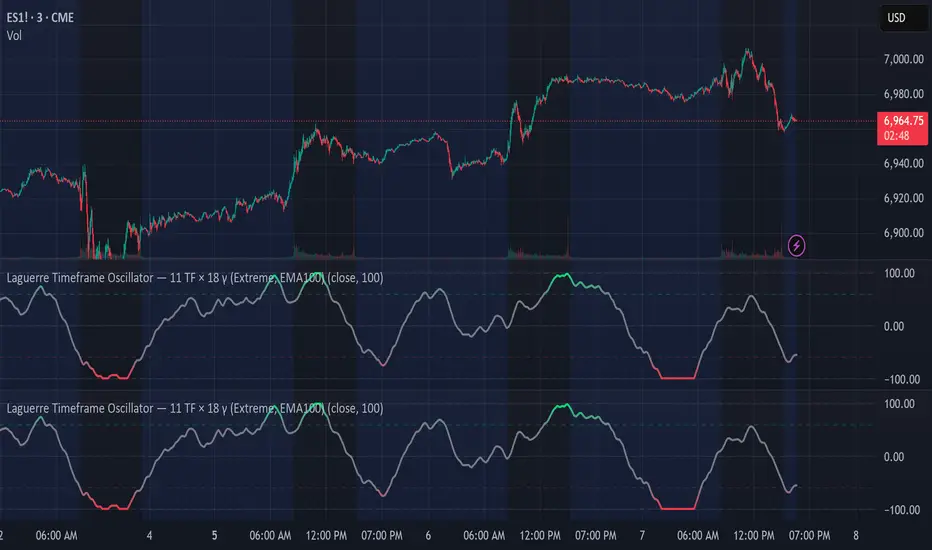
Laguerre Timeframe Breadth Oscillator
Multi-timeframe × multi-gamma Laguerre breadth model
────────────────────────
Usage Notes
────────────────────────
• This is a regime & consensus indicator, not a trigger
• Best used for trend validation and risk filtering
• Extreme values tend to persist during strong regimes
This indicator answers a single question:
“Out of 198 independent Laguerre filters, how many are currently rising?”
────────────────────────
Concept
────────────────────────
Using Laguerre polynomials, we aggregate price behavior across:
• 11 explicit timeframes (1-minute → 1-day)
• 18 gamma responsiveness levels (0.10 → 0.95)
This produces 198 independent Laguerre curves.
The final oscillator is NOT price.
It represents a directional consensus across timescales and smoothing sensitivities.
────────────────────────
Laguerre Filter Mathematics
────────────────────────
For each Laguerre line i:
L0ᵢ(t) = (1 − γᵢ) · x(t) + γᵢ · L0ᵢ(t−1)
L1ᵢ(t) = −γᵢ · L0ᵢ(t) + L0ᵢ(t−1) + γᵢ · L1ᵢ(t−1)
L2ᵢ(t) = −γᵢ · L1ᵢ(t) + L1ᵢ(t−1) + γᵢ · L2ᵢ(t−1)
L3ᵢ(t) = −γᵢ · L2ᵢ(t) + L2ᵢ(t−1) + γᵢ · L3ᵢ(t−1)
Smoothed output:
Yᵢ(t) = ( L0ᵢ + 2·L1ᵢ + 2·L2ᵢ + L3ᵢ ) / 6
This weighted sum smooths noise while preserving phase better than a traditional EMA.
────────────────────────
Gamma Responsiveness
────────────────────────
Gamma controls responsiveness vs stability:
0.10 — Very fast, noisy
0.40 — Momentum-sensitive
0.70 — Trend-stable
0.95 — Very slow, structural
Each timeframe is evaluated across all gamma levels.
────────────────────────
Timeframes Used (11)
────────────────────────
Minutes: 1, 3, 5, 10, 15, 30, 45
Hours: 1, 2, 4
Days: 1
────────────────────────
Direction Test
────────────────────────
Each Laguerre line votes “up” or “down”:
Iᵢ(t) = 1 if Yᵢ(t) > Yᵢ(t−1)
Iᵢ(t) = 0 otherwise
────────────────────────
Breadth Calculation
────────────────────────
greenCount(t) =
I₁(t) + I₂(t) + I₃(t) + … + I₁₉₈(t)
Total number of rising Laguerre filters.
────────────────────────
Centered Breadth Oscillator
────────────────────────
oscRaw(t) = greenCount(t) − 99
(99 = half of 198; zero represents balanced breadth)
────────────────────────
Smoothing & Amplification
────────────────────────
EMA smoothing:
oscSmooth(t) = EMA₁₀₀(oscRaw)
Extreme emphasis:
oscExtreme(t) = 2 · oscSmooth(t)
────────────────────────
Clamped Final Output
────────────────────────
osc(t) = max( −99 , min( 99 , oscExtreme(t) ) )
Range:
• −99 → all filters falling
• 0 → mixed / neutral
• +99 → all filters rising
────────────────────────
Optional Probabilistic Interpretation
────────────────────────
p(t) = greenCount(t) / 198
Interpretable as the probability of upward directional alignment.
Reach out on Discord if you need further guidance. - Coño Vista
Multi-timeframe × multi-gamma Laguerre breadth model
────────────────────────
Usage Notes
────────────────────────
• This is a regime & consensus indicator, not a trigger
• Best used for trend validation and risk filtering
• Extreme values tend to persist during strong regimes
This indicator answers a single question:
“Out of 198 independent Laguerre filters, how many are currently rising?”
────────────────────────
Concept
────────────────────────
Using Laguerre polynomials, we aggregate price behavior across:
• 11 explicit timeframes (1-minute → 1-day)
• 18 gamma responsiveness levels (0.10 → 0.95)
This produces 198 independent Laguerre curves.
The final oscillator is NOT price.
It represents a directional consensus across timescales and smoothing sensitivities.
────────────────────────
Laguerre Filter Mathematics
────────────────────────
For each Laguerre line i:
L0ᵢ(t) = (1 − γᵢ) · x(t) + γᵢ · L0ᵢ(t−1)
L1ᵢ(t) = −γᵢ · L0ᵢ(t) + L0ᵢ(t−1) + γᵢ · L1ᵢ(t−1)
L2ᵢ(t) = −γᵢ · L1ᵢ(t) + L1ᵢ(t−1) + γᵢ · L2ᵢ(t−1)
L3ᵢ(t) = −γᵢ · L2ᵢ(t) + L2ᵢ(t−1) + γᵢ · L3ᵢ(t−1)
Smoothed output:
Yᵢ(t) = ( L0ᵢ + 2·L1ᵢ + 2·L2ᵢ + L3ᵢ ) / 6
This weighted sum smooths noise while preserving phase better than a traditional EMA.
────────────────────────
Gamma Responsiveness
────────────────────────
Gamma controls responsiveness vs stability:
0.10 — Very fast, noisy
0.40 — Momentum-sensitive
0.70 — Trend-stable
0.95 — Very slow, structural
Each timeframe is evaluated across all gamma levels.
────────────────────────
Timeframes Used (11)
────────────────────────
Minutes: 1, 3, 5, 10, 15, 30, 45
Hours: 1, 2, 4
Days: 1
────────────────────────
Direction Test
────────────────────────
Each Laguerre line votes “up” or “down”:
Iᵢ(t) = 1 if Yᵢ(t) > Yᵢ(t−1)
Iᵢ(t) = 0 otherwise
────────────────────────
Breadth Calculation
────────────────────────
greenCount(t) =
I₁(t) + I₂(t) + I₃(t) + … + I₁₉₈(t)
Total number of rising Laguerre filters.
────────────────────────
Centered Breadth Oscillator
────────────────────────
oscRaw(t) = greenCount(t) − 99
(99 = half of 198; zero represents balanced breadth)
────────────────────────
Smoothing & Amplification
────────────────────────
EMA smoothing:
oscSmooth(t) = EMA₁₀₀(oscRaw)
Extreme emphasis:
oscExtreme(t) = 2 · oscSmooth(t)
────────────────────────
Clamped Final Output
────────────────────────
osc(t) = max( −99 , min( 99 , oscExtreme(t) ) )
Range:
• −99 → all filters falling
• 0 → mixed / neutral
• +99 → all filters rising
────────────────────────
Optional Probabilistic Interpretation
────────────────────────
p(t) = greenCount(t) / 198
Interpretable as the probability of upward directional alignment.
Reach out on Discord if you need further guidance. - Coño Vista
Open-source script
In true TradingView spirit, the creator of this script has made it open-source, so that traders can review and verify its functionality. Kudos to the author! While you can use it for free, remember that republishing the code is subject to our House Rules.

Disclaimer
The information and publications are not meant to be, and do not constitute, financial, investment, trading, or other types of advice or recommendations supplied or endorsed by TradingView. Read more in the Terms of Use.
Open-source script
In true TradingView spirit, the creator of this script has made it open-source, so that traders can review and verify its functionality. Kudos to the author! While you can use it for free, remember that republishing the code is subject to our House Rules.
Disclaimer
The information and publications are not meant to be, and do not constitute, financial, investment, trading, or other types of advice or recommendations supplied or endorsed by TradingView. Read more in the Terms of Use.