
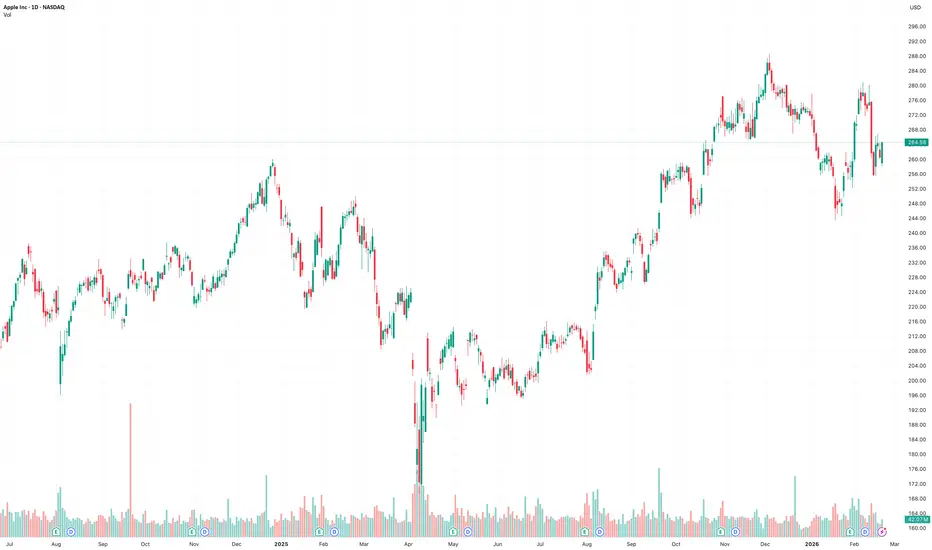
Why Stability Comes from State — Not Triggers
Most trading systems react to events.
Very few interpret states.
That difference determines stability.
Signals are instant.
Structure is state.
Many trading systems revolve around waiting for a trigger:
• A moving average crossover
• A divergence
• An overbought reading
• A threshold event
As if once that moment appears,
the market has provided an answer.
But markets are not moment-based systems.
They are conditional systems.
1️⃣ Triggers React. Structure Interprets.
Signals emerge from local conditions:
A value crossing.
A pattern completing.
A threshold breaking.
Noise itself creates local conditions.
The more noise,
the more triggers.
Within the same market state,
contradictory signals can appear repeatedly.
The issue is not trend change.
The issue is trigger-level analysis.
2️⃣ Stability Comes from Hierarchy
Why structure is more stable than signals
has nothing to do with accuracy.
It has to do with hierarchy.
Signals belong to the event layer.
Structure belongs to the state layer.
Structure asks:
• Has sustained imbalance formed?
• Is progression stable?
• Has prior order degraded?
Structure corresponds to state nodes —
not isolated moments.
It defines validity.
It defines invalidation.
3️⃣ Optimization Often Creates Instability
Signal-driven systems depend on parameters.
When volatility shifts,
sensitivity must be recalibrated.
Parameters drift.
Rules mutate.
Optimization becomes instability.
If your system is signal-driven:
• Entries become frequent
• Noise becomes dominant
• Adjustment becomes habitual
Complexity rises.
Stability declines.
If your system is structure-driven:
• You identify state first
• You decide participation second
• You manage risk through invalidation boundaries
You optimize consistency —
not trigger frequency.
Structural Takeaway
Signals answer:
“Did something fire?”
Structure answers:
“Has the condition changed?”
One belongs to the event layer.
The other belongs to the state layer.
Signals are instant.
Structure endures.
Positioning
This is not an anti-signal argument.
It is a hierarchy argument.
Structure interprets.
Signals react.
Interpretation precedes reaction.
Most trading systems react to events.
Very few interpret states.
That difference determines stability.
Signals are instant.
Structure is state.
Many trading systems revolve around waiting for a trigger:
• A moving average crossover
• A divergence
• An overbought reading
• A threshold event
As if once that moment appears,
the market has provided an answer.
But markets are not moment-based systems.
They are conditional systems.
1️⃣ Triggers React. Structure Interprets.
Signals emerge from local conditions:
A value crossing.
A pattern completing.
A threshold breaking.
Noise itself creates local conditions.
The more noise,
the more triggers.
Within the same market state,
contradictory signals can appear repeatedly.
The issue is not trend change.
The issue is trigger-level analysis.
2️⃣ Stability Comes from Hierarchy
Why structure is more stable than signals
has nothing to do with accuracy.
It has to do with hierarchy.
Signals belong to the event layer.
Structure belongs to the state layer.
Structure asks:
• Has sustained imbalance formed?
• Is progression stable?
• Has prior order degraded?
Structure corresponds to state nodes —
not isolated moments.
It defines validity.
It defines invalidation.
3️⃣ Optimization Often Creates Instability
Signal-driven systems depend on parameters.
When volatility shifts,
sensitivity must be recalibrated.
Parameters drift.
Rules mutate.
Optimization becomes instability.
If your system is signal-driven:
• Entries become frequent
• Noise becomes dominant
• Adjustment becomes habitual
Complexity rises.
Stability declines.
If your system is structure-driven:
• You identify state first
• You decide participation second
• You manage risk through invalidation boundaries
You optimize consistency —
not trigger frequency.
Structural Takeaway
Signals answer:
“Did something fire?”
Structure answers:
“Has the condition changed?”
One belongs to the event layer.
The other belongs to the state layer.
Signals are instant.
Structure endures.
Positioning
This is not an anti-signal argument.
It is a hierarchy argument.
Structure interprets.
Signals react.
Interpretation precedes reaction.

Research-oriented market structure analysis.
Real-time market structure interpretation with trend-state modeling (initiation, continuation, expansion, transition).
Website: uia.institute
Real-time market structure interpretation with trend-state modeling (initiation, continuation, expansion, transition).
Website: uia.institute
Declinazione di responsabilità
Le informazioni e le pubblicazioni non sono intese come, e non costituiscono, consulenza o raccomandazioni finanziarie, di investimento, di trading o di altro tipo fornite o approvate da TradingView. Per ulteriori informazioni, consultare i Termini di utilizzo.
Research-oriented market structure analysis.
Real-time market structure interpretation with trend-state modeling (initiation, continuation, expansion, transition).
Website: uia.institute
Real-time market structure interpretation with trend-state modeling (initiation, continuation, expansion, transition).
Website: uia.institute
Declinazione di responsabilità
Le informazioni e le pubblicazioni non sono intese come, e non costituiscono, consulenza o raccomandazioni finanziarie, di investimento, di trading o di altro tipo fornite o approvate da TradingView. Per ulteriori informazioni, consultare i Termini di utilizzo.