
Chapter -12 The Waiting Skill (Why Waiting Is a Weapon)
Why inactivity is often more profitable than constant trading
Chapter 10 (Exit Intelligence & Trade Aging) proved something important: traders don’t actually need more signals — they need more control. The response i got (≈2.3K views + 131 Like) is the evidence: people are emotionally hungry for execution discipline and loss prevention, not “another buy/sell arrow.”
This chapter is the missing half of that story:
Exit Intelligence protects you once you’re in.
Waiting Skill protects you before you enter.
And the market rewards the second one even more.
1) The uncomfortable truth
Most accounts don’t blow up because the trader “can’t find entries.”
They blow up because the trader cannot sit still.
Overtrading is not a technical issue.
It’s a behavioral leak disguised as “analysis.”
You don’t lose because you didn’t trade enough.
You lose because you traded when the market did not give permission.
2) Why inactivity is profitable
Waiting is profitable for three reasons:
A) It deletes your worst trades
Your worst trades almost always come from:
low liquidity
mixed timeframes
range/chop
late entries after expansion
“forced setups”
Waiting removes those by default.
B) It upgrades your entry price
When you wait, you don’t chase.
You let the market come to your area.
That means:
tighter stop
better R:R
less stress
fewer “save trades” and revenge trades
C) It preserves mental equity
Capital is not only money.
It is also clarity.
Every unnecessary trade reduces clarity.
And clarity is the asset that produces the next clean trade.
3) The Waiting Skill is not “doing nothing”
Professional waiting is active. It has rules.
Waiting means:
scanning
grading conditions
refusing weak liquidity
refusing low-quality regime
refusing entries when permission is locked
Waiting is a decision. Not an absence of decision.
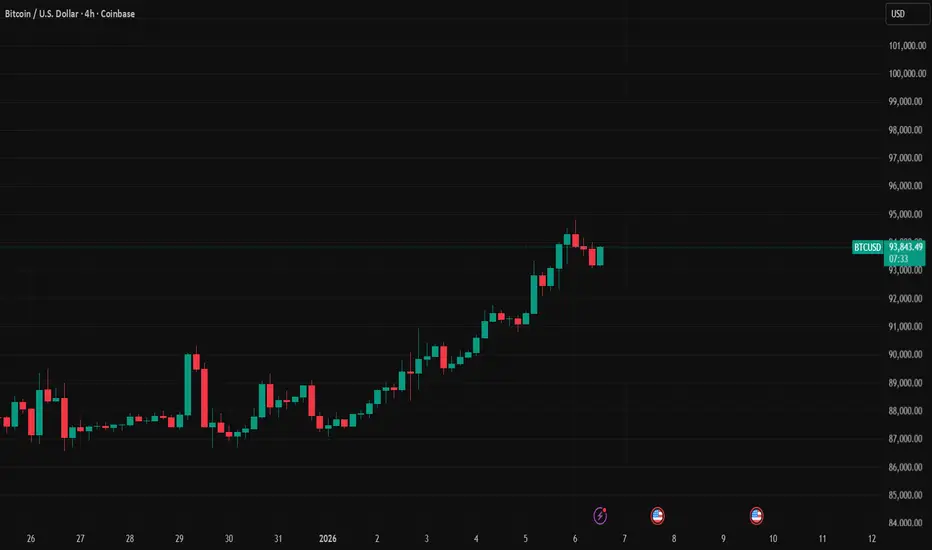
4) The chart lesson (your attached BTCUSD reference)
On your BTCUSD 4H chart, the story is perfect for this chapter.

What the Context Board is telling you
Direction: Bullish
H1 Context: Bullish
H4 Context: Bullish
Daily Context: Neutral
Liquidity Context: LOW
LTF Exec: WEAK
Market Phase: RANGE
Risk State: OVEREXTENDED
Active Window: OFF
ECI score shows 78 (A) but with CAP NOTES: LOW LIQ
This is the core lesson:
Even with a strong score, LOW LIQ + RANGE + OVEREXTENDED + LTF WEAK means:
your edge is not entry — your edge is waiting.
What the Qualification Gate / EDC is saying
SETUP: WAIT
ENTRY PERMISSION: WAIT
LIQUIDITY: LOW
So MARAL is doing exactly what a real execution system must do:
✅ it separates “market bullish” from “trade allowed”
✅ it blocks forced participation
✅ it prevents the most common type of loss: the impatience loss
What this means in real trading language
This is not a “no trend” environment.
It’s a “trend exists, but entry quality is currently unsafe” environment.
And that distinction saves accounts.
5) The retail illusion: “If it’s bullish, I must buy”
Retail logic:
Market bullish → buy now → hope
Professional logic:
Market bullish → wait for liquidity + timing + permission → then execute
Direction is not permission.
Trend is not timing.
Bias is not entry.
The Waiting Skill is the ability to hold that separation.
6) What MARAL is really teaching here
MARAL is not only a tool.
It is a behavior correction system.
It forces three professional behaviors:
(1) Permission-based execution
If Entry Permission is not granted, you do not trade — no matter how “good” the chart looks.
(2) Liquidity-aware patience
Liquidity LOW means:
spreads/inefficiency in execution
chop fake-outs
poor follow-through
stops get hunted easier
So MARAL uses liquidity as a safety switch.
(3) Regime recognition
Market Phase = RANGE means:
more noise than edge
you need perfect timing or you bleed slowly
So MARAL pushes you into WAIT mode until structure becomes tradeable.
7) The Waiting Checklist
Use this as a strict gate:
WAIT if ANY of these is true
Liquidity Context = LOW
Market Phase = RANGE
Risk State = OVEREXTENDED
LTF Exec = WEAK
Entry Permission = WAIT
Setup = WAIT
Daily Context = Neutral while lower TFs are pushing late
Only consider entry when
Liquidity improves (LOW → Neutral/High)
Market Phase shifts (Range → Trend / Expansion)
Risk State cools down (Overextended → Normal)
Entry Permission unlocks
LTF Exec strengthens
This is how you convert “I want more signals” into “I want better trades.”
8) The hidden advantage: waiting gives you cleaner exits too
Chapter 10 was about Exit Intelligence.
Here’s the connection:
Bad entries create bad exits.
If you enter during:
low liquidity
range regime
overextended conditions
…your exits become emotional:
early exit
late exit
panic close
revenge re-entry
So waiting is not just “entry discipline.”
It is exit quality protection.
Engineering Analogy (This Is Exactly Engineering)
A pump system never runs at full speed all the time.
It operates only when the system demands it — and only when safe operating conditions are confirmed.
It waits for:
Demand signal (real requirement, not noise)
Pressure setpoint deviation (a valid reason to engage)
Safe operating window (operating inside design limits)
Stable suction condition (NPSH safety — no cavitation risk)
Now bring the same logic to trading:
A professional trading system doesn’t “run” because it can.
It runs only when conditions permit safe operation.
Think of this like a BMS (Building Management System) Engineering point of view — to show how an execution framework should behave every second, not only at entry.
Just like a BMS continuously monitors:
Temperature
Pressure
Flow
Alarms
Safety thresholds
This framework continuously monitors:
Market state
Execution permission
Risk conditions
Liquidity pressure
Trade validity
Every second. No guessing. No prediction.
Key point:
This is not about generating buy/sell signals.
This is about real-time decision governance.
Just like a BMS doesn’t open a valve because temperature moved 0.1°,
this system doesn’t allow a trade just because price ticks.
Markets don’t need faster traders.
They need better decision control.
Watch the seconds — not the candles.
And one more point — because this is engineering:
I don’t ignore small variables in complex systems.
In engineering, micro-deviations create macro failures (vibration → fatigue → breakdown).
Markets are no different: small condition shifts become big losses when execution is uncontrolled.
That’s why this is an engineering-driven execution tool —
built to monitor micro-changes and enforce discipline before damage happens.
In buildings, a BMS (Building Management System) does not “guess.”
It enforces interlocks:
If a safety condition fails → the system blocks operation
If the environment is unstable → it stays in WAIT / HOLD
If alarms trigger → it shifts into protective mode
If multiple parameters don’t align → it refuses to start, even if one signal looks good
Trading should be the same.
MARAL is built exactly like that.
It is not a “signal generator.”
It is an engineering-grade execution control system — a safety interlock + decision logic that prevents forced participation.
Because in real engineering:
Running at the wrong time destroys equipment.
And in markets:
Trading at the wrong time destroys accounts.
chapter closing
The trader who wins long-term is not the one with the most trades.
It is the one with the most refused trades.
Waiting is not passive.
Waiting is selecting only the market moments that pay.
Note : This is an educational execution framework demonstration — not a signal service, not investment advice, and not a recommendation to buy or sell any asset.
#Trading #TradingPsychology #Discipline #RiskManagement #Execution #PriceAction #SmartMoney #ICT #Liquidity #Bitcoin #BTC #Forex #Futures #SystemTrading #TradingRules #NoTradeIsATrade #EngineeringMindset #BMS #AutomationLogic #ProcessControl #MARAL
Why inactivity is often more profitable than constant trading
Chapter 10 (Exit Intelligence & Trade Aging) proved something important: traders don’t actually need more signals — they need more control. The response i got (≈2.3K views + 131 Like) is the evidence: people are emotionally hungry for execution discipline and loss prevention, not “another buy/sell arrow.”
This chapter is the missing half of that story:
Exit Intelligence protects you once you’re in.
Waiting Skill protects you before you enter.
And the market rewards the second one even more.
1) The uncomfortable truth
Most accounts don’t blow up because the trader “can’t find entries.”
They blow up because the trader cannot sit still.
Overtrading is not a technical issue.
It’s a behavioral leak disguised as “analysis.”
You don’t lose because you didn’t trade enough.
You lose because you traded when the market did not give permission.
2) Why inactivity is profitable
Waiting is profitable for three reasons:
A) It deletes your worst trades
Your worst trades almost always come from:
low liquidity
mixed timeframes
range/chop
late entries after expansion
“forced setups”
Waiting removes those by default.
B) It upgrades your entry price
When you wait, you don’t chase.
You let the market come to your area.
That means:
tighter stop
better R:R
less stress
fewer “save trades” and revenge trades
C) It preserves mental equity
Capital is not only money.
It is also clarity.
Every unnecessary trade reduces clarity.
And clarity is the asset that produces the next clean trade.
3) The Waiting Skill is not “doing nothing”
Professional waiting is active. It has rules.
Waiting means:
scanning
grading conditions
refusing weak liquidity
refusing low-quality regime
refusing entries when permission is locked
Waiting is a decision. Not an absence of decision.
4) The chart lesson (your attached BTCUSD reference)
On your BTCUSD 4H chart, the story is perfect for this chapter.
What the Context Board is telling you
Direction: Bullish
H1 Context: Bullish
H4 Context: Bullish
Daily Context: Neutral
Liquidity Context: LOW
LTF Exec: WEAK
Market Phase: RANGE
Risk State: OVEREXTENDED
Active Window: OFF
ECI score shows 78 (A) but with CAP NOTES: LOW LIQ
This is the core lesson:
Even with a strong score, LOW LIQ + RANGE + OVEREXTENDED + LTF WEAK means:
your edge is not entry — your edge is waiting.
What the Qualification Gate / EDC is saying
SETUP: WAIT
ENTRY PERMISSION: WAIT
LIQUIDITY: LOW
So MARAL is doing exactly what a real execution system must do:
✅ it separates “market bullish” from “trade allowed”
✅ it blocks forced participation
✅ it prevents the most common type of loss: the impatience loss
What this means in real trading language
This is not a “no trend” environment.
It’s a “trend exists, but entry quality is currently unsafe” environment.
And that distinction saves accounts.
5) The retail illusion: “If it’s bullish, I must buy”
Retail logic:
Market bullish → buy now → hope
Professional logic:
Market bullish → wait for liquidity + timing + permission → then execute
Direction is not permission.
Trend is not timing.
Bias is not entry.
The Waiting Skill is the ability to hold that separation.
6) What MARAL is really teaching here
MARAL is not only a tool.
It is a behavior correction system.
It forces three professional behaviors:
(1) Permission-based execution
If Entry Permission is not granted, you do not trade — no matter how “good” the chart looks.
(2) Liquidity-aware patience
Liquidity LOW means:
spreads/inefficiency in execution
chop fake-outs
poor follow-through
stops get hunted easier
So MARAL uses liquidity as a safety switch.
(3) Regime recognition
Market Phase = RANGE means:
more noise than edge
you need perfect timing or you bleed slowly
So MARAL pushes you into WAIT mode until structure becomes tradeable.
7) The Waiting Checklist
Use this as a strict gate:
WAIT if ANY of these is true
Liquidity Context = LOW
Market Phase = RANGE
Risk State = OVEREXTENDED
LTF Exec = WEAK
Entry Permission = WAIT
Setup = WAIT
Daily Context = Neutral while lower TFs are pushing late
Only consider entry when
Liquidity improves (LOW → Neutral/High)
Market Phase shifts (Range → Trend / Expansion)
Risk State cools down (Overextended → Normal)
Entry Permission unlocks
LTF Exec strengthens
This is how you convert “I want more signals” into “I want better trades.”
8) The hidden advantage: waiting gives you cleaner exits too
Chapter 10 was about Exit Intelligence.
Here’s the connection:
Bad entries create bad exits.
If you enter during:
low liquidity
range regime
overextended conditions
…your exits become emotional:
early exit
late exit
panic close
revenge re-entry
So waiting is not just “entry discipline.”
It is exit quality protection.
Engineering Analogy (This Is Exactly Engineering)
A pump system never runs at full speed all the time.
It operates only when the system demands it — and only when safe operating conditions are confirmed.
It waits for:
Demand signal (real requirement, not noise)
Pressure setpoint deviation (a valid reason to engage)
Safe operating window (operating inside design limits)
Stable suction condition (NPSH safety — no cavitation risk)
Now bring the same logic to trading:
A professional trading system doesn’t “run” because it can.
It runs only when conditions permit safe operation.
Think of this like a BMS (Building Management System) Engineering point of view — to show how an execution framework should behave every second, not only at entry.
Just like a BMS continuously monitors:
Temperature
Pressure
Flow
Alarms
Safety thresholds
This framework continuously monitors:
Market state
Execution permission
Risk conditions
Liquidity pressure
Trade validity
Every second. No guessing. No prediction.
Key point:
This is not about generating buy/sell signals.
This is about real-time decision governance.
Just like a BMS doesn’t open a valve because temperature moved 0.1°,
this system doesn’t allow a trade just because price ticks.
Markets don’t need faster traders.
They need better decision control.
Watch the seconds — not the candles.
And one more point — because this is engineering:
I don’t ignore small variables in complex systems.
In engineering, micro-deviations create macro failures (vibration → fatigue → breakdown).
Markets are no different: small condition shifts become big losses when execution is uncontrolled.
That’s why this is an engineering-driven execution tool —
built to monitor micro-changes and enforce discipline before damage happens.
In buildings, a BMS (Building Management System) does not “guess.”
It enforces interlocks:
If a safety condition fails → the system blocks operation
If the environment is unstable → it stays in WAIT / HOLD
If alarms trigger → it shifts into protective mode
If multiple parameters don’t align → it refuses to start, even if one signal looks good
Trading should be the same.
MARAL is built exactly like that.
It is not a “signal generator.”
It is an engineering-grade execution control system — a safety interlock + decision logic that prevents forced participation.
Because in real engineering:
Running at the wrong time destroys equipment.
And in markets:
Trading at the wrong time destroys accounts.
chapter closing
The trader who wins long-term is not the one with the most trades.
It is the one with the most refused trades.
Waiting is not passive.
Waiting is selecting only the market moments that pay.
Note : This is an educational execution framework demonstration — not a signal service, not investment advice, and not a recommendation to buy or sell any asset.
#Trading #TradingPsychology #Discipline #RiskManagement #Execution #PriceAction #SmartMoney #ICT #Liquidity #Bitcoin #BTC #Forex #Futures #SystemTrading #TradingRules #NoTradeIsATrade #EngineeringMindset #BMS #AutomationLogic #ProcessControl #MARAL

MARAL Execution Workflow, Long & Short Permission , Dynamic risk mapper & Deep Candle Intelligence
Context → Liquidity Event → Displacement → Structure Shift → POI Confirmation → Risk Clearance (Discretionary | Educational)
Context → Liquidity Event → Displacement → Structure Shift → POI Confirmation → Risk Clearance (Discretionary | Educational)
Pubblicazioni correlate
Declinazione di responsabilità
Le informazioni e le pubblicazioni non sono intese come, e non costituiscono, consulenza o raccomandazioni finanziarie, di investimento, di trading o di altro tipo fornite o approvate da TradingView. Per ulteriori informazioni, consultare i Termini di utilizzo.
MARAL Execution Workflow, Long & Short Permission , Dynamic risk mapper & Deep Candle Intelligence
Context → Liquidity Event → Displacement → Structure Shift → POI Confirmation → Risk Clearance (Discretionary | Educational)
Context → Liquidity Event → Displacement → Structure Shift → POI Confirmation → Risk Clearance (Discretionary | Educational)
Pubblicazioni correlate
Declinazione di responsabilità
Le informazioni e le pubblicazioni non sono intese come, e non costituiscono, consulenza o raccomandazioni finanziarie, di investimento, di trading o di altro tipo fornite o approvate da TradingView. Per ulteriori informazioni, consultare i Termini di utilizzo.