
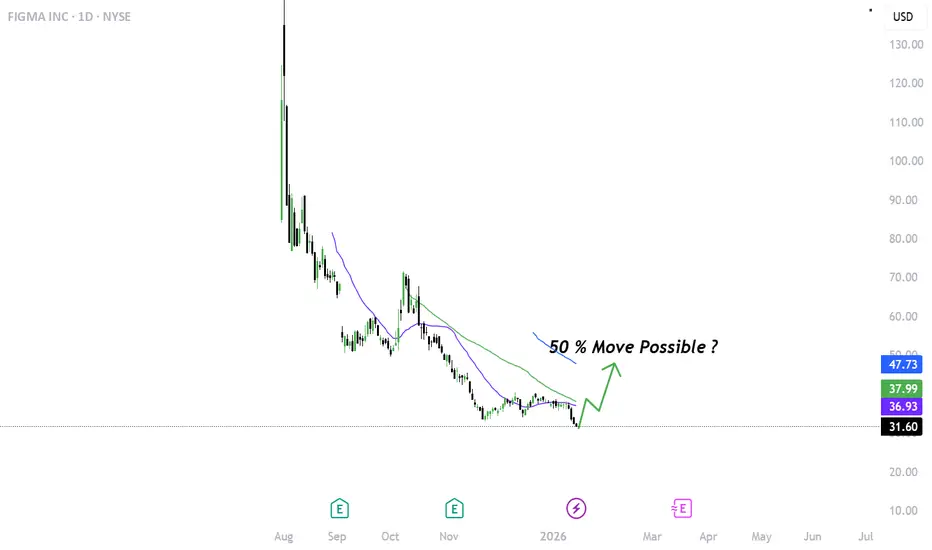
Why Figma’s Stock Has Fallen Since Its IPO
1) Big IPO Pop Then Pullback
Figma’s IPO was priced at $33 per share and then surged, 250% on day one, closing above $115 which was a huge market debut. But much of that initial rise was driven by hype, limited supply, and “risk-on” money flipping shares, not long-term fundamentals. As the hype wore off and profit taking happened (especially when lock-up periods expired), the stock came down sharply.
2) Profit Taking and Lock-up Expiries
After the IPO, early investors and insiders had restricted periods during which they couldn’t sell. Once these expired, a lot of selling pressure hit the stock.
3) Growth vs Valuation Expectations
Despite solid revenue growth (30–40% range), the high expectations set by the IPO and tech multiples meant the stock had to deliver much faster growth, which hasn’t materialized yet.
4) Profitability and Expensive Tech Multiple
Some earnings reports have shown large losses or high stock-based compensation costs, making pure profitability less clear than it first looked.
The Bullish Case:
Leader in Collaborative Design Software
Figma set the standard for real-time, browser-based design tools and has strong adoption among tech and creative teams worldwide.
Growing Revenue
Revenue has been increasing strongly (e.g., ~40% growth reported in a quarter).
This signals that the business is actually scaling, not shrinking.
Strong Stickiness and Network Effects
Many teams build workflows around Figma, that creates a “sticky” base with high retention.
Lower Valuation Today
Trading well below IPO and peak levels means you’re not paying for peak hype. If Figma can sustain growth, it could be a value play now.
Product Expansion & AI Integration
Figma has introduced new tools (AI-assisted prototyping, website builders, etc.) that could expand its TAM beyond just UX/UI design.
Cons and Risks:
Post-IPO Volatility Is High
The stock swung wildly up 250%, then down 60% or more, showing high price risk and speculation rather than fundamental valuation moves.
Profitability Is Not Strong Yet
Despite revenue growth, profitability has been mixed, including large expenses that concern some investors.
Competition & Market Limits
While dominant in UX design, Figma may have less room to grow if its main adjacent markets (e.g., graphic design, 3D workflows) don’t materialize.
Tech Stocks Can Lag
If broader tech sentiment turns cautious, growth stocks, especially ones without established profitability, often lag the market.
Disclaimer:
This analysis is for informational and educational purposes only and does not constitute financial advice, investment recommendation, or an offer to buy or sell any securities. Asset prices, valuations, and performance metrics are subject to change and may be outdated. Always conduct your own due diligence and consult with a licensed financial advisor before making investment decisions. The information presented may contain inaccuracies and should not be solely relied upon for financial decisions. I am not a licensed financial advisor or professional trader. I am not personally liable for your own losses; this is not financial advice.
1) Big IPO Pop Then Pullback
Figma’s IPO was priced at $33 per share and then surged, 250% on day one, closing above $115 which was a huge market debut. But much of that initial rise was driven by hype, limited supply, and “risk-on” money flipping shares, not long-term fundamentals. As the hype wore off and profit taking happened (especially when lock-up periods expired), the stock came down sharply.
2) Profit Taking and Lock-up Expiries
After the IPO, early investors and insiders had restricted periods during which they couldn’t sell. Once these expired, a lot of selling pressure hit the stock.
3) Growth vs Valuation Expectations
Despite solid revenue growth (30–40% range), the high expectations set by the IPO and tech multiples meant the stock had to deliver much faster growth, which hasn’t materialized yet.
4) Profitability and Expensive Tech Multiple
Some earnings reports have shown large losses or high stock-based compensation costs, making pure profitability less clear than it first looked.
The Bullish Case:
Leader in Collaborative Design Software
Figma set the standard for real-time, browser-based design tools and has strong adoption among tech and creative teams worldwide.
Growing Revenue
Revenue has been increasing strongly (e.g., ~40% growth reported in a quarter).
This signals that the business is actually scaling, not shrinking.
Strong Stickiness and Network Effects
Many teams build workflows around Figma, that creates a “sticky” base with high retention.
Lower Valuation Today
Trading well below IPO and peak levels means you’re not paying for peak hype. If Figma can sustain growth, it could be a value play now.
Product Expansion & AI Integration
Figma has introduced new tools (AI-assisted prototyping, website builders, etc.) that could expand its TAM beyond just UX/UI design.
Cons and Risks:
Post-IPO Volatility Is High
The stock swung wildly up 250%, then down 60% or more, showing high price risk and speculation rather than fundamental valuation moves.
Profitability Is Not Strong Yet
Despite revenue growth, profitability has been mixed, including large expenses that concern some investors.
Competition & Market Limits
While dominant in UX design, Figma may have less room to grow if its main adjacent markets (e.g., graphic design, 3D workflows) don’t materialize.
Tech Stocks Can Lag
If broader tech sentiment turns cautious, growth stocks, especially ones without established profitability, often lag the market.
Disclaimer:
This analysis is for informational and educational purposes only and does not constitute financial advice, investment recommendation, or an offer to buy or sell any securities. Asset prices, valuations, and performance metrics are subject to change and may be outdated. Always conduct your own due diligence and consult with a licensed financial advisor before making investment decisions. The information presented may contain inaccuracies and should not be solely relied upon for financial decisions. I am not a licensed financial advisor or professional trader. I am not personally liable for your own losses; this is not financial advice.

Declinazione di responsabilità
Le informazioni e le pubblicazioni non sono intese come, e non costituiscono, consulenza o raccomandazioni finanziarie, di investimento, di trading o di altro tipo fornite o approvate da TradingView. Per ulteriori informazioni, consultare i Termini di utilizzo.
Declinazione di responsabilità
Le informazioni e le pubblicazioni non sono intese come, e non costituiscono, consulenza o raccomandazioni finanziarie, di investimento, di trading o di altro tipo fornite o approvate da TradingView. Per ulteriori informazioni, consultare i Termini di utilizzo.