
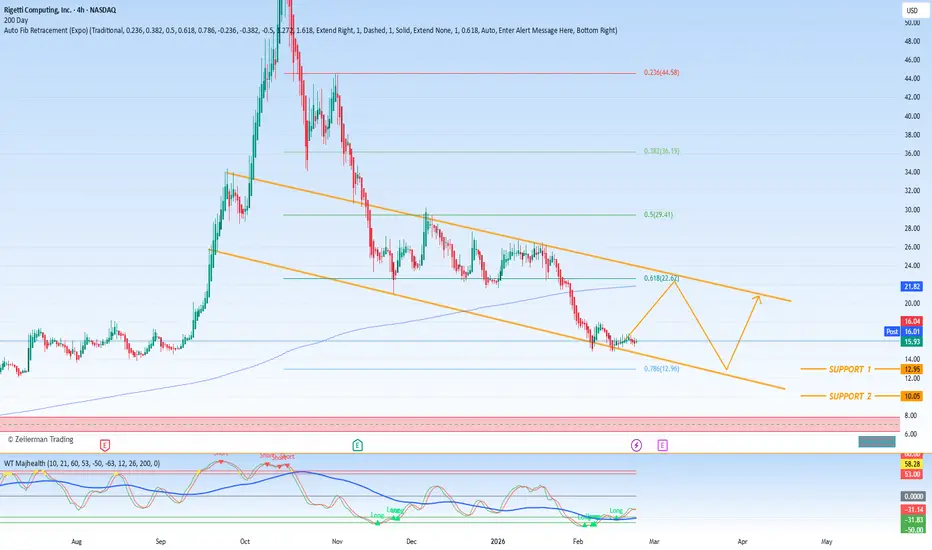
Company Foundation and Full-Stack Capabilities
Founded in 2013 and headquartered in Berkeley, California, Rigetti Computing has established itself as a vertically integrated player in the quantum computing sector. The company's comprehensive approach encompasses the entire ecosystem of quantum system development. Rigetti is actively involved in designing, building, and bringing to market superconducting quantum integrated circuits and processor chips. Crucially, the company also manufactures the specialized supercooled dilution refrigeration units that are indispensable for creating the extreme低温 environments required for these components to function in a quantum state. This full-stack capability allows Rigetti to control both the core technology and the critical infrastructure that supports it.
Commercial Product Portfolio and Modular Architecture
Rigetti's commercial strategy is built on offering a tiered portfolio of quantum systems designed to appeal to a broad range of customers, from research institutions to commercial enterprises. Key elements of this portfolio include:
Ankaa-3: The company's flagship quantum computer, which utilizes a non-modular chip design and represents the current pinnacle of its non-scaled architecture.
Novera: A more compact and accessible 9-qubit quantum processing unit (QPU). Its key value proposition lies in its flexibility; it can be deployed as a standalone system or linked with additional Novera units. This tandem configuration allows customers to create a scalable, "boosted" quantum computing solution that can grow in power incrementally to meet expanding computational demands.
Cepheus-1-108Q: The company's next-generation system, slated for commercial release by the end of the first quarter of 2026. The Cepheus system is built upon a modular architecture, integrating twelve of Rigetti's 9-qubit chiplets. This design is specifically intended to maximize the advantages of modularity, potentially offering a more scalable path to higher qubit counts and improved performance.
International Validation Amidst Operational Headwinds
In a significant commercial and geopolitical win, Rigetti recently secured an $8.4 million order from India's Centre for Development of Advanced Computing (C-DAC). As the Indian government's premier R&D institute under the Ministry of Electronics and Information Technology, C-DAC's decision to purchase a 108-qubit quantum computer for installation in Bengaluru serves as a strong endorsement of Rigetti's technology on the global stage.
However, this positive development is juxtaposed against several significant challenges that have contributed to a decline in the company's stock price. The primary headwinds include:
Intense Competitive Landscape: Rigetti operates in a highly competitive field, facing well-resourced and established technology giants like IBM, Google, and Honeywell, all of whom are making substantial strides in quantum computing.
Financial Performance Pressures: The company has faced scrutiny over its financial results, including revenues that have consistently fallen short of market expectations combined with ongoing and significant operating losses.
Product Development Delays: Delays in the rollout of its crucial 108-qubit Cepheus system have raised concerns about the company's ability to execute on its technology roadmap in a timely manner.
Recent Financial Results and Analyst Assessment
The impact of these challenges was reflected in Rigetti's fiscal third-quarter 2025 results. The company reported revenue of $1.9 million, a 19% decrease year-over-year that also missed analyst consensus estimates by approximately $223,000. The bottom line revealed deeper concerns, with an operating loss of $20.5 million for the quarter. This resulted in a non-GAAP net loss of $10.7 million, or a net loss of $0.03 per share.
In his coverage, 5-star analyst Sankar adopts a cautious yet balanced stance. He views the risk-reward profile as currently balanced, noting that while the company's valuation remains premium, Rigetti has lagged behind some of its peers in crucial areas such as revenue growth and the demonstration of qubit scaling and fidelity improvements. Sankar explicitly outlines the key risks to the investment thesis: the company's ongoing cash burn, which could necessitate a capital raise within the next one to two years; the fiercely competitive market dynamic against both large tech firms and alternative quantum modalities (like ion traps and photonics); and the critical, yet uncertain, path to scaling its processor roadmap while achieving competitive fidelity rates. Consequently, Sankar has assigned a Hold rating to Rigetti's shares, opting not to set a specific price target given these uncertainties.
Broader Market Sentiment and Future Outlook
Despite the cautious individual analyst view, the broader Wall Street consensus on Rigetti (NASDAQ: RGTI) remains moderately optimistic. The stock currently holds a Moderate Buy rating, derived from a mix of seven recent analyst evaluations—five Buy recommendations and two Holds. Trading at approximately $16.60, the stock's average analyst price target of $38.75 suggests a significant potential upside of around 133% over the next 12 months. This optimistic target reflects a degree of market belief in the company's long-term technological vision and the potential of its modular architecture to eventually overcome its current operational and financial hurdles.

Declinazione di responsabilità
Le informazioni e le pubblicazioni non sono intese come, e non costituiscono, consulenza o raccomandazioni finanziarie, di investimento, di trading o di altro tipo fornite o approvate da TradingView. Per ulteriori informazioni, consultare i Termini di utilizzo.
Declinazione di responsabilità
Le informazioni e le pubblicazioni non sono intese come, e non costituiscono, consulenza o raccomandazioni finanziarie, di investimento, di trading o di altro tipo fornite o approvate da TradingView. Per ulteriori informazioni, consultare i Termini di utilizzo.