
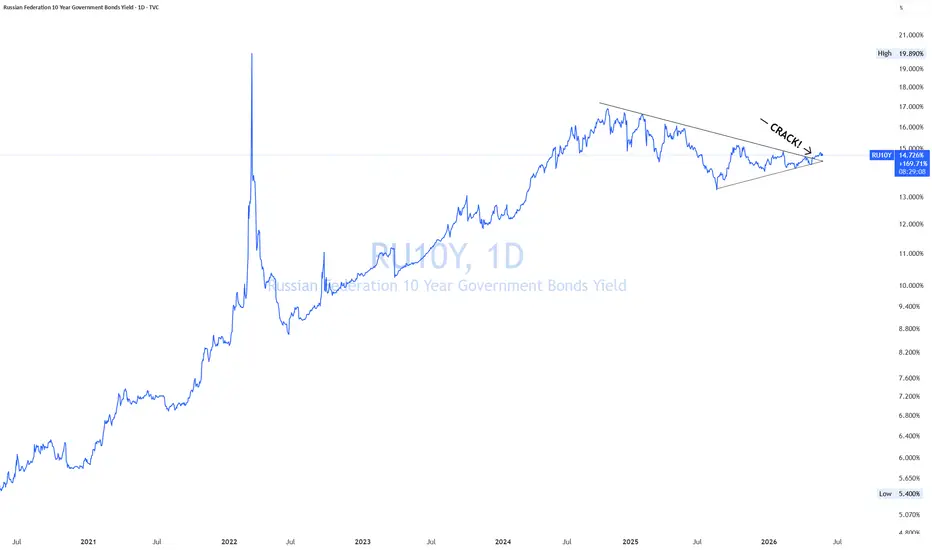
Russia is walking into a wartime version of Dutch disease:
Energy cash flows + defense spending temporarily mask weakening civilian productivity and diversification.
High yields despite controls are the tell.
Resource dependence feels strong… until the economy forgets how to do anything else.
High commodity revenues + state-directed spending + defense concentration can temporarily prop up nominal growth while quietly hollowing out productive diversification.
Dutch disease is when a country becomes so dependent on one dominant export sector that the rest of the economy slowly weakens underneath it.
In Russia’s case:
Oil, gas, and commodities bring in large foreign revenues.
The state then channels that money heavily into defense, government spending, and politically favored sectors.
The ruble and domestic cost structure become distorted around that resource flow.
Labor, capital, and talent get pulled toward energy and military production instead of diversified civilian industries.
The result:
Civilian manufacturing weakens,
innovation slows,
productivity outside the commodity sector lags,
imports become structurally necessary,
and the economy becomes increasingly dependent on commodity prices staying high.
Russia’s version is more dangerous because it’s layered with:
sanctions, (Trump is easing to help)
wartime spending,
capital controls,
labor shortages,
and elevated interest rates.
So instead of classic Dutch disease where a strong currency kills industry, Russia risks a “state-war-resource dependency loop”:
oil/gas fund the state,
the state funds war,
War absorbs labor/resources,
civilian sectors weaken,
dependence on commodities grows even more.
That’s why high bond yields matter. They’re often the market quietly saying:
“This growth may not be structurally healthy.”
If you enjoy the work: 👉 Drop a solid comment. Let’s push it to 7,000 and keep building a community grounded in raw truth, not hype.
Energy cash flows + defense spending temporarily mask weakening civilian productivity and diversification.
High yields despite controls are the tell.
Resource dependence feels strong… until the economy forgets how to do anything else.
High commodity revenues + state-directed spending + defense concentration can temporarily prop up nominal growth while quietly hollowing out productive diversification.
Dutch disease is when a country becomes so dependent on one dominant export sector that the rest of the economy slowly weakens underneath it.
In Russia’s case:
Oil, gas, and commodities bring in large foreign revenues.
The state then channels that money heavily into defense, government spending, and politically favored sectors.
The ruble and domestic cost structure become distorted around that resource flow.
Labor, capital, and talent get pulled toward energy and military production instead of diversified civilian industries.
The result:
Civilian manufacturing weakens,
innovation slows,
productivity outside the commodity sector lags,
imports become structurally necessary,
and the economy becomes increasingly dependent on commodity prices staying high.
Russia’s version is more dangerous because it’s layered with:
sanctions, (Trump is easing to help)
wartime spending,
capital controls,
labor shortages,
and elevated interest rates.
So instead of classic Dutch disease where a strong currency kills industry, Russia risks a “state-war-resource dependency loop”:
oil/gas fund the state,
the state funds war,
War absorbs labor/resources,
civilian sectors weaken,
dependence on commodities grows even more.
That’s why high bond yields matter. They’re often the market quietly saying:
“This growth may not be structurally healthy.”
If you enjoy the work: 👉 Drop a solid comment. Let’s push it to 7,000 and keep building a community grounded in raw truth, not hype.

Real Macro Economic Investing
patreon.com/Realmacro
patreon.com/Realmacro
Declinazione di responsabilità
Le informazioni e le pubblicazioni non sono intese come, e non costituiscono, consulenza o raccomandazioni finanziarie, di investimento, di trading o di altro tipo fornite o approvate da TradingView. Per ulteriori informazioni, consultare i Termini di utilizzo.
Real Macro Economic Investing
patreon.com/Realmacro
patreon.com/Realmacro
Declinazione di responsabilità
Le informazioni e le pubblicazioni non sono intese come, e non costituiscono, consulenza o raccomandazioni finanziarie, di investimento, di trading o di altro tipo fornite o approvate da TradingView. Per ulteriori informazioni, consultare i Termini di utilizzo.