
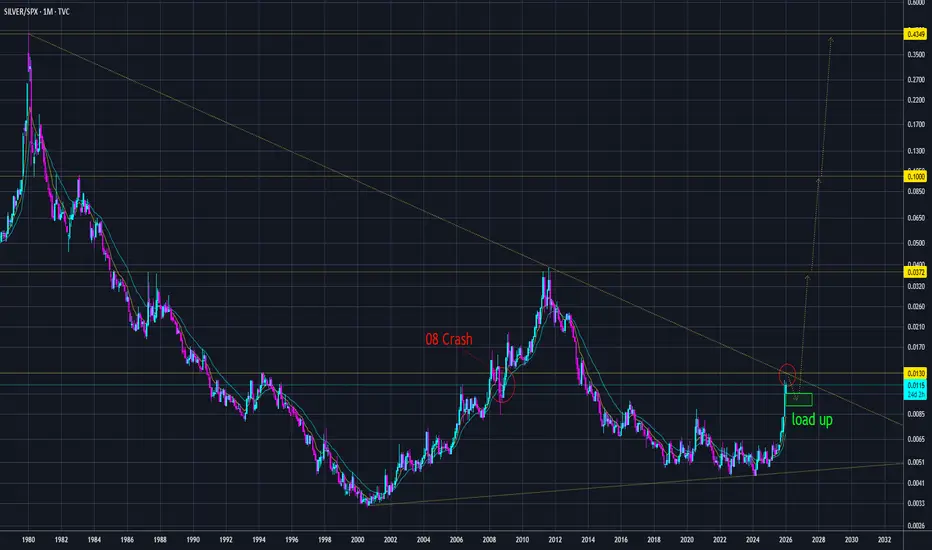
Thesis
Silver has a credible probability of outperforming the S&P 500 over a multi year horizon, potentially five to ten years, driven by persistent macroeconomic constraints, negative real rate bias, and a structurally tight supply demand balance. This outcome does not require systemic collapse or hyperinflation, only continued policy and fiscal pressure.
Macro framework
The US debt burden materially limits monetary policy flexibility. Aggressive rate hikes risk destabilizing an economy that remains highly dependent on credit expansion, while sustained easing increases the likelihood of above target inflation. This creates a long term bias toward financial repression, where nominal growth is supported at the expense of real purchasing power.
In such environments, real assets historically outperform financial assets on a relative basis. Even moderate but persistent inflation combined with capped or declining real rates is sufficient to favor precious metals versus equities.
Relative performance rather than absolute collapse
This thesis is not predicated on hyperinflation or fiat currency failure. Equities may continue to rise nominally, but silver does not need stocks to fall outright to outperform. A period of stagnant or modest equity returns alongside rising commodity prices is enough to generate meaningful relative outperformance.
Supply and demand dynamics
Silver supply is structurally constrained. A large portion of global production is a byproduct of base metal mining, limiting the ability of supply to respond quickly to higher prices. At the same time, industrial demand continues to grow, particularly in energy transition, electronics, and defense related applications.
Above ground inventories remain limited relative to potential demand surges. While demand is not infinite and substitution can occur at sufficiently high prices, the adjustment process is slow and often price disruptive, creating conditions for volatility and upside asymmetry.
Strategic behavior as a signal
Corporate and governmental behavior increasingly reflects concern over future availability of critical materials. Prepayment agreements, long term offtake contracts, and supply chain security initiatives suggest that some participants are prioritizing certainty of access over spot pricing. These behaviors tend to emerge when markets underestimate future scarcity.
As resource security becomes a higher priority, capital allocation decisions may shift in ways that favor commodity producers and real assets over long duration growth equities.
Pathways to silver outperformance
None of these conditions require extreme outcomes, and several can occur simultaneously.
Risks to the thesis
This thesis would be weakened if real interest rates remain meaningfully positive for an extended period, if fiscal discipline materially improves, or if technological substitution and recycling significantly reduce silver demand. A sustained expansion in silver supply would also challenge the upside case. Though arguably unlikely, these risks are still possible.
Conclusion
Silver outperformance is not inevitable, but the risk reward profile appears asymmetric. The combination of policy constraints, structural supply limits, and demand sensitivity creates a setup where silver has multiple viable paths to exceed equity returns over a multi year period. The primary risk lies not in short term volatility, but in the possibility that macro conditions resolve more favorably than currently expected.
Silver has a credible probability of outperforming the S&P 500 over a multi year horizon, potentially five to ten years, driven by persistent macroeconomic constraints, negative real rate bias, and a structurally tight supply demand balance. This outcome does not require systemic collapse or hyperinflation, only continued policy and fiscal pressure.
Macro framework
The US debt burden materially limits monetary policy flexibility. Aggressive rate hikes risk destabilizing an economy that remains highly dependent on credit expansion, while sustained easing increases the likelihood of above target inflation. This creates a long term bias toward financial repression, where nominal growth is supported at the expense of real purchasing power.
In such environments, real assets historically outperform financial assets on a relative basis. Even moderate but persistent inflation combined with capped or declining real rates is sufficient to favor precious metals versus equities.
Relative performance rather than absolute collapse
This thesis is not predicated on hyperinflation or fiat currency failure. Equities may continue to rise nominally, but silver does not need stocks to fall outright to outperform. A period of stagnant or modest equity returns alongside rising commodity prices is enough to generate meaningful relative outperformance.
Supply and demand dynamics
Silver supply is structurally constrained. A large portion of global production is a byproduct of base metal mining, limiting the ability of supply to respond quickly to higher prices. At the same time, industrial demand continues to grow, particularly in energy transition, electronics, and defense related applications.
Above ground inventories remain limited relative to potential demand surges. While demand is not infinite and substitution can occur at sufficiently high prices, the adjustment process is slow and often price disruptive, creating conditions for volatility and upside asymmetry.
Strategic behavior as a signal
Corporate and governmental behavior increasingly reflects concern over future availability of critical materials. Prepayment agreements, long term offtake contracts, and supply chain security initiatives suggest that some participants are prioritizing certainty of access over spot pricing. These behaviors tend to emerge when markets underestimate future scarcity.
As resource security becomes a higher priority, capital allocation decisions may shift in ways that favor commodity producers and real assets over long duration growth equities.
Pathways to silver outperformance
- Silver is likely to outperform the S&P 500 under several realistic scenarios, including
- Persistent inflation that keeps real rates near zero or negative
- Continued fiscal expansion and debt growth without meaningful consolidation
- Rising industrial demand without a commensurate increase in supply
- Increased strategic stockpiling by governments or corporations
- Periods of equity market stagnation or valuation compression rather than outright crashes
None of these conditions require extreme outcomes, and several can occur simultaneously.
Risks to the thesis
This thesis would be weakened if real interest rates remain meaningfully positive for an extended period, if fiscal discipline materially improves, or if technological substitution and recycling significantly reduce silver demand. A sustained expansion in silver supply would also challenge the upside case. Though arguably unlikely, these risks are still possible.
Conclusion
Silver outperformance is not inevitable, but the risk reward profile appears asymmetric. The combination of policy constraints, structural supply limits, and demand sensitivity creates a setup where silver has multiple viable paths to exceed equity returns over a multi year period. The primary risk lies not in short term volatility, but in the possibility that macro conditions resolve more favorably than currently expected.

Pubblicazioni correlate
Declinazione di responsabilità
Le informazioni e le pubblicazioni non sono intese come, e non costituiscono, consulenza o raccomandazioni finanziarie, di investimento, di trading o di altro tipo fornite o approvate da TradingView. Per ulteriori informazioni, consultare i Termini di utilizzo.
Pubblicazioni correlate
Declinazione di responsabilità
Le informazioni e le pubblicazioni non sono intese come, e non costituiscono, consulenza o raccomandazioni finanziarie, di investimento, di trading o di altro tipo fornite o approvate da TradingView. Per ulteriori informazioni, consultare i Termini di utilizzo.