OPEN-SOURCE SCRIPT
ATH Drawdown model
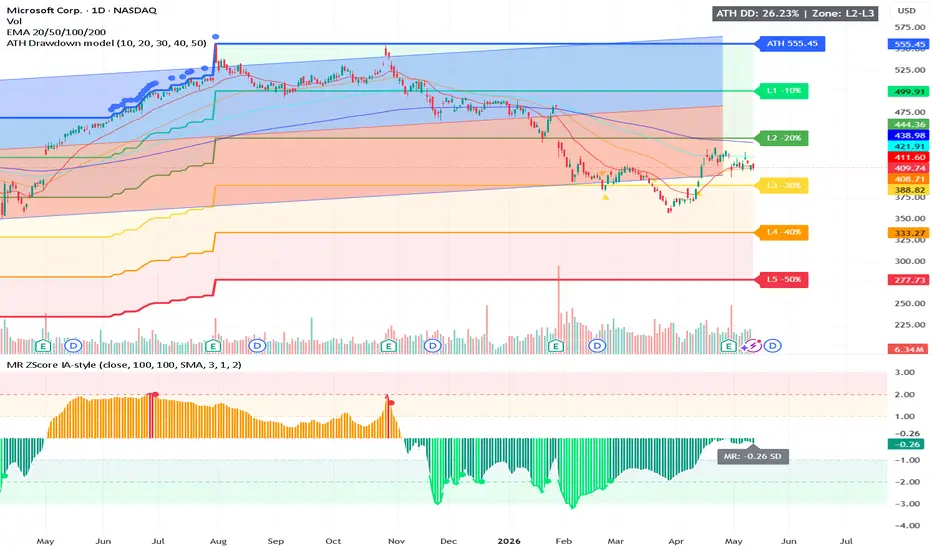
Best way to use:
On this model, the most useful reclaim alerts are usually L4, L3, and L2, because they often mark recovery from deeper drawdown zones back into improving structure. The cleanest use is on Daily, with 12H or 6H for earlier but still confirmed signals, always based on the completed candle close rather than mid-candle movement.
Clean interpretation:
A simple interpretation rule would be:
>Entered L4/L5: deep drawdown / stress zone.
>Reclaimed L4: early recovery signal.
>Reclaimed L3: stronger improvement in structure.
>Reclaimed L2: recovery gaining real traction
How to interpret “dead” names
Using this model, a name looks more structurally broken when it spends long periods in L4/L5, fails to reclaim those levels on confirmed bar closes, or reclaims them briefly and then loses them again. The Patreon guidance does not define “dead stock” directly, but it does emphasize using confirmed bar-close behavior rather than intrabar noise, so the meaningful signal is not a bounce during the candle — it is whether the level is reclaimed and held at candle close.
Best timeframe
The Patreon post says daily is great, while 12-hour or 6-hour can show direction changes earlier as long as you still confirm on bar close. So a practical setup is daily for your main map, 12H for earlier tactical signals, and 6H only when you want more responsiveness and accept more noise.
NO FINANCIAL ADVICE
On this model, the most useful reclaim alerts are usually L4, L3, and L2, because they often mark recovery from deeper drawdown zones back into improving structure. The cleanest use is on Daily, with 12H or 6H for earlier but still confirmed signals, always based on the completed candle close rather than mid-candle movement.
Clean interpretation:
A simple interpretation rule would be:
>Entered L4/L5: deep drawdown / stress zone.
>Reclaimed L4: early recovery signal.
>Reclaimed L3: stronger improvement in structure.
>Reclaimed L2: recovery gaining real traction
How to interpret “dead” names
Using this model, a name looks more structurally broken when it spends long periods in L4/L5, fails to reclaim those levels on confirmed bar closes, or reclaims them briefly and then loses them again. The Patreon guidance does not define “dead stock” directly, but it does emphasize using confirmed bar-close behavior rather than intrabar noise, so the meaningful signal is not a bounce during the candle — it is whether the level is reclaimed and held at candle close.
Best timeframe
The Patreon post says daily is great, while 12-hour or 6-hour can show direction changes earlier as long as you still confirm on bar close. So a practical setup is daily for your main map, 12H for earlier tactical signals, and 6H only when you want more responsiveness and accept more noise.
NO FINANCIAL ADVICE
Script open-source
Nello spirito di TradingView, l'autore di questo script lo ha reso open source, in modo che i trader possano esaminarne e verificarne la funzionalità. Complimenti all'autore! Sebbene sia possibile utilizzarlo gratuitamente, ricordiamo che la ripubblicazione del codice è soggetta al nostro Regolamento.

Declinazione di responsabilità
Le informazioni e le pubblicazioni non sono intese come, e non costituiscono, consulenza o raccomandazioni finanziarie, di investimento, di trading o di altro tipo fornite o approvate da TradingView. Per ulteriori informazioni, consultare i Termini di utilizzo.
Script open-source
Nello spirito di TradingView, l'autore di questo script lo ha reso open source, in modo che i trader possano esaminarne e verificarne la funzionalità. Complimenti all'autore! Sebbene sia possibile utilizzarlo gratuitamente, ricordiamo che la ripubblicazione del codice è soggetta al nostro Regolamento.
Declinazione di responsabilità
Le informazioni e le pubblicazioni non sono intese come, e non costituiscono, consulenza o raccomandazioni finanziarie, di investimento, di trading o di altro tipo fornite o approvate da TradingView. Per ulteriori informazioni, consultare i Termini di utilizzo.