

Most new traders chase the wrong goal.
Bigger targets. Bigger payouts. More accounts.
But prop firms do not pay you for having the best expectancy on a spreadsheet. They pay you for surviving long enough to withdraw.
A 30% win-rate system targeting 3R can look similar on paper to a 65% win-rate system targeting 1R. In reality, the losing streaks, drawdown and psychological pressure can feel completely different. 📊 Consistency Beats “More Profitable”
On a prop account, variance is the enemy. Tight drawdown rules punish long losing streaks—even when the strategy may be profitable over a large sample.
🎯 That is why Model 1 exists
Model 1 targets 50% of the CLS range, usually around 1:1 to 1.2R. It is not designed to look exciting. It is the bread-and-butter setup: higher win rate, repeatable execution and less psychological damage.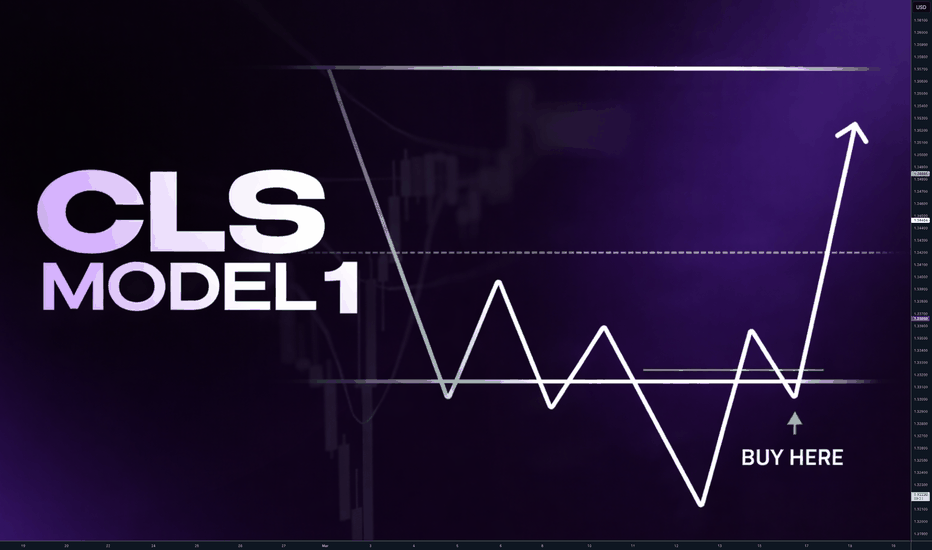 🎯 Model 2 targets the full range.
It becomes more useful after Model 1 has created a profit buffer not when it is your only plan for paying rent. 🧪 One percent of $100K is still more than ten percent of $5K. Scaling capital matters more than forcing heroic returns from one small account.
🎯 Stage 1: Build the Edge
Phase one is not about payouts. It is about answering one question:
⁉️ Can I execute the same setup correctly 50 times in a row?
Start with one model. Backtest toward 200 logged trades. Spend Weeks 1–4 studying and marking charts with no live money.
📍 For every Model 1 setup, follow the same sequence:
HTF CLS range → premium/discount → liquidity → manipulation → displacement → order-block close → fixed stop → 50% target.
‼️ No manipulation, no trade. No moving the stop. No negotiating with the target after entry
Use fixed R:R or 50% so your data tests the quality of your setup selection not whether random exit management rescued the trade and no partials. This is one shot trade.
📓 Journal Like a Scientist
Log the setup, HTF context, session, manipulation, confirmation timeframe, stop, target, R:R, entry screenshot and one honest line about your state of mind.Then review every Saturday with no open positions and no pressure. 🧪 Track three things:
- What happened—continuation or reversal, trend or range
- Where it happened—premium, discount, inside or outside the dealing range
- When it happened—session, day and time
If your win rate is weak, do not call yourself a failure. Find the variable that appears in your losses and test removing it. Messy Asia range. Entering during the sweep. No order-block close. Premium longs.
💰 Stage 2: Make Payouts Boring
Your first payout is proof of process not permission to start living like a full-time trader.
Trade one funded account until execution becomes automatic. Use fixed risk around 0.7% where the firm’s rules and your personal limits allow it. Take Model 1 targets. Protect the week.
Keep separate income while consistency is fragile. The moment you need today’s trade to pay a bill, every stop loss becomes negotiable.
Save most of the payout. Reinvest a small part. Slow is smooth. Smooth is fast.
🚀 Stage 3: Scale Capital, Not Ego
More accounts multiply good execution—but they also multiply mistakes. Do not copy one impulsive entry across twenty accounts and call it scaling. Group accounts into sections, trade a maximum of five at once, reach the payout objective, lock that section and rotate to another accounts section.
If one week goes wrong, you damage one section—not the entire operation.
Keep Model 1 as the consistency engine. Use Model 2 selectively when the setup qualifies and booked profit provides a buffer. See details about this risk management in this article.
Reinvest roughly 20–30% of payouts into more funded capital while saving the rest. Keep journaling. Keep the Saturday review.
📍The path is simple:
1️⃣ Build one repeatable edge.
2️⃣ Turn that edge into boring payouts.
3️⃣ Scale the capital without scaling your ego.
At scale, your survival rate matters more than one heroic month. The traders who last are the ones who can repeat a good process for years. And mainly who can do the work before the profits comes
✅ Be Patient, do deep focused work
Can you work on patiently on your trading business? Many people cant. My recent social experiment confirms it. I created two articles on the second one I added word - LATER. And as you can see 3x less people clicked on it. Why ? Because everyone looking for information that solve trading now. Not later. Unfortunately it's not how it works in the trading. You work on your system and processes and profits comes later. Not other way around.
Adapt useful, Reject useless and add what is specifically yours.
David Perk
🚀Boost | 🔁 Share | 💬 Comment | ✅ Follow for more Education
Bigger targets. Bigger payouts. More accounts.
But prop firms do not pay you for having the best expectancy on a spreadsheet. They pay you for surviving long enough to withdraw.
A 30% win-rate system targeting 3R can look similar on paper to a 65% win-rate system targeting 1R. In reality, the losing streaks, drawdown and psychological pressure can feel completely different.
On a prop account, variance is the enemy. Tight drawdown rules punish long losing streaks—even when the strategy may be profitable over a large sample.
🎯 That is why Model 1 exists
Model 1 targets 50% of the CLS range, usually around 1:1 to 1.2R. It is not designed to look exciting. It is the bread-and-butter setup: higher win rate, repeatable execution and less psychological damage.
It becomes more useful after Model 1 has created a profit buffer not when it is your only plan for paying rent.
🎯 Stage 1: Build the Edge
Phase one is not about payouts. It is about answering one question:
⁉️ Can I execute the same setup correctly 50 times in a row?
Start with one model. Backtest toward 200 logged trades. Spend Weeks 1–4 studying and marking charts with no live money.
📍 For every Model 1 setup, follow the same sequence:
HTF CLS range → premium/discount → liquidity → manipulation → displacement → order-block close → fixed stop → 50% target.
‼️ No manipulation, no trade. No moving the stop. No negotiating with the target after entry
Use fixed R:R or 50% so your data tests the quality of your setup selection not whether random exit management rescued the trade and no partials. This is one shot trade.
📓 Journal Like a Scientist
Log the setup, HTF context, session, manipulation, confirmation timeframe, stop, target, R:R, entry screenshot and one honest line about your state of mind.Then review every Saturday with no open positions and no pressure.
- What happened—continuation or reversal, trend or range
- Where it happened—premium, discount, inside or outside the dealing range
- When it happened—session, day and time
If your win rate is weak, do not call yourself a failure. Find the variable that appears in your losses and test removing it. Messy Asia range. Entering during the sweep. No order-block close. Premium longs.
💰 Stage 2: Make Payouts Boring
Your first payout is proof of process not permission to start living like a full-time trader.
Trade one funded account until execution becomes automatic. Use fixed risk around 0.7% where the firm’s rules and your personal limits allow it. Take Model 1 targets. Protect the week.
Keep separate income while consistency is fragile. The moment you need today’s trade to pay a bill, every stop loss becomes negotiable.
Save most of the payout. Reinvest a small part. Slow is smooth. Smooth is fast.
🚀 Stage 3: Scale Capital, Not Ego
More accounts multiply good execution—but they also multiply mistakes.
If one week goes wrong, you damage one section—not the entire operation.
Keep Model 1 as the consistency engine. Use Model 2 selectively when the setup qualifies and booked profit provides a buffer. See details about this risk management in this article.
Reinvest roughly 20–30% of payouts into more funded capital while saving the rest. Keep journaling. Keep the Saturday review.
📍The path is simple:
1️⃣ Build one repeatable edge.
2️⃣ Turn that edge into boring payouts.
3️⃣ Scale the capital without scaling your ego.
At scale, your survival rate matters more than one heroic month. The traders who last are the ones who can repeat a good process for years. And mainly who can do the work before the profits comes
✅ Be Patient, do deep focused work
Can you work on patiently on your trading business? Many people cant. My recent social experiment confirms it. I created two articles on the second one I added word - LATER. And as you can see 3x less people clicked on it. Why ? Because everyone looking for information that solve trading now. Not later.
Adapt useful, Reject useless and add what is specifically yours.
David Perk
🚀Boost | 🔁 Share | 💬 Comment | ✅ Follow for more Education

🌎 Website & Verified Results
davidperkfx.com/
🔮 Community
davidperkfx.com/discord
🧪 Telegram
shorturl.at/fPjTX
50% Trading Bonus
shorturl.at/lmFa8
‼️ Tradingview Prop USA
shorturl.at/dNxSj
davidperkfx.com/
🔮 Community
davidperkfx.com/discord
🧪 Telegram
shorturl.at/fPjTX
50% Trading Bonus
shorturl.at/lmFa8
‼️ Tradingview Prop USA
shorturl.at/dNxSj
免責事項
これらの情報および投稿は、TradingViewが提供または承認する金融、投資、取引、またはその他の種類の助言もしくは推奨であることを意図したものではなく、またこれらに該当するものでもありません。詳細は利用規約をご覧ください。
🌎 Website & Verified Results
davidperkfx.com/
🔮 Community
davidperkfx.com/discord
🧪 Telegram
shorturl.at/fPjTX
50% Trading Bonus
shorturl.at/lmFa8
‼️ Tradingview Prop USA
shorturl.at/dNxSj
davidperkfx.com/
🔮 Community
davidperkfx.com/discord
🧪 Telegram
shorturl.at/fPjTX
50% Trading Bonus
shorturl.at/lmFa8
‼️ Tradingview Prop USA
shorturl.at/dNxSj
免責事項
これらの情報および投稿は、TradingViewが提供または承認する金融、投資、取引、またはその他の種類の助言もしくは推奨であることを意図したものではなく、またこれらに該当するものでもありません。詳細は利用規約をご覧ください。