
—But Investors Should Tread Carefully
by silvercoder007
After five years of legal limbo, the cryptocurrency finally has clarity. The question now: is the rally justified?
In the fractured world of cryptocurrency, few assets have suffered as much regulatory purgatory as XRP. For five years, the digital token faced an existential threat: a lawsuit from the Securities and Exchange Commission that cast doubt on its legal status and chilled institutional adoption. That uncertainty finally lifted in 2025, when the SEC agreed to settle its case, unleashing a torrent of pent-up demand.
The recovery has been swift and dramatic. XRP surged nearly 350% in late 2024 and early 2025, briefly trading near its all-time high of $3.84 set in January 2018. Spot exchange-traded funds launched in November 2025 to institutional fanfare, generating over $1 billion in cumulative inflows by May of this year. For long-suffering holders, the vindication felt complete.
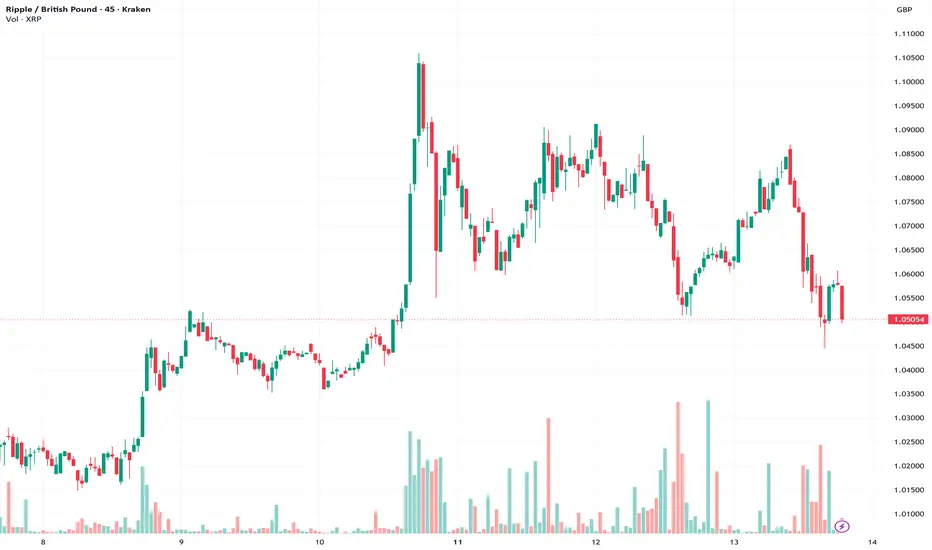
Yet beneath the surface lies a troubling contradiction. XRP's current market valuation of $88.6 billion bears almost no relationship to the actual utility being generated on its underlying network. Transaction fees on the XRP Ledger total mere thousands of dollars annually—a rounding error compared to a market cap that assumes the token will soon revolutionize global finance. The asset is now trading at $1.43, down 22 percent year-to-date after consolidating from its July 2025 peak of $3.66.
This creates a fundamental puzzle for investors: Regulatory clarity is real progress. But is it enough to justify a valuation that prices in aggressive future adoption while current on-chain activity remains minimal? Or are investors buying pure speculation under the guise of regulation?
The Basic Facts: Ranking Third, But Highly Volatile
Start with the essentials. XRP ranks third by market capitalization behind Bitcoin and Ethereum, with an $88.6 billion valuation. The token has a circulating supply of approximately 61.8 billion coins out of a fixed maximum of 100 billion, creating scarcity that advocates argue will support long-term value accumulation. Daily trading volume exceeds $2.1 billion, making it highly liquid for an alternative asset.
The challenge emerges when examining risk metrics. XRP carries annual volatility of 33.3 percent, roughly 45 percent higher than Bitcoin's volatility of 22.9 percent. This amplified price movement means larger drawdowns during bear markets. Historically, the asset has experienced maximum drawdown of 95.87 percent—worse than Bitcoin's 85.3 percent decline during the worst cryptocurrency bear market.
Most troubling for near-term investors is that over the past three months, XRP has delivered a Sharpe ratio of negative 0.14. This metric measures risk-adjusted returns, essentially capturing how much return you earn per unit of volatility. A negative Sharpe ratio means investors have been compensated negatively for taking on volatility. In other words, recent price swings have destroyed rather than created value on a risk-adjusted basis.
The correlation between XRP and Bitcoin stands at 0.63, which analysts consider moderate. This means that while the two assets do not move in perfect lockstep, XRP does tend to amplify Bitcoin's movements. In a bear market, when risk appetite evaporates broadly, XRP typically declines more sharply than the market leader. This amplification effect increases portfolio risk without providing meaningful diversification benefits.
The Valuation Disconnect: When Hope Exceeds Reality
Ripple, the company behind XRP, has long pitched the token as a bridge currency for cross-border payments. The vision is elegant: international banks would hold XRP reserves as a settlement mechanism, using them to instantly settle transactions across currencies and geographies without the delays and friction of traditional correspondent banking. In theory, this could disrupt the $900 trillion global settlement market and capture a meaningful slice of the $685 billion annual remittance industry.
In practice, the gap between vision and execution remains cavernous. Consider the fundamental metrics of network usage. The XRP Ledger generates transaction fees totaling between $36,000 and $180,000 annually—roughly $100 to $500 per day. Ripple claims over 300 financial institutions now use its RippleNet corridor for cross-border payments, but "using" the network and generating material transaction volume are vastly different things. The annual fee generation represents 0.0004 percent of the asset's market capitalization. It is a rounding error.
"The total transaction fees generated on the XRP Ledger remain minimal relative to the asset's total valuation, suggesting price is still driven more by speculation than organic network usage."
To illustrate the valuation disconnect using a traditional business analogy: imagine purchasing a restaurant for $100 million based on hopes that someday it would serve one billion meals per year and capture a material share of the global food market. Today, however, that restaurant serves a few hundred customers weekly. The ambition may be sound, and the long-term addressable market is genuine. But the current financials—the actual revenue being generated—bear no relationship to the $100 million valuation.
Ripple's RLUSD stablecoin, launched to provide dollar-denominated liquidity on the XRP Ledger, has grown to approximately $1.3 billion in market capitalization within its first year. This is meaningful progress and suggests some institutional interest in the infrastructure. Yet it remains a tiny fraction of the broader stablecoin market, which exceeds $200 billion across all competitors. And stablecoin adoption, while helpful to the ecosystem, does not directly validate XRP token utility.
This disconnect is not necessarily permanent. If RippleNet adoption accelerates—if banks genuinely begin settling material volume on the XRP Ledger—then on-chain utility will eventually justify higher valuations. But that acceleration has not yet happened. Current pricing assumes it will.
The Regulatory Catalyst: Has It Already Been Priced In?
The SEC settlement in 2025 was genuinely transformative for the XRP narrative. For five years, regulatory uncertainty cast a shadow over adoption. Financial institutions feared that holding or using XRP might expose them to future compliance risks if regulators determined the token was an unregistered security. This legal sword of Damocles effectively froze institutional participation and triggered delistings from major exchanges.
The resolution of that lawsuit unlocked three concrete developments. First, the SEC approved spot XRP exchange-traded funds in November 2025. Grayscale, Bitwise, Franklin Templeton, and other major asset managers now offer regulated XRP exposure, opening the asset to institutional capital flows that were previously blocked by compliance concerns. Cumulative net inflows have exceeded $1 billion since inception.
Second, Ripple received conditional approval for a U.S. national trust bank charter in December 2025. If full approval materializes, this would signal deeper integration between Ripple's infrastructure and traditional regulated banking. Such a charter would permit Ripple to operate as a regulated financial institution, potentially enabling partnerships with traditional banks more directly.
Third, bipartisan legislation known as the CLARITY Act was scheduled for a Senate Banking Committee markup on May 14, 2026. This legislation aims to clarify the regulatory classification of tokens like XRP, potentially crystallizing XRP's legal status once and for all and removing residual regulatory uncertainty that has persisted despite the SEC settlement.
These developments matter substantially. Regulatory clarity enables adoption. The ETF inflows demonstrate that institutional capital is genuinely interested in XRP exposure now that legal risks have diminished. For holders who endured five years of uncertainty, vindication has arrived.
But here lies the crucial distinction: regulatory clarity is not the same as utility growth. Clearing away legal uncertainty does not automatically ensure that banks will adopt RippleNet at scale. The technology still faces formidable competition from stablecoins like USDC and Tether, faster payment networks like the Lightning Network, and central bank digital currencies that major economies are developing. The Federal Reserve is already testing digital dollar infrastructure that could compete with private payment networks. Many large financial institutions have already built alternative settlement infrastructure and face switching costs if they were to migrate to Ripple's system.
Moreover, the arrival of regulatory clarity is now priced into the asset. XRP has already rallied more than 200 percent from its pre-resolution lows. The regulatory overhang has been lifted. What remains is the hardest part: actual execution. Banks must adopt RippleNet at scale. On-chain transaction volume must grow materially. These are non-trivial challenges.
The Historical Pattern: Boom, Then Bust
XRP's price history reveals a recurring pattern of explosive rallies followed by severe drawdowns, often triggered by regulatory events or sentiment shifts. In 2021, when the SEC lawsuit was at its height, XRP fell 57.9 percent for the year. In 2022, as crypto winter deepened and regulatory uncertainty persisted, the token declined another 59 percent. The asset appeared to stabilize in 2023 with an 81.5 percent gain, but that reflected a recovery from depressed levels rather than fundamental utility growth.
The 2024 surge of 238 percent came on the back of post-election optimism and growing confidence that the SEC lawsuit would be resolved favorably. This rally accelerated in early 2025, when the SEC agreed to settle. From January through July 2025, XRP gained 98.9 percent, peaking at $3.66. But the rally proved unsustainable. From July through December 2025, the token fell 48.1 percent in a sharp correction that reflected profit-taking and consolidation. Year-to-date 2026, XRP is down 22.3 percent, still consolidating near support levels.
The token has experienced three major drawdowns exceeding 50 percent in the past five years. That volatility is not a feature of sound investing—it is a warning signal. Your ability to tolerate a 40 to 50 percent loss without panic selling is a prerequisite for any meaningful XRP position. Most investors lack this psychological fortitude, which explains why many retail participants get shaken out of positions near market troughs.
What Wall Street Analysts Are Saying
Price predictions for XRP through 2027 cluster around three broad scenarios, each with starkly different implications. The bull case assumes CLARITY Act passage, dramatic RippleNet adoption acceleration, and macro cryptocurrency strength. Under this scenario, analysts project XRP reaching $4.00 to $5.00 by the end of 2027. This case is assigned a probability of approximately 30 to 40 percent by most observers. It requires that institutions rapidly increase settlement volume on the XRP Ledger, that on-chain metrics demonstrate meaningful utility growth, and that the broader cryptocurrency market experiences a major bull run driven by Bitcoin strength.
The base case assumes incremental progress rather than watershed adoption. Regulatory clarity improves modestly, RippleNet grows to 400 to 500 institutions, but on-chain activity fails to accelerate dramatically. Macro-driven cryptocurrency cycles continue to dominate price action, with XRP consolidating within a range. This scenario projects pricing of $2.50 to $3.50 by the end of 2027 and is assigned a probability of 40 to 50 percent. It represents the most likely outcome given current trends, assuming neither major adoption breakthroughs nor significant setbacks occur.
The bear case assumes regulatory headwinds return or CLARITY Act efforts stall, that adoption growth disappoints, and that macro cryptocurrency weakness creates downward pressure. Under these conditions, XRP could fall to $0.90 to $1.50 by the end of 2027. This scenario is assigned a probability of 15 to 25 percent but carries tail risk that could amplify losses if concurrent macro factors deteriorate.
Standard Chartered, one of the few major banks with active cryptocurrency research, has positioned its base case for XRP around $2.80 under moderate adoption conditions. More bullish shops like FXEmpire and Coinfomania extend toward the $5.00 to $5.13 range, but only if adoption accelerates dramatically and institutional participation surges. Most forecasts share a common thread: meaningful upside requires a fundamental acceleration in how banks and financial institutions use the XRP Ledger for actual settlement.
The Key Question: Most of the regulatory optionality has already been priced into XRP. What remains is the hardest question: Will banks actually adopt RippleNet for settlement at scale? This requires not regulatory clarity—which largely exists now—but competitive success against stablecoins, faster networks, and central bank digital currencies. That outcome is far from assured.
Who Should Own XRP, and How Much
XRP is fundamentally a bet on future adoption of blockchain-based cross-border payments. It is not a bet on regulatory clarity—that clarity has already been largely priced into the asset. Investors considering XRP should ask themselves one core question: Do I believe that banks and financial institutions will significantly increase their use of the XRP Ledger for settlement within the next three to five years?
Those who answer yes—who have genuine conviction in blockchain-based settlement disruption and believe Ripple is positioned to capture meaningful market share—may justify a position. These investors should be risk-tolerant, with time horizons of at least three years. They must be able to stomach 40 to 50 percent drawdowns without emotional distress. They must have sufficient portfolio diversification that a total loss in XRP would not materially impact their financial security.
Those who answer no—who are skeptical of adoption prospects or believe that competing technologies will ultimately prevail—should avoid the asset entirely. These include conservative investors seeking stable returns, those with short-term financial needs, retirees focused on capital preservation, and anyone uncomfortable watching 30 to 50 percent portfolio swings. First-time cryptocurrency investors should particularly avoid XRP given its volatility profile and speculative nature.
For those who do own XRP, position sizing is critical. No more than one to three percent of your cryptocurrency allocation should be devoted to XRP. And your cryptocurrency allocation itself should be modest within a broader diversified portfolio—typically no more than 5 to 10 percent of total investment assets. No institutional asset allocator would justify allocating 10 to 20 percent of crypto holdings to an asset with negative risk-adjusted returns over the past three months and a valuation disconnected from current utility.
The Verdict: A Lottery Ticket, Not an Investment
XRP's regulatory resolution is genuine progress. The SEC settlement, ETF approvals, and potential CLARITY Act passage create a more hospitable environment for adoption. For holders who endured five years of uncertainty, vindication has arrived. The elimination of legal overhang should theoretically remove a material drag on institutional participation.
But progress is not the same as present reality. Today, XRP generates minimal on-chain utility yet commands an $88.6 billion market valuation. The asset has already rallied more than 200 percent from its pre-resolution lows. The regulatory optionality is largely priced in. What remains is the hardest part: actual execution.
Banks must adopt RippleNet at scale. On-chain transaction volume must grow materially from current trivial levels. These are non-trivial challenges competing against stablecoins, faster networks, and institutional inertia. The base-case outcome—modest adoption growth and $2.50 to $3.50 pricing by 2027—offers limited upside relative to the downside volatility and risk. The bull case requires adoption acceleration that has not yet materialized.
For experienced investors willing to accept volatility and regulatory uncertainty, XRP presents a speculative opportunity at current levels. But it is a lottery ticket masquerading as an investment, not a conviction position built on current utility and demonstrated adoption. Price it accordingly.
Disclosure: This analysis is for informational purposes only and does not constitute investment advice. Cryptocurrency investments are highly speculative and volatile. Past performance is not indicative of future results. Regulatory developments could change rapidly and materially impact valuations. Readers should consult with qualified financial advisors before making allocation decisions.
by silvercoder007
After five years of legal limbo, the cryptocurrency finally has clarity. The question now: is the rally justified?
In the fractured world of cryptocurrency, few assets have suffered as much regulatory purgatory as XRP. For five years, the digital token faced an existential threat: a lawsuit from the Securities and Exchange Commission that cast doubt on its legal status and chilled institutional adoption. That uncertainty finally lifted in 2025, when the SEC agreed to settle its case, unleashing a torrent of pent-up demand.
The recovery has been swift and dramatic. XRP surged nearly 350% in late 2024 and early 2025, briefly trading near its all-time high of $3.84 set in January 2018. Spot exchange-traded funds launched in November 2025 to institutional fanfare, generating over $1 billion in cumulative inflows by May of this year. For long-suffering holders, the vindication felt complete.
Yet beneath the surface lies a troubling contradiction. XRP's current market valuation of $88.6 billion bears almost no relationship to the actual utility being generated on its underlying network. Transaction fees on the XRP Ledger total mere thousands of dollars annually—a rounding error compared to a market cap that assumes the token will soon revolutionize global finance. The asset is now trading at $1.43, down 22 percent year-to-date after consolidating from its July 2025 peak of $3.66.
This creates a fundamental puzzle for investors: Regulatory clarity is real progress. But is it enough to justify a valuation that prices in aggressive future adoption while current on-chain activity remains minimal? Or are investors buying pure speculation under the guise of regulation?
The Basic Facts: Ranking Third, But Highly Volatile
Start with the essentials. XRP ranks third by market capitalization behind Bitcoin and Ethereum, with an $88.6 billion valuation. The token has a circulating supply of approximately 61.8 billion coins out of a fixed maximum of 100 billion, creating scarcity that advocates argue will support long-term value accumulation. Daily trading volume exceeds $2.1 billion, making it highly liquid for an alternative asset.
The challenge emerges when examining risk metrics. XRP carries annual volatility of 33.3 percent, roughly 45 percent higher than Bitcoin's volatility of 22.9 percent. This amplified price movement means larger drawdowns during bear markets. Historically, the asset has experienced maximum drawdown of 95.87 percent—worse than Bitcoin's 85.3 percent decline during the worst cryptocurrency bear market.
Most troubling for near-term investors is that over the past three months, XRP has delivered a Sharpe ratio of negative 0.14. This metric measures risk-adjusted returns, essentially capturing how much return you earn per unit of volatility. A negative Sharpe ratio means investors have been compensated negatively for taking on volatility. In other words, recent price swings have destroyed rather than created value on a risk-adjusted basis.
The correlation between XRP and Bitcoin stands at 0.63, which analysts consider moderate. This means that while the two assets do not move in perfect lockstep, XRP does tend to amplify Bitcoin's movements. In a bear market, when risk appetite evaporates broadly, XRP typically declines more sharply than the market leader. This amplification effect increases portfolio risk without providing meaningful diversification benefits.
The Valuation Disconnect: When Hope Exceeds Reality
Ripple, the company behind XRP, has long pitched the token as a bridge currency for cross-border payments. The vision is elegant: international banks would hold XRP reserves as a settlement mechanism, using them to instantly settle transactions across currencies and geographies without the delays and friction of traditional correspondent banking. In theory, this could disrupt the $900 trillion global settlement market and capture a meaningful slice of the $685 billion annual remittance industry.
In practice, the gap between vision and execution remains cavernous. Consider the fundamental metrics of network usage. The XRP Ledger generates transaction fees totaling between $36,000 and $180,000 annually—roughly $100 to $500 per day. Ripple claims over 300 financial institutions now use its RippleNet corridor for cross-border payments, but "using" the network and generating material transaction volume are vastly different things. The annual fee generation represents 0.0004 percent of the asset's market capitalization. It is a rounding error.
"The total transaction fees generated on the XRP Ledger remain minimal relative to the asset's total valuation, suggesting price is still driven more by speculation than organic network usage."
To illustrate the valuation disconnect using a traditional business analogy: imagine purchasing a restaurant for $100 million based on hopes that someday it would serve one billion meals per year and capture a material share of the global food market. Today, however, that restaurant serves a few hundred customers weekly. The ambition may be sound, and the long-term addressable market is genuine. But the current financials—the actual revenue being generated—bear no relationship to the $100 million valuation.
Ripple's RLUSD stablecoin, launched to provide dollar-denominated liquidity on the XRP Ledger, has grown to approximately $1.3 billion in market capitalization within its first year. This is meaningful progress and suggests some institutional interest in the infrastructure. Yet it remains a tiny fraction of the broader stablecoin market, which exceeds $200 billion across all competitors. And stablecoin adoption, while helpful to the ecosystem, does not directly validate XRP token utility.
This disconnect is not necessarily permanent. If RippleNet adoption accelerates—if banks genuinely begin settling material volume on the XRP Ledger—then on-chain utility will eventually justify higher valuations. But that acceleration has not yet happened. Current pricing assumes it will.
The Regulatory Catalyst: Has It Already Been Priced In?
The SEC settlement in 2025 was genuinely transformative for the XRP narrative. For five years, regulatory uncertainty cast a shadow over adoption. Financial institutions feared that holding or using XRP might expose them to future compliance risks if regulators determined the token was an unregistered security. This legal sword of Damocles effectively froze institutional participation and triggered delistings from major exchanges.
The resolution of that lawsuit unlocked three concrete developments. First, the SEC approved spot XRP exchange-traded funds in November 2025. Grayscale, Bitwise, Franklin Templeton, and other major asset managers now offer regulated XRP exposure, opening the asset to institutional capital flows that were previously blocked by compliance concerns. Cumulative net inflows have exceeded $1 billion since inception.
Second, Ripple received conditional approval for a U.S. national trust bank charter in December 2025. If full approval materializes, this would signal deeper integration between Ripple's infrastructure and traditional regulated banking. Such a charter would permit Ripple to operate as a regulated financial institution, potentially enabling partnerships with traditional banks more directly.
Third, bipartisan legislation known as the CLARITY Act was scheduled for a Senate Banking Committee markup on May 14, 2026. This legislation aims to clarify the regulatory classification of tokens like XRP, potentially crystallizing XRP's legal status once and for all and removing residual regulatory uncertainty that has persisted despite the SEC settlement.
These developments matter substantially. Regulatory clarity enables adoption. The ETF inflows demonstrate that institutional capital is genuinely interested in XRP exposure now that legal risks have diminished. For holders who endured five years of uncertainty, vindication has arrived.
But here lies the crucial distinction: regulatory clarity is not the same as utility growth. Clearing away legal uncertainty does not automatically ensure that banks will adopt RippleNet at scale. The technology still faces formidable competition from stablecoins like USDC and Tether, faster payment networks like the Lightning Network, and central bank digital currencies that major economies are developing. The Federal Reserve is already testing digital dollar infrastructure that could compete with private payment networks. Many large financial institutions have already built alternative settlement infrastructure and face switching costs if they were to migrate to Ripple's system.
Moreover, the arrival of regulatory clarity is now priced into the asset. XRP has already rallied more than 200 percent from its pre-resolution lows. The regulatory overhang has been lifted. What remains is the hardest part: actual execution. Banks must adopt RippleNet at scale. On-chain transaction volume must grow materially. These are non-trivial challenges.
The Historical Pattern: Boom, Then Bust
XRP's price history reveals a recurring pattern of explosive rallies followed by severe drawdowns, often triggered by regulatory events or sentiment shifts. In 2021, when the SEC lawsuit was at its height, XRP fell 57.9 percent for the year. In 2022, as crypto winter deepened and regulatory uncertainty persisted, the token declined another 59 percent. The asset appeared to stabilize in 2023 with an 81.5 percent gain, but that reflected a recovery from depressed levels rather than fundamental utility growth.
The 2024 surge of 238 percent came on the back of post-election optimism and growing confidence that the SEC lawsuit would be resolved favorably. This rally accelerated in early 2025, when the SEC agreed to settle. From January through July 2025, XRP gained 98.9 percent, peaking at $3.66. But the rally proved unsustainable. From July through December 2025, the token fell 48.1 percent in a sharp correction that reflected profit-taking and consolidation. Year-to-date 2026, XRP is down 22.3 percent, still consolidating near support levels.
The token has experienced three major drawdowns exceeding 50 percent in the past five years. That volatility is not a feature of sound investing—it is a warning signal. Your ability to tolerate a 40 to 50 percent loss without panic selling is a prerequisite for any meaningful XRP position. Most investors lack this psychological fortitude, which explains why many retail participants get shaken out of positions near market troughs.
What Wall Street Analysts Are Saying
Price predictions for XRP through 2027 cluster around three broad scenarios, each with starkly different implications. The bull case assumes CLARITY Act passage, dramatic RippleNet adoption acceleration, and macro cryptocurrency strength. Under this scenario, analysts project XRP reaching $4.00 to $5.00 by the end of 2027. This case is assigned a probability of approximately 30 to 40 percent by most observers. It requires that institutions rapidly increase settlement volume on the XRP Ledger, that on-chain metrics demonstrate meaningful utility growth, and that the broader cryptocurrency market experiences a major bull run driven by Bitcoin strength.
The base case assumes incremental progress rather than watershed adoption. Regulatory clarity improves modestly, RippleNet grows to 400 to 500 institutions, but on-chain activity fails to accelerate dramatically. Macro-driven cryptocurrency cycles continue to dominate price action, with XRP consolidating within a range. This scenario projects pricing of $2.50 to $3.50 by the end of 2027 and is assigned a probability of 40 to 50 percent. It represents the most likely outcome given current trends, assuming neither major adoption breakthroughs nor significant setbacks occur.
The bear case assumes regulatory headwinds return or CLARITY Act efforts stall, that adoption growth disappoints, and that macro cryptocurrency weakness creates downward pressure. Under these conditions, XRP could fall to $0.90 to $1.50 by the end of 2027. This scenario is assigned a probability of 15 to 25 percent but carries tail risk that could amplify losses if concurrent macro factors deteriorate.
Standard Chartered, one of the few major banks with active cryptocurrency research, has positioned its base case for XRP around $2.80 under moderate adoption conditions. More bullish shops like FXEmpire and Coinfomania extend toward the $5.00 to $5.13 range, but only if adoption accelerates dramatically and institutional participation surges. Most forecasts share a common thread: meaningful upside requires a fundamental acceleration in how banks and financial institutions use the XRP Ledger for actual settlement.
The Key Question: Most of the regulatory optionality has already been priced into XRP. What remains is the hardest question: Will banks actually adopt RippleNet for settlement at scale? This requires not regulatory clarity—which largely exists now—but competitive success against stablecoins, faster networks, and central bank digital currencies. That outcome is far from assured.
Who Should Own XRP, and How Much
XRP is fundamentally a bet on future adoption of blockchain-based cross-border payments. It is not a bet on regulatory clarity—that clarity has already been largely priced into the asset. Investors considering XRP should ask themselves one core question: Do I believe that banks and financial institutions will significantly increase their use of the XRP Ledger for settlement within the next three to five years?
Those who answer yes—who have genuine conviction in blockchain-based settlement disruption and believe Ripple is positioned to capture meaningful market share—may justify a position. These investors should be risk-tolerant, with time horizons of at least three years. They must be able to stomach 40 to 50 percent drawdowns without emotional distress. They must have sufficient portfolio diversification that a total loss in XRP would not materially impact their financial security.
Those who answer no—who are skeptical of adoption prospects or believe that competing technologies will ultimately prevail—should avoid the asset entirely. These include conservative investors seeking stable returns, those with short-term financial needs, retirees focused on capital preservation, and anyone uncomfortable watching 30 to 50 percent portfolio swings. First-time cryptocurrency investors should particularly avoid XRP given its volatility profile and speculative nature.
For those who do own XRP, position sizing is critical. No more than one to three percent of your cryptocurrency allocation should be devoted to XRP. And your cryptocurrency allocation itself should be modest within a broader diversified portfolio—typically no more than 5 to 10 percent of total investment assets. No institutional asset allocator would justify allocating 10 to 20 percent of crypto holdings to an asset with negative risk-adjusted returns over the past three months and a valuation disconnected from current utility.
The Verdict: A Lottery Ticket, Not an Investment
XRP's regulatory resolution is genuine progress. The SEC settlement, ETF approvals, and potential CLARITY Act passage create a more hospitable environment for adoption. For holders who endured five years of uncertainty, vindication has arrived. The elimination of legal overhang should theoretically remove a material drag on institutional participation.
But progress is not the same as present reality. Today, XRP generates minimal on-chain utility yet commands an $88.6 billion market valuation. The asset has already rallied more than 200 percent from its pre-resolution lows. The regulatory optionality is largely priced in. What remains is the hardest part: actual execution.
Banks must adopt RippleNet at scale. On-chain transaction volume must grow materially from current trivial levels. These are non-trivial challenges competing against stablecoins, faster networks, and institutional inertia. The base-case outcome—modest adoption growth and $2.50 to $3.50 pricing by 2027—offers limited upside relative to the downside volatility and risk. The bull case requires adoption acceleration that has not yet materialized.
For experienced investors willing to accept volatility and regulatory uncertainty, XRP presents a speculative opportunity at current levels. But it is a lottery ticket masquerading as an investment, not a conviction position built on current utility and demonstrated adoption. Price it accordingly.
Disclosure: This analysis is for informational purposes only and does not constitute investment advice. Cryptocurrency investments are highly speculative and volatile. Past performance is not indicative of future results. Regulatory developments could change rapidly and materially impact valuations. Readers should consult with qualified financial advisors before making allocation decisions.

免責事項
これらの情報および投稿は、TradingViewが提供または承認する金融、投資、取引、またはその他の種類の助言もしくは推奨であることを意図したものではなく、またこれらに該当するものでもありません。詳細は利用規約をご覧ください。
免責事項
これらの情報および投稿は、TradingViewが提供または承認する金融、投資、取引、またはその他の種類の助言もしくは推奨であることを意図したものではなく、またこれらに該当するものでもありません。詳細は利用規約をご覧ください。