
The disparity in expectations of the Federal Reserve's policies becomes prominent: The market currently focuses on the "70.6% probability of rate cut" on the surface data, but overlooks two key details - first, there is only one non-farm employment data left before the Fed's December meeting (released on November 7th), if the new employment figures are lower than 180,000 (current expectation 200,000), the probability of rate cut is expected to jump to over 80% within 3 trading days; second, the "dot plot" of the Fed implies an expectation of 3 rate cuts in 2026, and the current gold price has not priced in the medium- to long-term easing path, and is currently in the "low range before the expectation correction" at this stage.
The divergence in sentiment between retail investors and institutions provides opportunities: The bullish sentiment index of retail investors towards gold has dropped from 68 in October to the current 52 (neutral range), reflecting the fear of "integer thresholds" among retail investors; but institutions are quietly increasing their holdings - the largest global gold ETF (SPDR) added 1.8 tons on November 6th, with its holdings rising to 912 tons, a 3-month high, the "divergent pattern of retail investors' fear of heights + institutions' bottom-fishing" provides an emotional safety cushion for the current stage of long-term positioning.
The "pseudo-strength and real weakness" of the US Dollar Index supports gold: The US Dollar Index is currently maintained at around 100.2, but "the strengthening of the US dollar" is more dependent on the weakening of the euro and the pound (the inflation in the Eurozone fell unexpectedly), rather than the strong economic fundamentals of the United States; the US ISM manufacturing PMI in October is still below the critical line (49.8), the core PCE price index year-on-year 2.9% has declined but is above the target, the "safety margin" of US dollar assets has decreased, and gold as a "non-dollar safe-haven asset" has an increased attractiveness.
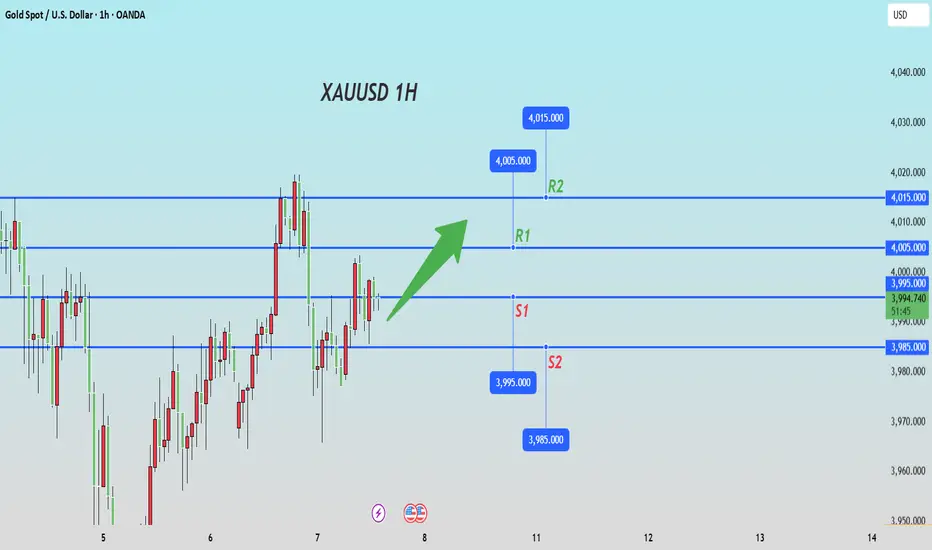
Today's gold trading strategy
buy:3985-3995
tp:4005-4015
sl:3975
The divergence in sentiment between retail investors and institutions provides opportunities: The bullish sentiment index of retail investors towards gold has dropped from 68 in October to the current 52 (neutral range), reflecting the fear of "integer thresholds" among retail investors; but institutions are quietly increasing their holdings - the largest global gold ETF (SPDR) added 1.8 tons on November 6th, with its holdings rising to 912 tons, a 3-month high, the "divergent pattern of retail investors' fear of heights + institutions' bottom-fishing" provides an emotional safety cushion for the current stage of long-term positioning.
The "pseudo-strength and real weakness" of the US Dollar Index supports gold: The US Dollar Index is currently maintained at around 100.2, but "the strengthening of the US dollar" is more dependent on the weakening of the euro and the pound (the inflation in the Eurozone fell unexpectedly), rather than the strong economic fundamentals of the United States; the US ISM manufacturing PMI in October is still below the critical line (49.8), the core PCE price index year-on-year 2.9% has declined but is above the target, the "safety margin" of US dollar assets has decreased, and gold as a "non-dollar safe-haven asset" has an increased attractiveness.
Today's gold trading strategy
buy:3985-3995
tp:4005-4015
sl:3975

면책사항
해당 정보와 게시물은 금융, 투자, 트레이딩 또는 기타 유형의 조언이나 권장 사항으로 간주되지 않으며, 트레이딩뷰에서 제공하거나 보증하는 것이 아닙니다. 자세한 내용은 이용 약관을 참조하세요.
면책사항
해당 정보와 게시물은 금융, 투자, 트레이딩 또는 기타 유형의 조언이나 권장 사항으로 간주되지 않으며, 트레이딩뷰에서 제공하거나 보증하는 것이 아닙니다. 자세한 내용은 이용 약관을 참조하세요.